

Why Subfloor Ventilation Systems Are Essential for Australian Homes
Subfloor ventilation systems are mechanical or passive solutions that remove stale, moisture-laden air from beneath your home and replace it with fresh, dry air. Here are the main types available:
Passive Systems:
- Terracotta or louvre brick vents (natural airflow)
- High-flow aluminium vents (improved cross-ventilation)
Active Systems:
- Wall-mounted extraction fans (single-zone solution)
- Ducted inline systems (whole-house coverage)
- Solar-powered fans (zero running costs)
Smart Systems:
- Sensor-controlled fans (dew-point automation)
- Timer-based operation (peak drying hours)
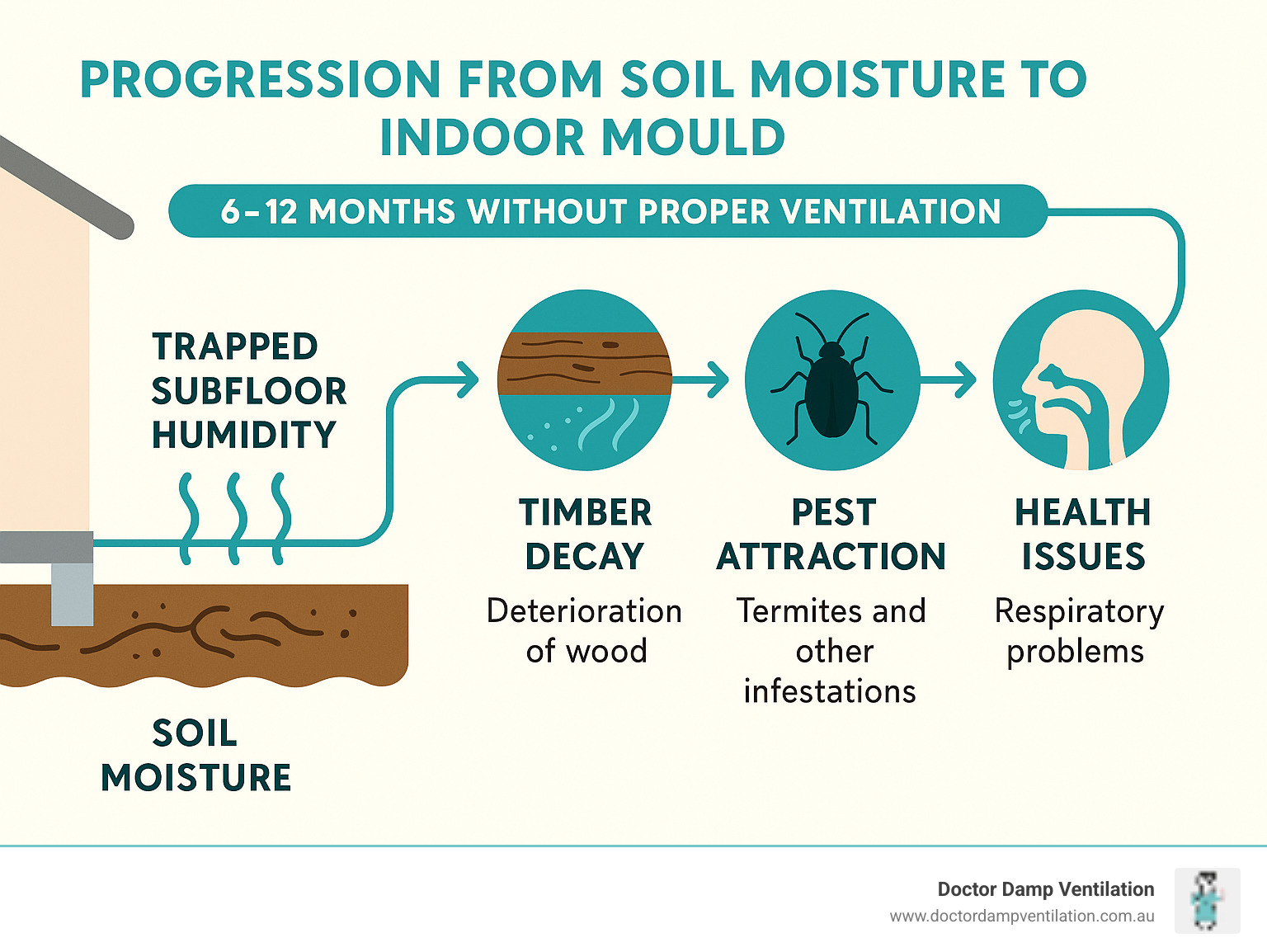
If you’re dealing with musty odours, window condensation, or mould patches in wardrobes, the problem likely starts underneath your floorboards. Poor subfloor ventilation traps moisture from soil evaporation, creating the perfect breeding ground for mould, timber rot, and even termite infestations.
Research shows that 6-10 air changes per hour are needed to effectively control subfloor moisture. For a typical 160 m³ crawl space, this means extracting 960-1,600 m³ of air hourly – far beyond what passive vents alone can achieve.
Modern subfloor ventilation systems make moisture control both affordable and automated. From simple wall-mounted fans to sophisticated sensor-driven networks, there’s a solution for every home and budget.
I’m Scott Lambert, founder of Dr. Damp Ventilation, with over 20 years of experience installing subfloor ventilation systems across Australia. I’ve personally diagnosed moisture issues in over 20,000 Australian homes and developed proprietary diagnostic tools now used throughout the industry.
Why Your Home Needs Subfloor Ventilation
That musty smell greeting you when you walk into certain rooms isn’t just unpleasant – it’s your home’s way of crying for help. What’s happening beneath your floorboards can seriously impact your family’s health, your property’s value, and your wallet.
I’ve crawled under thousands of Australian homes, and the damage I’ve seen from poor subfloor ventilation still surprises me. Just last month, I assessed a heritage home in Sydney where the owners had ignored that “old house smell” for years. The timber rot was so extensive that structural repairs ended up costing over $45,000 – money that could have stayed in their pocket with a simple subfloor ventilation system.
Structural damage starts silently. Excess moisture turns your home’s timber bearers and joists into a soggy mess, literally eating away at your foundation. I’ve seen floor joists so rotted you could push your finger right through them.
The health risks are equally concerning. Damp subfloors become mould factories, pumping spores into your living spaces through every crack and gap. Research shows that 35% of Australian homes battle mould problems, with many cases starting in poorly ventilated crawl spaces.
Termites love moisture-damaged timber. These destructive pests can smell weakness from miles away, and a damp subfloor is like rolling out the red carpet for them. One colony can cause thousands in damage before you even know they’ve moved in.
Then there’s radon – the invisible threat. This radioactive gas naturally occurs in soil but gets trapped in enclosed subfloor spaces. Long-term exposure increases cancer risk, making proper ventilation a serious health investment.
Your property value takes a hit too. Try selling a house with moisture damage and mould issues – buyers run faster than you can say “structural problems.” Even minor moisture signs can knock tens of thousands off your asking price.
Scientific research on moisture control proves what we’ve known for years: stopping moisture at its source beats playing catch-up with expensive repairs.
How Subfloor Ventilation Systems Fight Damp
Subfloor ventilation systems work like lungs for your home’s foundation. They breathe out the stale, humid air and breathe in fresh, dry air – creating a healthy environment where mould and rot simply can’t thrive.
The magic happens through cross-flow air movement. Strategic placement of extraction fans pulls moisture-laden air from the deepest corners of your subfloor space. Meanwhile, passive vents positioned around your home’s perimeter allow fresh air to flow in naturally. This creates a continuous cycle that prevents moisture from building up to dangerous levels.
The real enemy here is soil evaporation. Ground moisture constantly rises from the earth beneath your home, and without proper airflow, this water vapor gets trapped. Our systems break this cycle by maintaining constant air movement, preventing humidity from reaching the saturation point where problems begin.
Proper subfloor ventilation systems create highways for air movement, ensuring every corner stays dry and healthy. The result? No more musty smells, no structural damage, and peace of mind knowing your family’s breathing clean air.
Choosing the Right Subfloor Ventilation System
Picking the perfect subfloor ventilation systems for your home isn’t a one-size-fits-all decision. Your home’s subfloor volume, existing ventilation setup, severity of dampness, and budget all play crucial roles in determining what’ll work best.
Getting Fan Sizing Right
Here’s the golden rule: aim for 6-10 air changes per hour. If you’re dealing with serious moisture issues, push toward the higher end of this range.
Let me give you a real-world example. Say your subfloor measures 20 metres long, 10 metres wide, and 0.8 metres high – that’s 160 cubic metres of space. To achieve 6 air changes per hour, you need to extract 960 cubic metres of air every hour.
The Motor Technology Battle: AC vs EC
This choice will significantly impact your energy bills, noise levels, and overall performance.
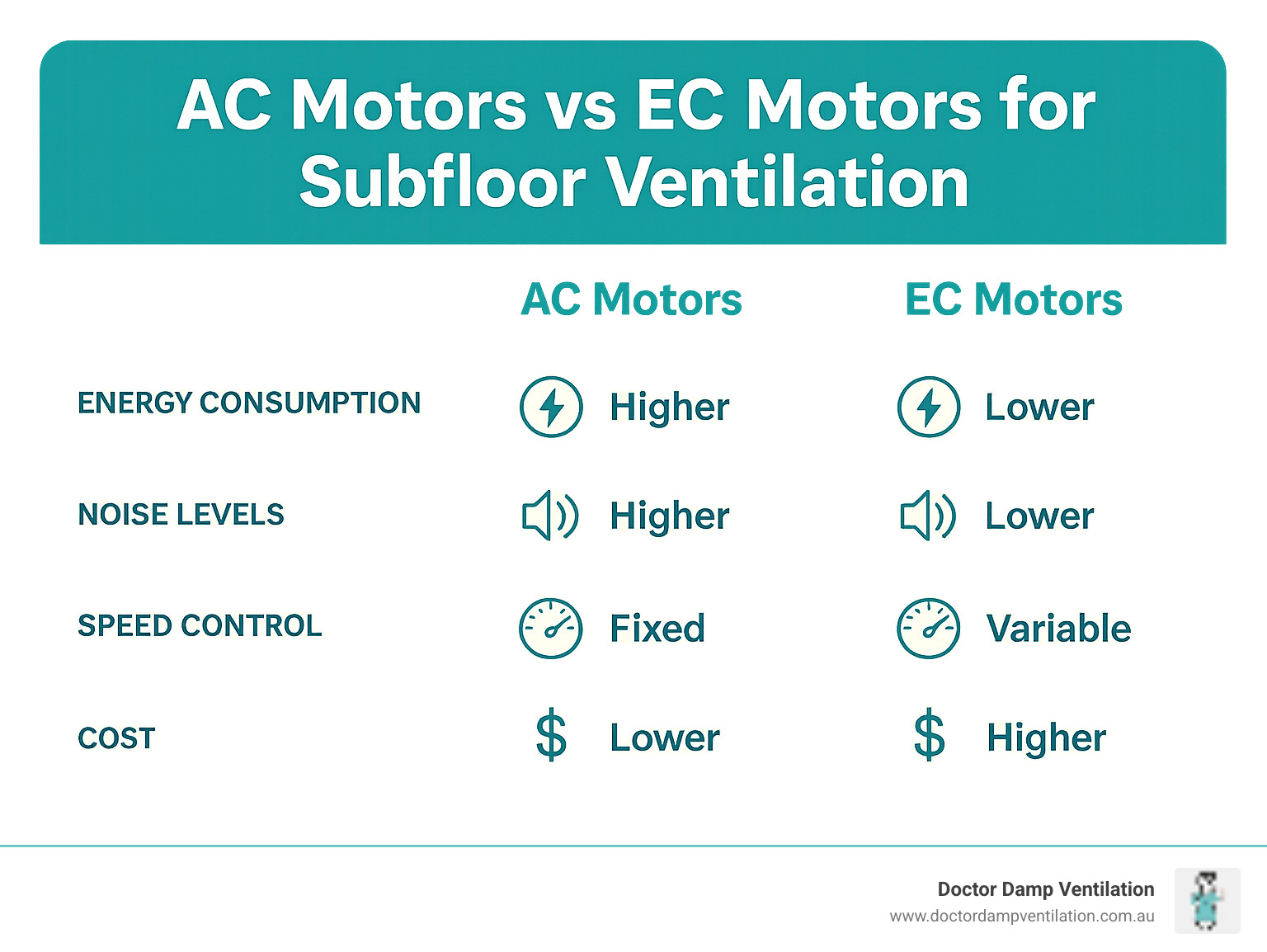
AC motors are the reliable workhorses of the ventilation world. They run at fixed speeds and typically operate for 10 hours daily during peak drying conditions (7am to 5pm). These motors have failure rates of less than 0.1% – they just keep going. They’re also perfect for solar-powered systems since they don’t need fancy electronic controls.
EC motors are the smart choice for tech-savvy homeowners. These electronically controlled units offer variable speed operation. Drop an EC motor’s speed by just 20%, and you’ll cut both energy consumption and noise by 50%.
Here’s something that surprises many clients: a two-fan system using EC motors at 40% speed can actually provide 40% more ventilation over 24 hours while using only half the energy of AC motors.
Calculating Airflow for Subfloor Ventilation Systems
Step 1 is simple: multiply your subfloor’s length, width, and height to get the volume in cubic metres.
Step 2 involves multiplying that volume by your target air changes per hour to determine required airflow.
Using our earlier example: 20m × 10m × 0.8m gives us 160 cubic metres. Multiply by 6 air changes per hour, and you need 960 cubic metres per hour of airflow.
Understanding Pressure Systems
Most customers go with negative pressure systems – and for good reason. These extraction-based systems pull moist air out while fresh air naturally enters through passive vents. The beauty is that you’re not pushing potentially contaminated air up into your living spaces.
Positive pressure systems work the opposite way, pushing air in rather than pulling it out. I rarely recommend these due to contamination risks.
Balanced systems combine both supply and extraction for maximum control. They’re the premium option but require more complex installation and higher costs.
Smart, Sensor-Controlled Subfloor Ventilation Systems
These intelligent setups use dew-point comparison to automatically determine when your fans should run – no guesswork involved.
Here’s how it works: sensors continuously monitor humidity levels both outdoors and in your subfloor. The system calculates dew points for both environments and only operates when the outdoor dew point is at least 2°C lower than your subfloor’s dew point.
Why does this matter? Because running fans when it’s humid outside can actually make your moisture problem worse. These smart systems ensure incoming air can genuinely remove moisture rather than adding to it.
Modern systems can connect with home automation platforms like Home Assistant, using devices like Shelly 1PM relays to control high-voltage fans based on real-time environmental data.
The benefits: reduced energy consumption since fans only run when beneficial, improved moisture control by preventing operation during humid conditions, remote monitoring and alerts, and automatic seasonal adjustments. It’s like having a moisture control expert monitoring your home 24/7.
Reliable Subfloor Ventilation Systems Reviewed
After two decades of installing subfloor ventilation systems across Australia, I’ve seen what works and what doesn’t. From celebrity properties to countless family homes, we’ve tested every type of system available. Let me share what really delivers results.
The moisture problem under your home won’t solve itself. Whether you’re dealing with minor dampness or serious mould growth, there’s a subfloor ventilation system that fits your situation and budget. The key is matching the right technology to your specific needs.
Passive Vent Sets: Low-Cost Moisture Guard
Sometimes the simplest solutions are the most overlooked. Passive brick vents might not have the glamour of high-tech fans, but they’re often the foundation of good subfloor ventilation.
Here’s the reality about traditional terracotta vents – they’re not great performers. Those little holes account for barely 13% of the brick’s total area. Add some spider webs and accumulated debris, and you’re down to practically nothing.
High-flow aluminium louvre vents are a different story entirely. These modern designs can achieve up to 60% free area, which means dramatically better airflow. We’ve seen homes where simply upgrading from old terracotta to quality louvre vents made a noticeable difference to subfloor conditions.
The secret to passive ventilation success lies in strategic placement. You need vents on opposing walls to create that crucial cross-flow. Think of it as creating a breeze under your house – air needs somewhere to enter and somewhere to exit.
Maintenance is everything with passive systems. A blocked vent is worse than no vent because it gives you false confidence. We recommend checking and cleaning vents every six months, removing spider webs, leaves, and any other debris that restricts airflow.
Wall-Mounted Extractors: Plug-and-Play Power
For homeowners who want immediate results without major installation work, wall-mounted extraction fans are hard to beat. These compact units punch well above their weight, especially in smaller subfloor areas.
A typical 734 m³/hr wall-mounted unit can effectively handle up to 120 m³ of subfloor space. That’s perfect for many Australian homes, particularly older properties with more compact footprints. The beauty of these systems is their simplicity – plug them in, and they start working immediately.
Installation couldn’t be easier. Most units just need a power outlet and a suitable external wall position. Within hours, you can transform a damp, musty subfloor into a properly ventilated space.
The main limitation is coverage area. Wall-mounted fans work brilliantly within their range, but larger homes may end up with dead zones where air circulation remains poor.
Ducted Inline Systems: Whole-House Solution
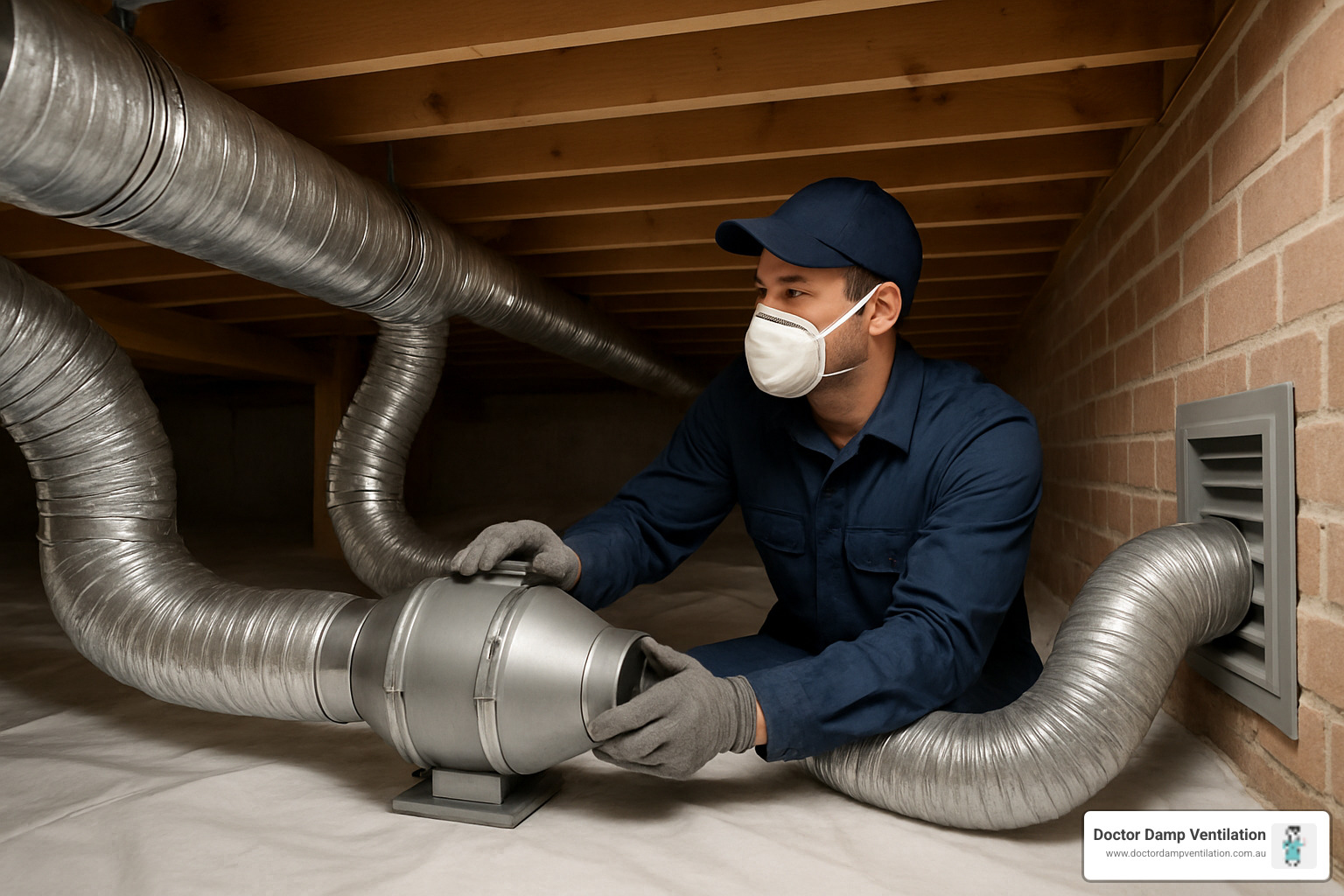
When you need comprehensive coverage, ducted inline systems represent the gold standard of subfloor ventilation. These systems use powerful centrifugal fans connected to multiple intake points through carefully planned ducting networks.
The magic happens in the bifurcation layouts – that’s the fancy term for splitting one main duct into multiple branches. This design allows a single powerful fan to draw moist air from strategic points throughout your entire subfloor area. No dead zones, no missed spots.
System sizing matters enormously. We use fans ranging from 100mm diameter for smaller homes up to 200mm for larger properties. The key is matching fan capacity to your total subfloor volume while accounting for ducting resistance.
EC motor upgrades transform these systems from good to exceptional. By running continuously at reduced speeds, an EC motor system can provide better 24-hour moisture control while using half the energy of traditional AC motors.
Solar-Powered Subfloor Ventilation Systems
Solar-powered systems represent the sweet spot between environmental responsibility and practical effectiveness. These systems automatically adjust their operation based on sunlight availability – precisely when drying conditions are optimal.
The logic is beautiful in its simplicity. PV panels power 12V DC fans that work hardest on sunny days when the air’s capacity to absorb moisture is highest. During overcast conditions, when outdoor humidity often exceeds indoor levels, the system naturally reduces operation.
Performance benefits extend beyond just environmental considerations. Higher airflow on sunny days provides maximum drying when it’s most effective. Reduced operation during humid conditions prevents the common mistake of drawing moist outdoor air into your subfloor space.
Zero running costs make these systems particularly attractive for budget-conscious homeowners. While the initial investment is higher than mains-powered alternatives, the ongoing savings add up significantly over the system’s lifespan.
For comprehensive guidance on choosing the right system for your home, visit our Sub Floor Ventilation page where we break down the options in detail.
Installation & Maintenance Made Easy
Getting your subfloor ventilation systems installed correctly makes all the difference between a system that works brilliantly and one that disappoints. After installing thousands of systems across Australia, we’ve learned exactly what separates success from frustration.
The secret to effective ventilation lies in strategic placement. Your intake vents should face the windward side of your home – that’s where the freshest, driest air naturally arrives. Position your exhaust points as far as possible from these intakes. We’ve seen well-meaning homeowners install fans just metres apart, essentially creating expensive air recycling systems that move the same damp air in circles.
Clearance requirements matter more than you might think. Keep 75mm clearance to wall plates and 150mm to floor underside. These aren’t just suggestions – they prevent airflow restrictions that can reduce system effectiveness by up to 40%.
The biggest enemy of any ventilation system? Blockages that creep up over time. Keep stored items well away from vent openings, trim vegetation regularly, and install appropriate mesh to keep out unwanted critters without restricting precious airflow.
Timing is everything when it comes to running your fans. Our research consistently shows that 10am to 4pm operation delivers the best moisture removal. During these golden hours, incoming air has the lowest relative humidity and greatest drying potential.
Nobody wants their ventilation system announcing itself every time it runs. Smart noise management starts with proper mounting – always choose masonry over timber to minimize vibration transfer. Use flexible duct connections to isolate motor vibration, and consider EC motors at reduced speeds for whisper-quiet operation.
For homeowners dealing with multiple moisture-related issues, our Healthy Home services combine subfloor ventilation systems with comprehensive mould remediation and indoor air quality improvements.
DIY vs Professional Installation of Subfloor Ventilation Systems
The DIY route works well for straightforward installations. Simple wall-mounted fans near existing power outlets, passive vent upgrades in accessible locations, and basic ducting through open crawl spaces are all within reach of handy homeowners.
However, some installations definitely require professional expertise. Any electrical connections need a licensed electrician – it’s not just about safety, it’s about insurance coverage and building compliance. Complex ducting through confined spaces, systems requiring structural modifications, and integration with existing HVAC systems all benefit from professional experience.
Professional installation brings peace of mind that extends far beyond the initial setup. We provide proper system sizing based on detailed assessment of your specific conditions, ensure compliance with all electrical and building codes, and back everything with comprehensive warranty coverage.
The investment typically makes financial sense too. While DIY kits range from $379 to $629, professional installation costs $2,500 to $4,500 including equipment, labour, and warranty protection. This investment often pays for itself through prevented structural damage and improved energy efficiency.
Monitoring Success & Troubleshooting
Success with subfloor ventilation systems reveals itself gradually but unmistakably. Within 2 to 4 weeks, those persistent musty odours should disappear completely. Window condensation during winter months reduces dramatically, and previously humid rooms develop a noticeably drier, fresher feel.
Digital hygrometers make excellent monitoring tools – aim for subfloor humidity between 30% and 50%. Regular visual inspections help catch any moisture or mould signs early, while annual professional assessments provide peace of mind for high-risk properties.
Don’t panic if some musty smells initially worsen – this commonly happens as fans disturb settled dust and debris that’s been sitting undisturbed for years. The effect typically resolves completely within one week.
Inadequate performance usually indicates undersized equipment or blocked airflow paths. Professional assessment can quickly identify bottlenecks and recommend solutions. Excessive noise generally stems from loose mounting or overtightened duct connections.
Maintenance requirements stay refreshingly simple. Clean external vents quarterly to prevent debris buildup, inspect ducting annually for damage or disconnections, and arrange professional fan service every 3 to 5 years.
Frequently Asked Questions about Subfloor Ventilation Systems
After installing subfloor ventilation systems in thousands of Australian homes, we hear the same questions repeatedly. Let me address the three most common concerns with straight answers based on real-world experience.
Do subfloor ventilation systems really prevent mould?
Absolutely, but there’s a catch – they need to be properly sized and installed. Subfloor ventilation systems work by removing the moisture that mould desperately needs to survive and multiply.
Here’s what we’ve learned from our installations: when we achieve those crucial 6-10 air changes per hour, subfloor humidity consistently drops below 60%. That’s the magic number – mould simply can’t establish itself when humidity stays below this threshold.
But here’s where many homeowners get frustrated. Ventilation treats the symptoms, not the root cause. If you’ve got water leaking from pipes, poor drainage around your foundation, or rising damp issues, you need to fix these first. Otherwise, you’re fighting a losing battle.
We always conduct a thorough moisture assessment before recommending any system. Sometimes we find that a simple plumbing repair combined with basic ventilation works better than an expensive fan system trying to battle a constant water source.
The good news? When everything’s done right, our customers typically notice the musty smells disappearing within 2-4 weeks.
How much do subfloor ventilation systems cost to run?
This is where the numbers might surprise you – especially if you choose the right motor technology.
Traditional AC motor systems are the workhorses of the industry. Each fan typically draws 48W of power. If you’re running two fans for our recommended 10 hours daily, you’re looking at about $0.96 per day or roughly $350 annually at current electricity rates.
EC motor systems are game-changers for running costs. When we dial these down to 40% speed – which still provides excellent airflow – each fan only consumes 10W. Two fans running continuously cost approximately $0.48 per day or $175 annually. Here’s the kicker: you actually get 38% more total airflow over 24 hours while using half the energy.
Solar-powered systems eliminate running costs entirely once installed. Yes, the upfront investment is higher, but your electricity meter won’t budge. Plus, these systems naturally run hardest during sunny days when drying conditions are perfect.
For most families, even the higher-consumption AC systems cost less than a daily coffee. When you consider the thousands of dollars in potential structural damage they prevent, it’s honestly a bargain.
Can subfloor ventilation systems reduce radon and soil gases?
Yes, and this is actually one of the most important benefits that many people don’t consider. Subfloor ventilation systems are highly effective at reducing radon and other potentially harmful soil gases.
Radon is particularly concerning because it’s completely odorless and invisible. This radioactive gas can accumulate in enclosed subfloor spaces and eventually migrate into your living areas. Long-term exposure increases cancer risk, making this more than just a comfort issue.
The key is maintaining consistent airflow that prevents stagnant air pockets where these gases can concentrate. By continuously diluting and removing soil gases before they reach dangerous levels, proper ventilation provides ongoing protection for your family.
For properties in known radon-risk areas, we typically recommend continuous-operation systems rather than timer-controlled units. You want that protection working around the clock, not just during peak drying hours.
Conclusion & Next Steps
After reading through this comprehensive guide, you now understand why subfloor ventilation systems are such a smart investment for Australian homeowners. Think about it – spending a few thousand dollars today could save you tens of thousands in structural repairs down the track. Not to mention the peace of mind that comes with knowing your family is breathing cleaner, healthier air.
I’ve seen too many homes where owners wished they’d acted sooner. That slight musty smell you’re noticing? Those damp patches appearing in wardrobes? These aren’t problems that fix themselves – they only get worse with time.
At Doctor Damp Ventilation, we’ve made moisture control our life’s work. Over the past 20 years, we’ve helped thousands of families transform their homes from damp, unhealthy spaces into comfortable havens.
Here’s what happens next:
Start with a proper assessment. Every home is unique, and cookie-cutter solutions rarely work. We’ll examine your specific subfloor conditions, measure humidity levels, and identify the moisture sources affecting your property. This isn’t a sales pitch – it’s genuine problem-solving.
Get a custom-designed solution. Based on what we find, we’ll recommend the system that makes sense for your home and budget. Sometimes that’s a simple wall-mounted fan. Other times, it’s a sophisticated ducted network with smart controls.
Professional installation with full warranty. Our licensed technicians handle everything from electrical connections to ductwork. You get comprehensive warranty coverage and ongoing support – because we stand behind our work.
Long-term monitoring and maintenance. We’ll show you how to track your system’s performance and provide maintenance schedules to keep everything running smoothly for years to come.
The best part? We offer a completely free subfloor assessment. No obligation, no pressure – just honest advice about what your home needs. Contact Us today and let’s get your moisture problems sorted once and for all.
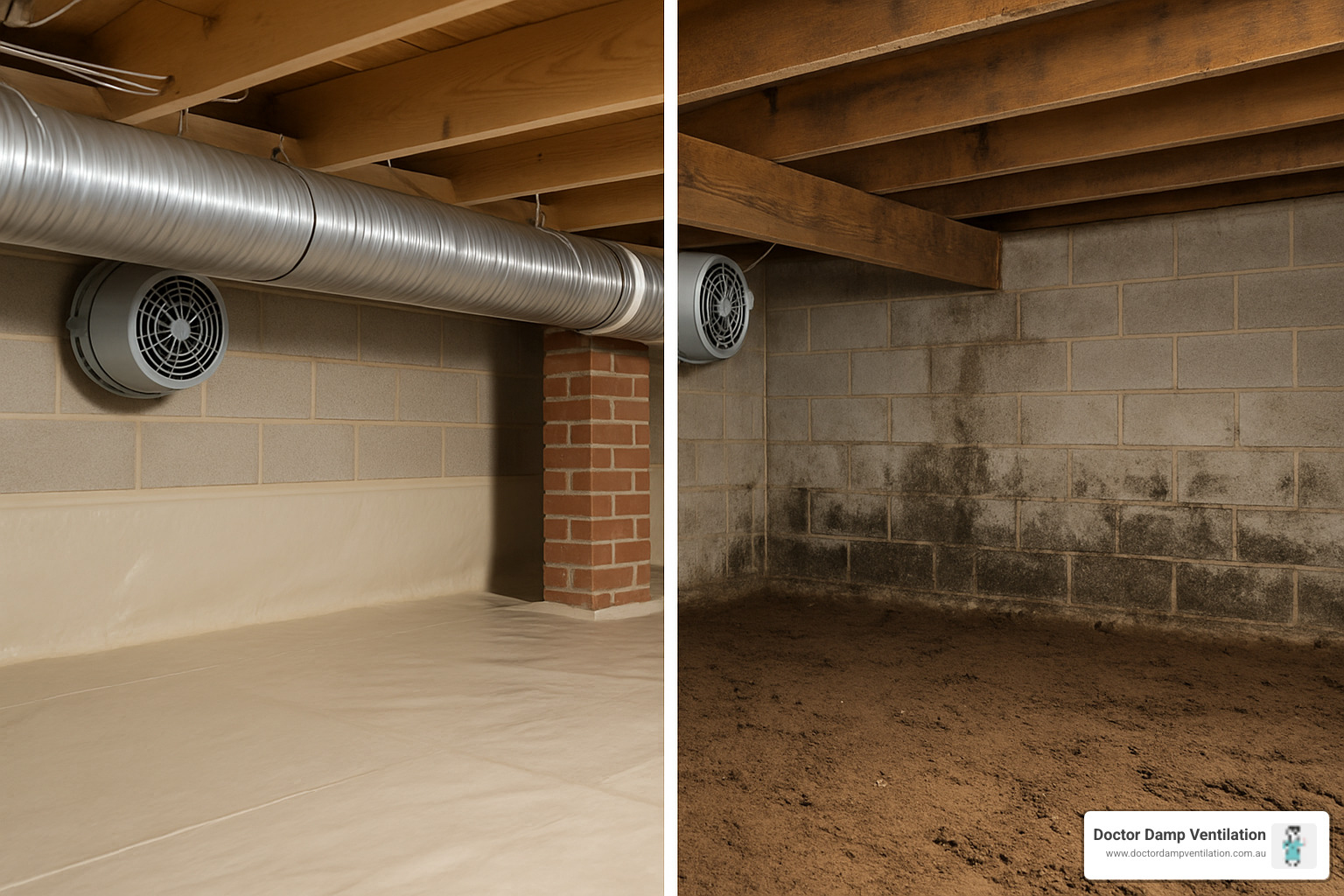
Don’t let moisture problems steal your home’s value or compromise your family’s health. The cost of prevention is always less than the cost of repair. Invest in reliable subfloor ventilation systems today, and you’ll be protecting your most valuable asset for decades to come.
We service all areas across Sydney – from the beaches of Bondi to the western suburbs of Penrith. Wherever you are, we’re ready to help you breathe easier with a properly ventilated home.
