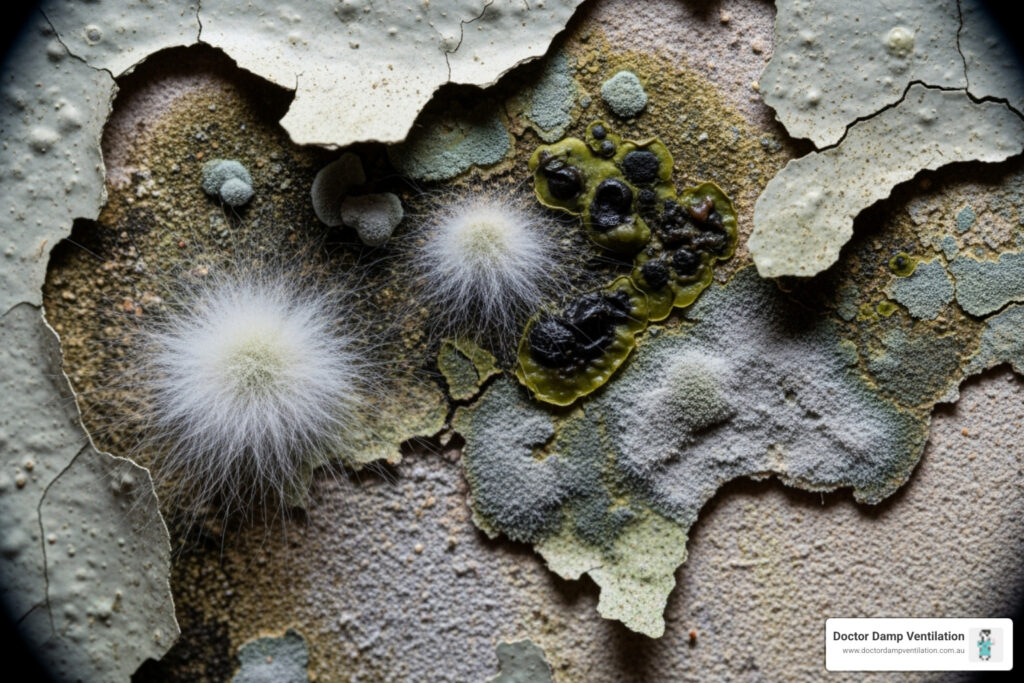
Understanding Mould Fumigation
What is mould fumigation?
Mould fumigation, often called fogging, uses chemical agents in a gaseous or fine mist form to kill mould spores in an enclosed area.
- Purpose: To eliminate visible and airborne mould.
- Method: Volatile chemicals penetrate hard-to-reach areas like wall cavities.
- Claimed Benefit: Kills mould at a molecular level, neutralising spores.
- Industry View: Its effectiveness as a standalone solution is heavily debated by experts, as it typically doesn’t remove dead mould or address the root moisture issue.
Mould is a common and frustrating problem for many homeowners, especially in humid climates like Sydney. It can cause unpleasant smells, damage property, and impact your family’s health. When facing persistent mould, you might come across the term mould fumigation as a potential solution.
As Australia’s leading expert in residential moisture control and building health, I’m Scott Lambert, founder and CEO of Dr. Damp. Over two decades, my work has focused on changing how homes are protected from damp-related damage, including understanding various mould remediation techniques such as mould fumigation.
What is Mould Fumigation and How Does It Claim to Work?
Let’s dive deeper into what mould fumigation actually is. You might hear it called ‘fogging’ sometimes. Essentially, it’s a method where special chemicals, usually an antimicrobial pesticide, are released as a fine mist or gas into an enclosed area. The big idea is to kill mould that’s hiding away in your home, whether it’s in a cozy Sydney terrace in Paddington or a larger property in Parramatta.

The main promise of mould fumigation is its supposed ability to reach those sneaky spots where mould loves to hide. Think of it: those tricky wall cavities, the spaces above ceilings, even tiny little cracks. The idea is that these special chemicals turn into a gas, spreading everywhere. They claim to work at a ‘molecular level,’ getting right into the mould’s structure to break it down and kill it, even neutralising its spores. Sounds pretty thorough, right?
Understanding the Process of Mould Fumigation
So, how does mould fumigation actually happen? If a service offers this, it generally follows a few key steps:
First, there’s usually an initial inspection. While this method is often suggested for really widespread mould issues, a professional would still come out to get a sense of the problem.
Next, they’ll focus on sealing the area. This is super important! To make sure the fumigant does its job and doesn’t escape, they’ll seal off the affected room or even the whole property. Think closing windows, doors, and sealing up vents. It’s like preparing for a very specific, chemical-based ‘fog’.
Then comes the fumigant dispersal. A special fogging machine is used to release that fine mist or gas, spreading the antimicrobial agents all over the place. This mist is designed to settle on surfaces and get into those hard-to-reach nooks and crannies.
After that, it’s all about dwell time. The chemicals need time to work their magic. For mould fumigation to be effective, experts say it needs a ‘dwell time’ of anywhere from 24 to 72 hours. And here’s the crucial part: you, your family, and your pets will need to vacate the property during this entire period. Safety first!
Once the dwell time is up, it’s time for aeration and ventilation. The property needs to be thoroughly aired out. This means opening up all those sealed areas and getting ventilation systems going to clear out the fumigants. It’s a vital step to make your home safe to come back to.
Finally, ideally, a post-treatment assessment would be done. This is meant to check if the mould spores are gone or greatly reduced. However, whether this step truly confirms a long-term solution is where the big discussions in the industry begin.
Common Chemicals and Agents Used
What kind of chemicals are we talking about here? The agents used in mould fumigation usually fall into a category called antimicrobial pesticides.
Simply put, antimicrobials are chemicals designed to stop or destroy tiny living things like mould. The EPA (Environmental Protection Agency) defines them as “chemicals used to suppress or destroy microorganisms.”. It’s important to know these are regulated, and using them incorrectly is a big no-no.
Beyond that, you might encounter various chemical biocides. These are substances specifically made to kill harmful organisms, including fungi. Some common ones you might hear about include:
- Hydrogen Peroxide: A familiar name, often used in different strengths for cleaning and disinfection.
- Botanical Oils: Some products even claim to use natural extracts with antifungal properties.
- Chlorine Dioxide: This is a powerful vapor, sometimes used for very specific fumigation jobs, like protecting delicate textiles, because it can break down microbes without harming other materials.
Now, you might also hear about much stronger fumigants. These are generally less common for home mould issues, but it’s good to be aware. Historically, or in very specific industrial settings, highly toxic chemicals like Methyl Bromide, Hydrogen Cyanide, and Phosphine have been used for pest control. While these are potent, they are also extremely dangerous and demand certified experts to handle them. (For instance, Methyl Bromide is used less now because it harms our ozone layer, and Hydrogen Cyanide is exceptionally dangerous). At Doctor Damp Ventilation, we always put your family’s safety first, focusing on solutions that are effective and non-toxic for your Sydney home.
The Great Debate: Is Mould Fumigation an Effective Solution?
Now, this is where things get a bit tricky, and where we often see quite different opinions about how effective mould fumigation really is. While it might sound like a magic bullet for your mould woes, especially if you’re dealing with it in homes across Sydney, places like Randwick, Newtown, or Blacktown, the full picture is actually much more complex.
At the heart of this debate is a crucial difference: are you killing the mould, or are you removing it? Mould fumigation is designed to kill mould and its spores. But here’s the kicker: just killing mould doesn’t make it disappear, and it doesn’t make it harmless. Imagine a patch of weeds in your garden. If you spray them with weed killer, they die, but they’re still there, right? You still need to pull them out for a clean, healthy garden.
It’s similar with mould. Even dead mould, its tiny spores, and the nasty by-products it leaves behind (called mycotoxins) can still cause problems. They can trigger allergies, make breathing difficult, and lead to other health issues. So, if the mould isn’t physically removed, even after it’s “killed,” those health risks can stick around.
The Argument For Fumigation
We totally get why mould fumigation can seem like a dream come true, especially for homeowners battling widespread mould in areas like Maroubra or Coogee. The ideas often put forward in its favour sound pretty good:
- Quick Solution: It often seems like a fast way to tackle mould without the mess of demolition.
- Kills Airborne Spores: Proponents say it’s great at zapping those invisible mould spores floating through the air, which can be a real pain for anyone with allergies or breathing issues.
- Minimal Disruption: Compared to ripping out walls, fogging seems much less invasive.
- Treats Inaccessible Spaces: Because it’s a gas or fine mist, it’s supposed to reach mould hiding in tricky spots like inside wall cavities or above ceilings.
- Reduces Musty Odours Temporarily: By killing active mould, it can certainly make those unpleasant, earthy smells disappear for a while.
But, as we’ll see, these perceived benefits often hide some serious downsides, especially when you’re looking for a lasting solution for your home.
The Expert Consensus Against Fumigation as a Standalone Method
Despite those appealing claims, the vast majority of experts, including big names like the Institute of Inspection Cleaning and Restoration Certification (IICRC) and the U.S. Environmental Protection Agency (EPA), agree on one thing: mould fumigation is generally not an effective standalone way to deal with a mould problem properly.
Here’s a quick look at why we, at Doctor Damp Ventilation, always recommend a different, more thorough approach:
| Feature | Mould Fumigation (Fogging) | Professional Physical Removal |
|---|---|---|
| Effectiveness | Primarily kills mold; does not remove dead mold, which can still be harmful. May not penetrate deeply enough to eliminate all existing mold. | Physically removes existing mold and spores. Addresses both viable and non-viable mold particles. |
| Safety | Involves hazardous chemicals; requires strict adherence to safety guidelines, including vacating premises for 24-72 hours and thorough ventilation. Can cause health issues (e.g., palsy). | Requires proper PPE and containment to prevent cross-contamination. Generally safer for occupants once remediation is complete, as harmful mold material is removed. |
| Cost | Can appear cheaper upfront but often requires subsequent physical remediation if the problem persists or health issues arise. | Higher upfront cost due to labour, specialized equipment, and material removal/replacement. Provides a more permanent solution, potentially saving money long-term. |
| Long-term Results | Often temporary; mould can return if the underlying moisture problem is not addressed. Does not remove staining or structural damage. | Effective and long-lasting if the moisture source is identified and eliminated. Aims to prevent recurrence by addressing root causes. |
| Biomass Removal | Does not remove the physical presence of mould or its mycotoxins/allergens. | Physically removes the mould biomass, its spores, and associated harmful particles. |
| Regulatory Stance | The IICRC states that vapor-based antimicrobials have not been shown to be effectively and safely used for remediation. Improper use is a federal violation. Health Canada advises against relying on chemical treatments alone. | IICRC and EPA recommend physical removal as the primary method for mould remediation. |
For us, the message is crystal clear: while mould fumigation might kill some mould, it completely misses the point of what truly solves a mould problem. It leaves behind all the dead mould, which is still allergenic and toxic. And critically, it does nothing to fix the moisture issue that caused the mould to grow in the first place. As our friends at Health Canada clearly advise, we just can’t rely on chemical treatments alone for a real fix.
Ignoring the root cause means that the mould will almost certainly come back. This makes any money spent on fumigation a bit of a waste, as you’ll likely need to do proper remediation later anyway. We’ve seen this happen time and again in homes all over Sydney, from the leafy suburbs of Woollahra to the busy areas of Liverpool. A quick fix for mould simply doesn’t cut it. For more detailed information on how we provide comprehensive, lasting solutions to keep your home healthy, check out our Healthy Home services.
The Professional Standard: A Complete Mould Remediation Strategy
At Doctor Damp Ventilation, we firmly believe that effective mould remediation isn’t about quick fixes; it’s about a comprehensive, multi-step approach that aims for a long-term solution. This not only protects your family’s health and comfort but also safeguards your property’s value. We don’t just treat the symptoms; we eradicate the problem at its source, giving you lasting peace of mind. For more information about our proven Mould Removal process, you can find detailed information right here on our website.

Here’s our proven strategy for tackling mould in your home, designed to be thorough and effective:
Step 1: Identify and Eliminate the Moisture Source
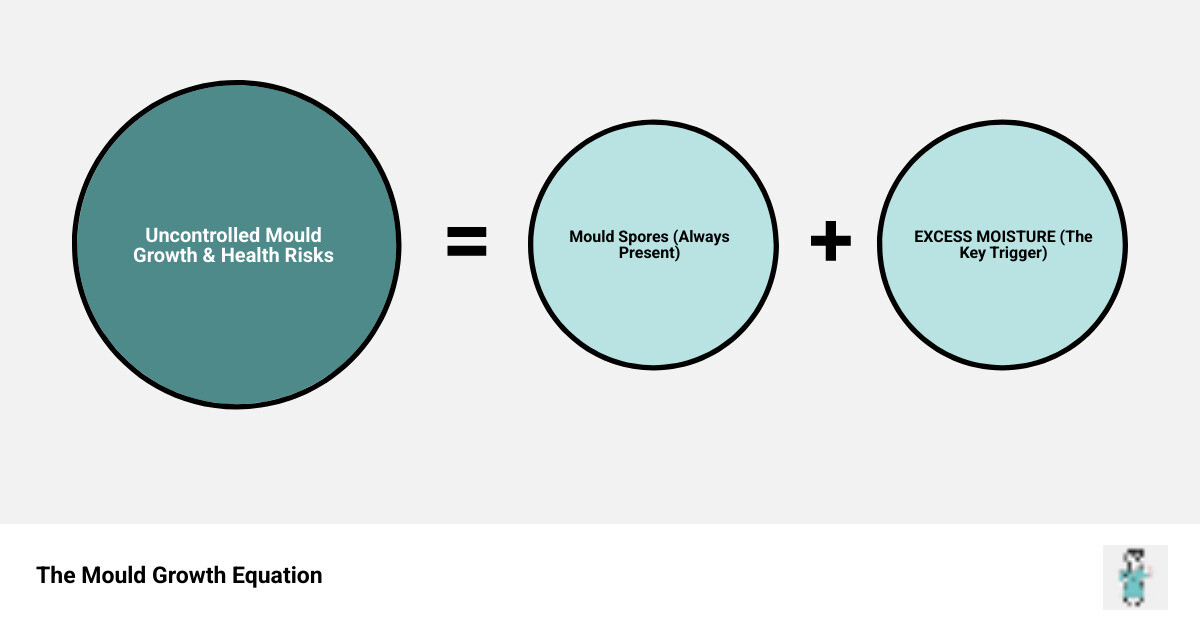
Mould absolutely loves moisture – it’s the lifeblood it needs to grow. In fact, if there’s excessive moisture, mould can start to sprout in just 48 hours! That’s why the very first, and most crucial, step in any effective mould remediation is to find and eliminate where that moisture is coming from. Without fixing this root cause, any mould removal effort will simply be a temporary band-aid, and the problem will inevitably return.
We start by carefully inspecting your property to pinpoint the exact origin of the dampness. This detective work can uncover a range of issues, such as leak detection from leaky faucets, fixtures, or damaged plumbing – a common sight in older homes in areas like Newtown and Paddington. We also look at humidity control, as high indoor humidity, especially in humid climates, is a frequent culprit. Sometimes, it’s about addressing condensation issues where warm, moist air meets cold surfaces.
For homes experiencing moisture rising from the ground, particularly common in older Sydney properties, we offer specialised rising damp solutions. This is often an issue in suburbs like Glebe or Leichhardt. Another big one is poor sub-floor ventilation systems, which are a primary cause of excessive moisture and humidity, creating perfect conditions for mould, especially in homes with crawl spaces in suburbs like Burwood or Strathfield. We also check for roof leaks and ensure your exterior drainage is working correctly, keeping rainwater away from your home’s foundation. By fixing these underlying issues, we effectively cut off the mould’s food supply, preventing future growth.
Step 2: Containment and Physical Removal
Once the moisture source is under control, the next vital step is the safe and thorough physical removal of the mould itself. This is where our approach truly differs from a method like mould fumigation. We don’t just kill the mould; we get rid of it entirely. You see, even dead mould can still cause health problems, so removing it physically is key.
Our process kicks off with isolating affected areas. We use plastic sheeting and negative air pressure to create a contained environment, which stops mould spores from spreading to other parts of your home during the remediation. This is super important to protect your entire property, whether you’re in Chatswood or Cronulla. Our technicians always wear the right personal protective equipment (PPE), like N95 respirators and gloves, to stay safe.
Then comes the hands-on part: physical scraping and cleaning. For non-porous surfaces like tiles, we scrub the mould off using professional-grade, non-toxic cleaning solutions. For semi-porous materials like wood or concrete, we might use sanding or wire brushing. We always spray dry mould with water first to prevent those pesky spores from becoming airborne. And for materials like drywall, ceiling tiles, or carpets that have extensive mould growth, they simply can’t be effectively cleaned. These contaminated materials must be safely removed and disposed of, sealed tightly in heavy-duty plastic bags to prevent any cross-contamination.
Step 3: Detailed Cleaning and Air Purification
After we’ve physically removed the mould, our attention turns to ensuring every last mould particle is gone and the air in your home is clean and healthy.
We start with HEPA vacuuming. We thoroughly vacuum all surfaces – walls, floors, and contents – using High-Efficiency Particulate Air (HEPA) filter vacuums. Unlike standard vacuums that can actually spread mould spores, HEPA vacuums are designed to capture even the tiniest particles. Next, all remaining surfaces get a meticulous surface wiping with appropriate cleaning solutions to remove any lingering mould residue or spores.
To really clean up the air, we employ advanced air purification technology, including air scrubbers with HEPA filters. These work hard to clean the air of any airborne mould spores that might have been disturbed during the remediation process. This step is critical for improving the indoor air quality in your home, from Bondi Beach to Mona Vale. Finally, while Health Canada doesn’t recommend air testing for routine mould situations, we can conduct post-remediation testing to confirm that mould levels have returned to normal, healthy levels, giving you absolute peace of mind.
This comprehensive approach not only eradicates existing mould but also addresses the root cause, providing a lasting solution and truly protecting your home and health for years to come.
Frequently Asked Questions about Mould Remediation
We totally get it – dealing with mould in your home can bring up a lot of questions, and you want the best, safest solution for your family. Here at Doctor Damp Ventilation, we’re here to clear up some of the most common concerns, especially when it comes to mould fumigation versus truly effective, lasting remediation.
What are the health risks of mould fumigation?
While mould fumigation might sound like a simple, quick fix, it’s crucial to understand that it involves using pretty serious chemicals. These aren’t your everyday cleaning products! These chemicals pose some significant health risks, and we’ve unfortunately heard distressing stories. For instance, we once spoke with a prospective client whose spouse developed a palsy after chemical fumigation and simply couldn’t live in their home anymore. That’s a stark reminder of the dangers.
The truth is, the volatile chemicals used in mould fumigation can lead to:
- Chemical Exposure: They can irritate your respiratory system, cause skin irritation, and lead to other uncomfortable reactions.
- Palsy Risk: As that story sadly illustrates, severe exposure to these chemicals can, in rare but serious cases, contribute to neurological issues like palsy.
- Respiratory Issues: Even after the treated area has been aired out, lingering chemical residues can worsen conditions like asthma or other breathing difficulties for sensitive individuals.
- Pet and Child Safety: This is a big one for families across Sydney, from Paddington to Newtown. Mould fumigation is absolutely not safe for your furry friends or little ones. You’ll need to vacate your home for an extended period – often 24 to 72 hours – and follow strict safety guidelines to ensure the fumigants dissipate and the area is thoroughly ventilated before anyone can safely re-enter.
Our approach at Doctor Damp is different. We focus on non-toxic, physical removal methods, meaning you won’t have to worry about these kinds of chemical dangers in your home.
When is fumigation ever appropriate?
In our honest, expert opinion, mould fumigation is very rarely, if ever, the right primary or standalone solution for residential mould problems. It’s truly a last resort, and even then, it comes with a lot of caveats. Its use is extremely limited and should only be considered under very specific, tightly controlled circumstances, and always with extreme caution.
Think of it this way:
- As a Supplementary Step, Not a Primary One: If mould fumigation is used at all, it might be considered as a very specific, additional treatment for widespread airborne spore contamination. But this would only happen after all the physical mould has been thoroughly removed and, most importantly, the moisture source that caused the mould has been completely addressed. It should never replace the essential step of physical mould removal.
- HVAC System Decontamination: In some highly specialised situations, like decontaminating complex commercial HVAC systems that are literally impossible to clean by hand, targeted chemical treatments might be used. But this is a very specific industrial process, not something akin to fogging an entire home in Bondi or Randwick.
- Registered Purpose Only: The EPA (Environmental Protection Agency) is very clear on this: antimicrobial products should only be used for their registered purpose, with proper personal protective equipment (PPE) and under specified conditions. Deviating from the label instructions is actually a violation of federal law.
The IICRC (Institute of Inspection Cleaning and Restoration Certification), a leading authority in our industry, also states that vapor-based antimicrobials haven’t been shown to be effectively and safely used for general mould remediation. We always prioritise methods that physically remove the mould and its harmful components, ensuring a truly healthy environment for your family, whether you’re in Woollahra or Manly.
Why doesn’t just killing mould solve the problem?
This is perhaps the most crucial point to understand why mould fumigation simply falls short of being a real solution. Simply killing mould doesn’t actually eliminate the problem because:
- Dead Mould Properties: Here’s the kicker – dead mould, its spores, and even tiny fragments of it still retain their allergenic and toxigenic (toxic) properties. Think of it like a dead bee: it can’t sting you anymore, but if you’re allergic, simply touching it could still cause a reaction. Even if the mould is no longer alive, these microscopic particles can still trigger allergic reactions, asthma attacks, and other respiratory problems when you breathe them in.
- Allergenic and Toxigenic Components: Mould produces allergens (substances that make you sneeze and itch) and mycotoxins (those nasty, toxic by-products). These harmful components remain present, lurking in your air and on surfaces, even after the mould is “dead.” Fogging might kill the mould, but it doesn’t magically remove these dangerous substances from your indoor environment.
- Inhalation Risks Remain: If dead mould is left behind, its spores and fragments can still become airborne. So, every time you walk by, sit down, or simply breathe, you could be inhaling these persistent health risks.
- Structural Integrity Issues: Mould isn’t just an ugly stain; it’s a living organism that literally eats away at building materials. It causes structural damage by rotting wood surfaces, drywall, and other components of your home. Killing the mould does not repair this damage or magically restore your home’s structural integrity.
- Staining and Odour: Let’s be honest, dead mould still looks bad. It leaves behind unsightly staining and can continue to contribute to that tell-tale musty odour. Physical removal is absolutely necessary to eliminate these persistent issues and ensure your home in Parramatta or Liverpool not only feels healthy but looks and smells fresh too.
Even specialists in other fields, like Museum Textile Services (who deal with delicate items), point out that even after their specific fumigation process, subsequent cleaning is still necessary to remove deactivated fungal growth, soot, and dirt. Why? To reduce allergens and prevent staining or rot. This principle applies even more strongly to your home!
Conclusion
While the allure of a quick fix for mould, such as mould fumigation or fogging, might seem appealing, we hope this guide has shed light on its significant limitations. Merely killing mould does not remove its harmful allergenic and toxigenic properties, nor does it address the underlying moisture issues that cause mould to grow in the first place. This means that, without comprehensive physical removal and moisture control, mould is likely to return, leaving you back at square one.
At Doctor Damp Ventilation, we stand by our expert, non-toxic, and guaranteed mould and damp remediation services. We believe in addressing the root cause, ensuring that your home is not just superficially clean but truly healthy and free from mould for the long term. Our holistic approach, which includes identifying and eliminating moisture sources, meticulous physical removal, and advanced air purification, provides a lasting solution that protects your family’s health and preserves your property’s value.
Whether you’re in Paddington, Newtown, or any of the vibrant communities across Sydney like Double Bay, Vaucluse, or Penrith, we are here to provide the professional standard in mould remediation. Don’t settle for temporary solutions that leave harmful residues behind. Choose a partner committed to your home’s health and your peace of mind.
For a truly comprehensive solution, explore our professional Mould Removal services. We’re ready to help you banish fungus for good and ensure a healthy, safe living environment for your family.