
Table of Contents
- Understanding the Problem: Identifying Damp, Mould and Musty Odours
- Causes of Damp and Mould in Properties
- Diagnosis and Assessment: From Inspection to Action Plan
- How to Get Rid of Musty Smells in a House
- Mould Removal and Remediation: Safe and Effective Methods
- Sub-Floor Ventilation for Damp Control
- Prevention and Long-Term Protection
- Frequently Asked Questions
Last Updated: October 16, 2026
Understanding the Problem: Identifying Damp, Mould and Musty Odours
The elimination of damp, mould, and musty odours starts with understanding what you’re looking at. At Doctor Damp Ventilation, we’ve helped thousands of property owners identify these problems before they become structural threats.
Damp manifests as visible growth, smell, or environmental conditions. Many property owners mistake surface condensation for rising damp, or assume a musty smell means mould when the culprit is stale air and humidity.
Visual signs of mould and mildew
Mould appears as discoloured patches, black, green, or white, on walls, ceilings, and window frames.
Mould penetrates surfaces; mildew sits on the surface. Wiped-away mildew returns quickly if the moisture source is still active, while mould requires more aggressive treatment.
Look for growth in predictable places: corners where walls meet, around bathroom exhaust vents, under sinks, along the base of exterior walls, and in sub-floor spaces.
Recognising musty and damp odours
A musty smell is your nose detecting microbial volatile organic compounds (MVOCs) released by mould and bacteria in damp conditions.
Odour diagnosis is subjective: what smells musty to one person may go unnoticed by another, especially after months of exposure. Visitors often notice it before you do.
Damp odours are earthier and heavier, often accompanied by visible moisture or window condensation.
Causes of Damp and Mould in Properties
Understanding why damp develops is essential to fixing it permanently. Many property owners treat symptoms, wiping mould, opening windows, without addressing the root cause, so the problem returns.
Moisture sources and water ingress
Water enters properties through three primary pathways: rising damp from the ground, penetrating damp from external walls, and condensation from indoor humidity.
Rising damp occurs when groundwater wicks upward through porous materials like brick and concrete, most common in older homes without effective damp-proof membranes.
Penetrating damp comes from rain or groundwater entering through cracks, failed mortar joints, or damaged render.
Leaks from plumbing, gutters, and downpipes are another major source.
Ventilation failures and condensation
Condensation forms when warm, humid air meets a cold surface. Bathrooms, kitchens, and laundries generate significant moisture; if that air can’t escape, it condenses on windows, mirrors, and walls.
Many homes have exhaust fans, but they’re often undersized, poorly ducted, or unused.
Older homes often lack exhaust systems entirely. Windows are the only ventilation, and in winter, people keep them closed to retain heat.
Sub-floor moisture and structural vulnerability
Sub-floor spaces are particularly vulnerable.
Even newer homes with concrete slabs can develop sub-floor moisture if the ground beneath isn’t properly drained or the slab lacks an effective damp-proof membrane.
The structural risk is real: prolonged moisture weakens timber, causes concrete to spall, and creates pathways for termites. By the time visible damage appears, significant deterioration has often already occurred.
Diagnosis and Assessment: From Inspection to Action Plan
A proper diagnosis determines whether you need a simple fix, better ventilation, or a major intervention like sub-floor remediation.
Conducting a property inspection
Start with a visual survey.
Check for obvious water sources: leaking gutters, cracked render, failed mortar, damaged flashing. Look at grading around the foundation, does water drain away or toward the building?
Inspect the sub-floor if accessible: look for standing water, soft or discoloured timber, active mould, or pest activity. A strong musty odour suggests significant moisture accumulation.
Moisture readings and humidity assessment
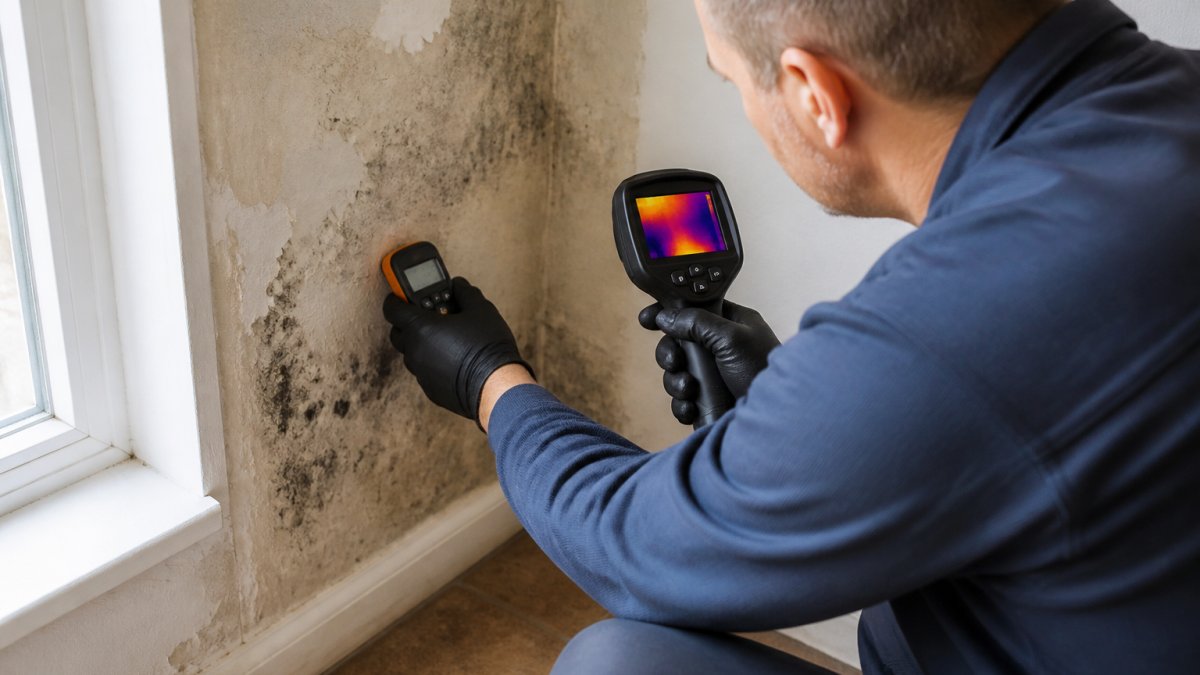
Visual inspection shows where moisture is visible; moisture meters show how much is present.
A hygrometer measures relative humidity. Healthy indoor humidity sits between 40-60%; above 60% condensation becomes likely, and chronic humidity above 60% creates persistent mould risk regardless of visible moisture.
Thermal imaging reveals temperature differentials that indicate moisture. Damp areas feel cooler because evaporation is occurring.
Combining moisture meter, hygrometer, and thermal imaging creates a complete picture.
Distinguishing odour sources and concealed moisture
Many property owners assume a musty smell means visible mould is present.
Identify where the smell is strongest: one room or the whole house? Does it worsen after rain, in humid weather, or when heating is on?
Concealed moisture often announces itself through smell before visible damage.
How to Get Rid of Musty Smells in a House
Eliminating musty odours requires addressing the moisture that’s creating them. Quick fixes, opening windows, running a dehumidifier, might temporarily mask the smell, but they won’t solve it permanently.
Immediate steps: cleaning and airflow
Start with what you can control immediately: improve air circulation and remove surface mould.
For visible surface mould, clean with detergent and water or a commercial mould cleaner, scrub firmly, and dry thoroughly.
Dehumidifiers help in specific rooms by extracting moisture and reducing humidity, but they’re a band-aid solution.
Improve ventilation by keeping windows clear of furniture and curtains, opening windows on opposite sides for cross-flow.
Addressing the underlying moisture source
The permanent fix requires finding and stopping the moisture source.
If water ingress is the problem, fix the source: repair gutters, repoint mortar joints, replace damaged render, fix plumbing leaks.
Sub-floor moisture requires improving drainage and ventilation below the house: sub-floor ventilation systems, better site drainage, or a damp-proof membrane. These are the solutions Doctor Damp Ventilation specialises in.
Mould Removal and Remediation: Safe and Effective Methods
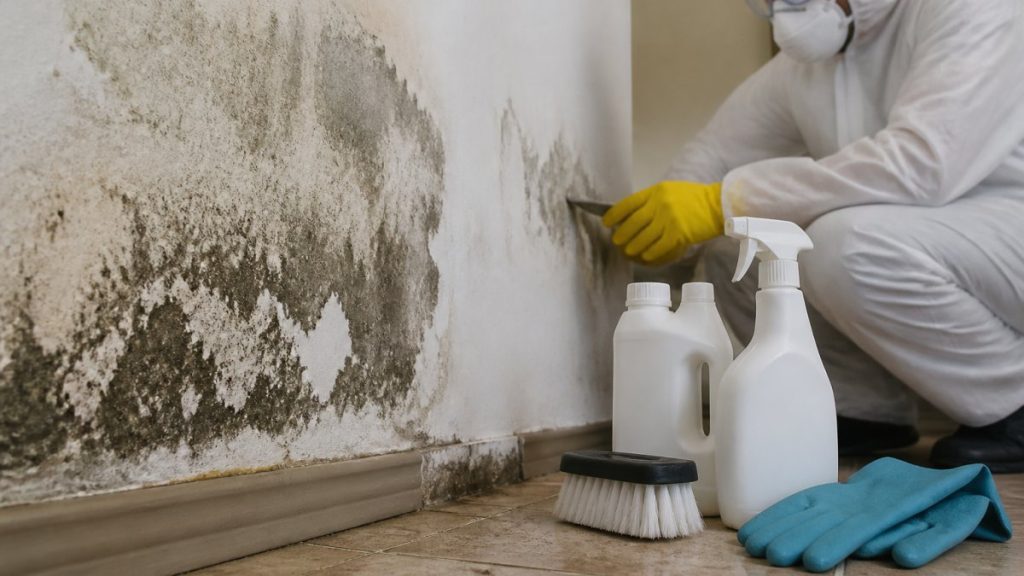
Small areas of surface mould can be cleaned by the property owner. Larger infestations or mould in hidden spaces require professional remediation.
Cleaning affected surfaces safely
For small mould patches on bathroom tiles or window frames, clean with detergent and water or a commercial mould cleaner.
Scrub firmly with a brush or cloth, don’t just wipe, to remove the mould growth and its biofilm.
For porous surfaces like drywall, plaster, or timber, cleaning is less effective: mould penetrates these materials, so surface cleaning removes only visible growth.
Protective equipment and health boundaries
Mould exposure can trigger respiratory symptoms, particularly in people with asthma, allergies, or compromised immune systems. Children and elderly people are more vulnerable.
If cleaning mould yourself, wear a P2 dust mask (a cloth mask won’t filter mould spores) and rubber gloves, and ensure the space is well-ventilated.
Mould remediation in hidden spaces, inside walls, under flooring, or in sub-floor areas, should always be done by professionals.
When to call a professional
Call a professional if:
- Mould covers an area larger than 1 square metre
- The mould is in a hidden space (walls, sub-floor, roof)
- You have respiratory concerns or vulnerable household members
- The mould has returned repeatedly after cleaning
- The underlying moisture source is structural (rising damp, water ingress, sub-floor moisture)
Doctor Damp Ventilation offers non-toxic mould removal and disinfection services, assessing the extent of the problem, identifying the moisture source, and developing a remediation plan addressing both the visible mould and the conditions that created it.
Sub-Floor Ventilation for Damp Control
Sub-floor ventilation is one of the most effective long-term solutions for controlling damp in older homes, addressing moisture at the source rather than treating symptoms.
How sub-floor ventilation works
Sub-floor ventilation systems draw moist air from under the house and expel it outside, replacing it with dry external air.
The result is measurable: sub-floor humidity drops from 80-90% to 50-60%, timber moisture stabilises at safe levels, mould growth stops, and termite activity declines dramatically since termites require high humidity.
Installation and suitability for older homes
Homes with concrete slabs present a different challenge: traditional sub-floor ventilation doesn’t apply, but alternatives exist, improving external drainage, installing a damp-proof membrane, or using internal moisture barriers.
Installation involves assessing the sub-floor layout, determining duct routes and vent locations, and installing with minimal disruption.
Complementary moisture control solutions
Sub-floor ventilation works best as part of a comprehensive moisture control strategy. Combining it with other solutions amplifies the effect.
Improve site drainage so water doesn’t pool near the foundation: install gutters and downpipes directing water away, and ensure grading slopes away from the house.
Insulate the sub-floor to reduce condensation on cold surfaces, particularly effective in winter when the sub-floor is cold and indoor moisture is high.
Prevention and Long-Term Protection
Once you’ve eliminated damp and mould, keeping them gone requires ongoing attention. Prevention is far cheaper than remediation.
Humidity control and seasonal management
Maintain indoor humidity between 40-60%, using hygrometers in key rooms.
Seasonal patterns matter: winter heating with sealed windows creates condensation risk, summer humidity requires active ventilation, and autumn and spring can swing rapidly.
Sub-floor ventilation systems run year-round, continuously managing sub-floor humidity regardless of season, working automatically to prevent the seasonal moisture spikes that create mould.
Documentation for landlords, tenants and property managers
This documentation protects you legally: if a tenant claims a damp problem, you can show the condition at move-in and the actions taken.
Property managers should maintain a maintenance log of all moisture-related work, cleaning, repairs, ventilation servicing, moisture readings, creating accountability and identifying patterns over time.
Post-remediation verification and success criteria
After remediation, verify the problem is actually solved.
Success looks like this: timber moisture below 15%, humidity consistently 40-60%, no visible mould, no musty odours, and no return of the original problem.
Persistent damp, mould, and musty odours indicate moisture control in your property has failed.
Doctor Damp Ventilation specialises in precisely this work. Call us on 1300 557 687 to discuss your moisture concerns and arrange a site assessment.
Frequently Asked Questions
What causes a musty smell in a property?
Musty odours typically stem from mould spores and mildew growth in damp areas. Common sources include poor ventilation, condensation on windows and pipes, water ingress from leaks, and elevated sub-floor moisture. Bathrooms, basements, and crawl spaces are particularly vulnerable. Identifying the moisture source is essential, whether it’s humidity, a roof leak, plumbing issue, or inadequate airflow, before the smell can be permanently eliminated.
How can you tell whether a musty smell is caused by mould?
A true musty odour almost always indicates mould or mildew presence. Mould produces volatile organic compounds (VOCs) that create that distinctive earthy smell. You may see visible mould stains on surfaces, or the mould may be hidden in wall cavities, sub-floor spaces, or behind furniture. If the smell persists despite cleaning and airing, professional air sampling or surface testing can confirm mould presence and guide remediation.
Can mould return after it has been removed?
Yes, mould can return if the underlying moisture source remains unaddressed. Cleaning the visible growth without controlling humidity, ventilation, or water ingress is temporary. Permanent prevention requires fixing leaks, improving airflow, reducing relative humidity, and installing moisture control systems like sub-floor ventilation. Post-remediation verification through humidity monitoring and periodic inspections helps ensure long-term success and catches early signs of recurrence.
When should you call a damp or mould specialist?
Call a specialist if damp or mould persists after basic cleaning and ventilation improvements, if you suspect hidden moisture in walls or sub-floors, if the affected area is large, or if health symptoms worsen. Specialists use moisture meters, thermal imaging, and air sampling to diagnose concealed problems. For older homes with concrete stumps or weatherboard construction, professional assessment ensures the right solution, such as sub-floor ventilation, is installed correctly.
How does sub-floor ventilation help control damp?
Sub-floor ventilation systems circulate air beneath the house, reducing moisture accumulation and preventing condensation. By maintaining lower sub-floor humidity and improving airflow, these systems protect timber stumps and joists from rot and termite damage. They work by drawing moisture-laden air out and replacing it with drier air, creating an environment where mould cannot thrive. Effectiveness depends on proper installation and adequate ventilation pathways.
How long does mould remediation usually take?
The timeline depends on the scope. Small surface cleaning may take a few hours, while comprehensive remediation involving moisture source repair and ventilation installation can take several days to weeks. Installation of sub-floor ventilation systems typically requires 1-3 days on-site. Post-remediation drying and verification add additional time. A professional assessment during the initial inspection provides a realistic project timeline and minimises disruption to your household.
What’s the actual cost of eliminating damp and mould in a property?
Cost varies significantly based on the cause, extent of damage, and solution required. Small surface cleaning differs vastly from sub-floor ventilation installation or structural repairs. Rather than estimate, contact a specialist for a site visit and formal quote. Pricing depends on your property’s age, foundation type, moisture severity, and the remediation method needed.
