
Last Updated: November 10, 2026
Quick Summary
Yes, Australian landlords must keep rentals reasonably ventilated, but ventilation hygiene regulations are set by each state and territory rather than one national code. The duty usually sits within the wider obligation to provide a safe, habitable property kept in reasonable repair. Check the current tenancy legislation for your location.
- Every bedroom and living area should have an opening that can be used for airflow.
- Bathroom, kitchen and laundry exhaust fans should vent outside, not into the roof or subfloor.
- Clean fan grilles every three to six months and run the fan afterwards to confirm airflow.
- Keep a ventilation log with dates, photos and invoices to show due diligence.
- Call a specialist if mould returns within weeks of cleaning or the cause is unclear.
Table of Contents
- Why Ventilation Hygiene Matters in Rental Properties
- Rental Property Minimum Standards for Ventilation
- Landlord Ventilation Responsibilities Under State and Territory Rules
- Rental Property Mould and Damp: What Landlords Must Address
- Inspection, Cleaning and Maintenance Checklist for Ventilation Hygiene
- Tenant Mould Reporting and Repair Process
- Booking a Ventilation Assessment for Your Rental Property
- Frequently Asked Questions
Why Ventilation Hygiene Matters in Rental Properties
Ventilation hygiene regulations for landlords are the rules that decide whether a rental home has enough fresh air and clean air.
Ventilation matters because stale, damp air causes problems that build slowly. Moisture collects on walls and ceilings, then turns into mould.
- Mould can trigger asthma and allergies in children and adults
- Damp can cause structural timber rot under the floor
- Condensation can damage paint, plaster and furniture
- Poor airflow makes every other maintenance problem harder to fix
This is where the rules come in. A landlord has a duty to keep a rental safe and fit to live in.
Rental Property Minimum Standards for Ventilation
Each Australian state and territory sets its own minimum standards for rental homes. The exact wording differs between jurisdictions, so always check the rules that apply where your property sits.
A common approach is to treat ventilation as part of the wider duty to provide a property that is safe, clean and fit to live in. That means every habitable room should have some way to let fresh air in and stale air out.
Natural Ventilation Through Windows and Openings
Natural ventilation uses windows, vents and other openings to move air. It is the simplest form of ventilation and often the first thing to check during an inspection.
Look for these points:
- Every bedroom and living area has an opening that can be used for airflow
- Windows open and close properly and are not painted shut
- Vents and air bricks are not blocked by furniture, soil or debris
- Subfloor vents are clear and not covered by landscaping
Many tenants open windows less than they should, especially in winter. Mould often starts in corners and behind furniture where air does not move. Good natural ventilation helps, but it works best when the building is designed for it.
Mechanical Exhaust Fans in Bathrooms, Kitchens and Laundries
Bathrooms, kitchens and laundries create the most moisture. Showers, cooking and drying clothes all release water vapour into the air. An exhaust fan removes that moisture before it settles on surfaces.
Check that exhaust fans:
- Turn on and run quietly without rattling
- Vent outside the building, not into the roof space or subfloor
- Are cleaned regularly, because dust and grease reduce airflow
- Have working switches and, where fitted, timers or humidity controls
A fan that vents into the roof cavity is a common mistake. It moves the damp problem out of sight rather than solving it.
Landlord Ventilation Responsibilities Under State and Territory Rules
There is no single national ventilation code for rentals.
| Jurisdiction | Main residential tenancy legislation | Regulator or authority | Ventilation-relevant hook |
|---|---|---|---|
| ACT | Residential Tenancies Act 1997 (ACT) | ACT Revenue Office, Rental Bonds | Minimum housing standards and a general obligation to maintain the premises in a reasonable state of repair |
| NSW | Residential Tenancies Act 2010 (NSW) | NSW Fair Trading | Property must be fit for habitation and kept in a reasonable state of repair; recent minimum-standards reforms add specific requirements |
| NT | Residential Tenancies Act 1999 (NT) | NT Consumer Affairs | Premises must be fit for habitation and maintained |
| QLD | Residential Tenancies and Rooming Accommodation Act 2008 (QLD) | Residential Tenancies Authority (RTA) | Minimum housing standards including weatherproofing, safety and repair obligations |
| SA | Residential Tenancies Act 1995 (SA) | Consumer and Business Services (CBS) | Premises must be reasonably fit for habitation and kept in repair |
| TAS | Residential Tenancy Act 1997 (TAS) | Consumer, Building and Occupational Services (CBOS) | Minimum standards for rental premises and repair obligations |
| VIC | Residential Tenancies Act 1997 (VIC) | Consumer Affairs Victoria (CAV) | Rental minimum standards, including ventilation and mould-related provisions |
| WA | Residential Tenancies Act 1987 (WA) | Consumer Protection WA | Premises must be in a reasonable state of repair and fit for habitation |
The wording of the duty differs between jurisdictions, so a clause that satisfies one regulator may not satisfy another.
Landlords should not assume a working exhaust fan is enough.
Watch out: do not rely on a summary like this instead of the current legislation, as minimum standards can change over time.
For official sources, start with the regulator listed for your jurisdiction and read the current Act and any prescribed minimum-standards regulations. Residential Tenancies Authority, minimum housing standards and Consumer Affairs Victoria, rental minimum standards are useful examples of the plain-English guidance regulators publish.
Rental Property Mould and Damp: What Landlords Must Address
Mould and damp are the most common ventilation problems in rentals.
Damp is moisture that enters or stays in the building fabric.
Condensation forms when warm, moist air meets a cold surface such as a window or external wall.
Mould grows where moisture stays too long.
A landlord should address:
- Any leak or water entry that causes damp
- Failed or blocked exhaust fans and vents
- Subfloor moisture that rises into the living space
- Mould that returns after cleaning, which points to a building cause
When mould keeps coming back, the likely cause is a building or ventilation problem.
If you want a clear diagnosis, book a ventilation assessment before deciding on repairs.
Inspection, Cleaning and Maintenance Checklist for Ventilation Hygiene
The procedure below is designed to be worked through at the start of each tenancy, at each routine inspection and after any reported damp or mould issue.
Room-by-room inspection
Bathroom, shower and toilet
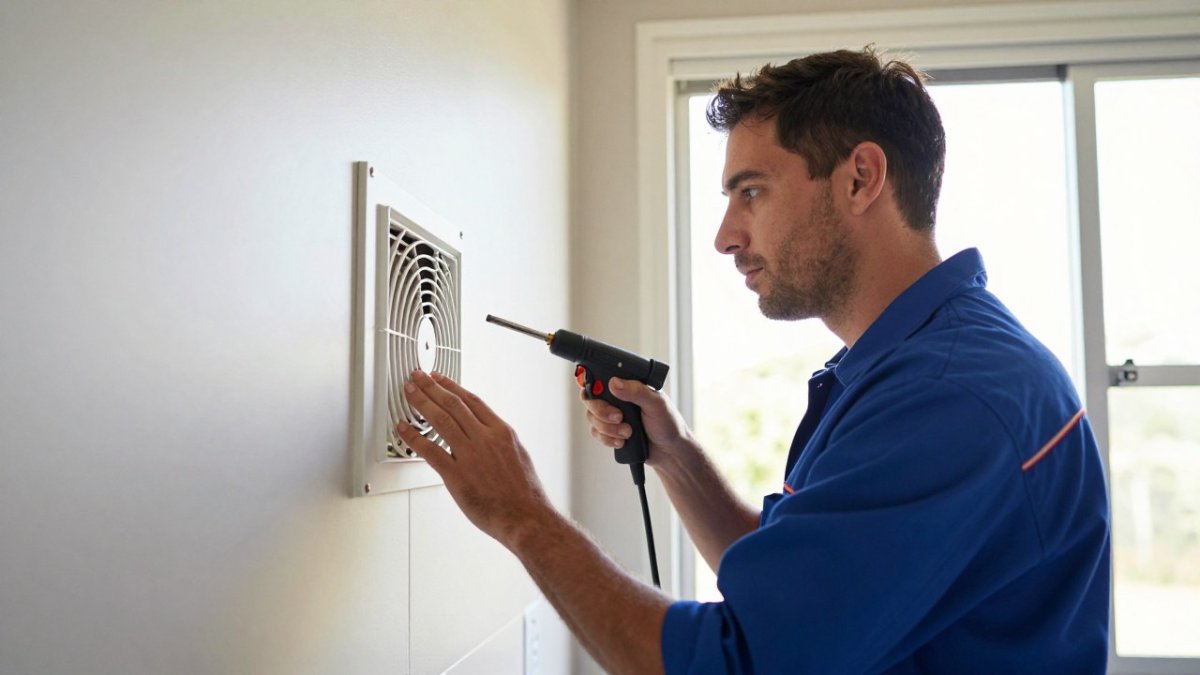
- Run the exhaust fan for at least five minutes and confirm airflow at the grille with a tissue or smoke pencil
- Confirm the fan discharges to outside air, not into the roof space, subfloor or wall cavity
- Check the fan grille and cover for dust, lint and grease build-up
- Look for condensation on windows, mirrors and ceilings after a shower
Kitchen
- Run the rangehood on each speed and confirm extraction
- Check whether the rangehood recirculates or ducts outside, recirculating units filter grease but do not remove moisture
- Clean or replace grease filters
- Look for grease film on walls and ceilings, which signals poor extraction
Laundry
- Confirm the dryer is vented outside if it is a vented model
- Check the exhaust fan or window opening
- Look for condensation on cold surfaces and musty odour
Bedrooms and living areas
- Open and close every window and confirm latches work
- Check air bricks, wall vents and ceiling vents for blockage by furniture, curtains or insulation
- Look for mould in corners, behind furniture and on external walls
- Check ceilings for water stains and peeling paint
Subfloor and roof space
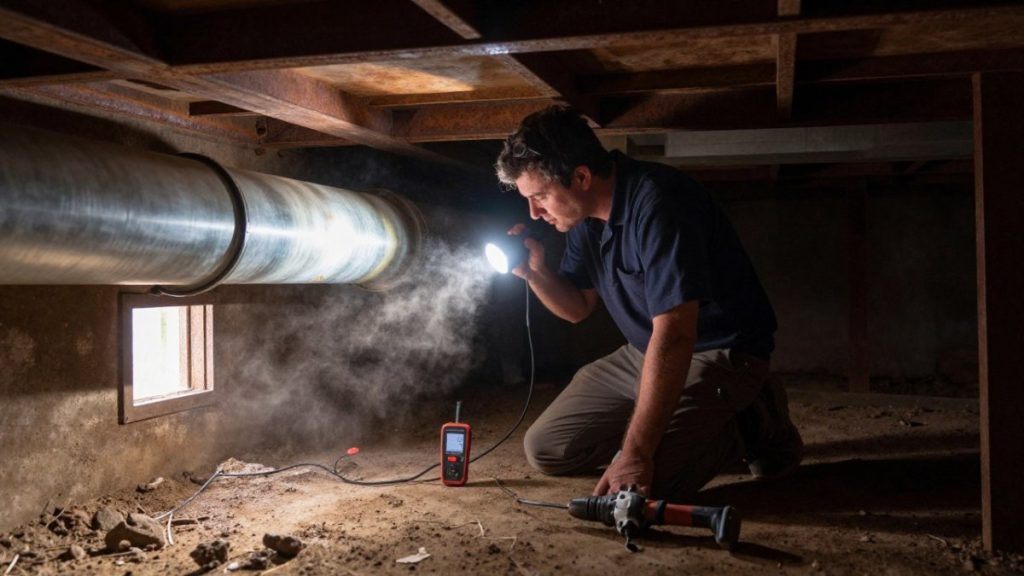
- Confirm subfloor vents are clear of soil, landscaping and stored items
- Check for standing water, damp soil and musty odour under the floor
- Confirm roof-space ventilation is not blocked by insulation
Cleaning procedure and frequency
Dust and grease reduce fan airflow and hold moisture against surfaces. A practical schedule is:
- Wipe fan grilles and vent covers every three to six months with a damp cloth and mild detergent, then dry fully
- Clean or replace rangehood grease filters every one to three months depending on cooking
- Vacuum accessible duct openings and grilles annually
- Wash window and door tracks and weep holes so condensation can drain
- Remove mould from hard surfaces with a suitable proprietary cleaner, then dry the area and address the moisture source
Watch out: cleaning a fan grille without checking that the fan still extracts can hide a failed motor. Always run the fan after cleaning and confirm airflow.
Documentation and evidence of compliance
Keep a simple ventilation log for each property. Record the date, who inspected, what was checked, what was found, what was cleaned or repaired, and the date the work was completed. Photograph grilles, fans and any mould before and after cleaning, with dates. Retain contractor invoices and any specialist reports. This record is what demonstrates due diligence if a tenant raises a dispute or a tribunal asks what the landlord knew and when.
When to escalate to a qualified ventilation or mould professional
Call a specialist if any of the following apply:
- Mould returns within weeks of cleaning, or covers an area larger than roughly a square metre
- The exhaust fan runs but airflow is weak after cleaning, or the motor is noisy or failed
- Ductwork is inaccessible, damaged or suspected of contamination
- Subfloor moisture persists despite clear vents
- A tenant reports respiratory symptoms linked to the property
A specialist can measure moisture, inspect ductwork and subfloor conditions, and distinguish a building defect from occupant behaviour. That distinction matters because it determines who is responsible for the remedy. Standards Australia, AS 1668 ventilation standards sets out the technical framework many practitioners reference for mechanical ventilation design, though rental minimum standards are set by tenancy law rather than by the standard itself.
Tenant Mould Reporting and Repair Process
Tenants have a role to play. They should report mould, leaks and faulty fans as soon as they notice them.
A clear process helps both sides:
- The tenant reports the problem in writing, with photos if possible
- The landlord acknowledges the report and arranges an inspection
- A qualified tradesperson or specialist identifies the cause
- The landlord carries out repairs within a reasonable time
- Both parties record the work and confirm it has been fixed
Tenants are generally expected to keep rooms aired and clean. Landlords should not blame tenants for mould caused by a building fault.
If a tenant reports mould that keeps returning, arrange a professional assessment before deciding who pays. The answer often shows that the building needs ventilation work.
Booking a Ventilation Assessment for Your Rental Property
When the cause of damp or mould is unclear, a professional assessment saves time and money.
At Doctor Damp Ventilation, we help landlords understand the cause before they commit to repairs. You can contact us to request an assessment, or learn about our subfloor ventilation services to see how we design and install systems for older homes.
Pricing depends on the size of the property, the extent of the problem and the work needed, so a quote is given after inspection.
What the landlord does next matters. Fix the cause, record the work and keep tenants informed. That protects your property, your tenants and your legal position.
Frequently Asked Questions
Are landlords required to provide ventilation in rental properties?
Yes. Australian residential tenancy rules require a rental property to be kept in reasonable repair, and ventilation is part of that obligation. The exact requirements are set by each state and territory. Landlords should check the residential tenancy legislation in the state or territory where the property is located, since the obligations and enforcement processes differ between jurisdictions.
Are landlords responsible for mould caused by poor ventilation?
In most cases, yes, if the mould results from a building defect, inadequate ventilation or a failure to repair. Mould linked to a lack of airflow, leaking roofs, rising damp or faulty exhaust fans is usually treated as a maintenance issue the landlord must fix. Mould caused mainly by a tenant’s behaviour, such as not airing a room or drying washing indoors, may be treated differently. Landlords should inspect the property, identify the cause and document the findings before deciding who is responsible.
What should a landlord do if a tenant reports condensation or mould?
Respond promptly, acknowledge the report in writing and arrange an inspection. Record the location, photographs and any moisture readings, and check for ventilation faults, leaks or drainage problems. If the cause is a building defect, arrange repairs within the timeframe set by your state or territory tenancy rules. Keep a written record of every step, including the tenant’s report, your response and the work completed, as this protects both parties.
How often should rental property ventilation systems be maintained?
Exhaust fans, range hoods and ducted systems should be checked at least once a year and cleaned when dust or grease builds up. Make sure grilles and vents are not blocked, and test that fans actually extract air. Schedule inspections between tenancies where possible, and note any faults in your property condition report. Regular checks catch problems early and help you show that the property was kept in good repair.

