
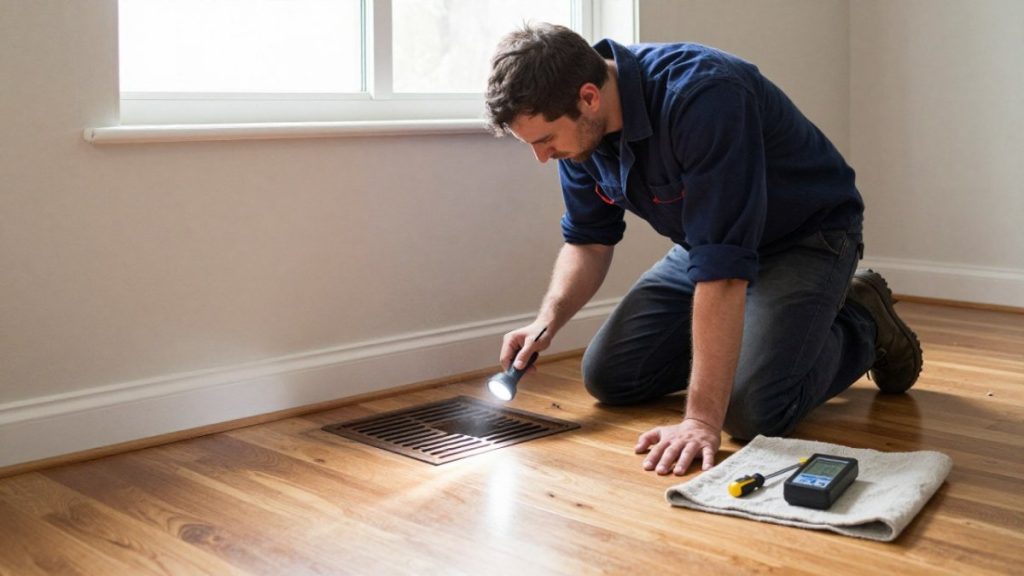
Quick Summary
The main downsides of floor vents are blocked airflow from furniture and rugs, and debris, dust or moisture falling through the open grille. Because the register sits at floor level, it is easy to cover or dirty. Choosing a vent type and placement that suits how the room is used helps reduce these problems.
- Furniture, rugs and curtains covering a register cut airflow to the rooms further along the duct.
- Dust, crumbs and small objects fall through the grille and can end up in the duct or fan.
- Keep furniture and rugs at least a hand-width clear of the grille so air can spread.
- Vacuum around and inside the register at least monthly, more often in busy rooms.
- Wipe up spills promptly and check the duct area if dampness or a musty smell persists.
Table of Contents
- What Floor Vents Are and How They Work in Australian Homes
- Floor Vents Compared With Ceiling and Baseboard Vents
- Airflow Restriction, Furniture and Rugs Blocking Vents
- Dust, Debris and Pests Entering Through Floor Vents
- Subfloor Ventilation Problems Caused by Passive Vents
- Passive Subfloor Ventilation Versus Fans: Which Suits Your Home
- How to Improve Underfloor Ventilation and Plan Your Next Step
- Frequently Asked Questions
What Floor Vents Are and How They Work in Australian Homes
Floor vents, also called floor registers, are openings set into the floor that let heated or cooled air move between a ducted system and the rooms above it. In many Australian homes they sit in lounge rooms, hallways and bedrooms, and they are often the most visible part of a ducted heating or cooling setup. Most of the downsides people notice come from how these vents interact with furniture, dust and the space underneath the floor.
A floor vent is simply the outlet end of a ducted air system. Air travels through ductwork hidden in the ceiling or sub-floor, then exits through the register. Because the register sits at floor level, it can be blocked, dirtied or knocked out of position far more easily than a ceiling outlet.
Here is what a typical floor vent is made of and does:
- A grille or cover: usually plastic or metal, with slats that direct airflow.
- A duct connection: links the vent to the main ductwork below.
- A damper or louvre: some vents let you open or close the airflow manually.
- An opening into the floor cavity: this is where dust, crumbs and small objects can fall through.
Many people wonder whether heat rises, which would make floor vents less useful for heating. Floor vents can still help warm air circulate, but the placement and the rest of the room layout matter. For a deeper look at how vent placement affects comfort, see Your Home’s guide to heating and cooling distribution.
Floor Vents Compared With Ceiling and Baseboard Vents
Floor vents are not the only option. Ceiling and baseboard (wall-mounted, near the skirting) vents are also common, and each one has different trade-offs.
Floor vents tend to be easier to reach and clean, but they collect more debris. Ceiling vents keep dust and dropped items out of the outlet, yet they are harder to reach for cleaning. Baseboard vents sit where the wall meets the floor and can work well in rooms with little furniture against the walls.
| Vent type | Main advantage | Main downside |
|---|---|---|
| Floor vent | Easy to access | Collects dust and small objects |
| Ceiling vent | Keeps debris out | Harder to clean |
| Baseboard vent | Works well along walls | Blocked by furniture placed against walls |
A common mistake is choosing the vent type based only on the look of the room. Check how the room is actually used before deciding. A busy family lounge with a child’s play mat may suit ceiling vents better than a floor register that the child can push things into.
Airflow Restriction, Furniture and Rugs Blocking Vents
The single most common complaint about floor vents is blocked airflow. A sofa pushed over a register, a thick rug laid across it, or a bookcase standing on top can cut the volume of conditioned air entering the room. Because the register sits at floor level, it is far easier to cover accidentally than a ceiling outlet.
When a register is covered, the system does not simply stop pushing air. The pressure in that branch of ductwork rises, so less air reaches the rooms further along the run.
Watch out: a heavy rug or a cushion pressed over a register can trap warm air at the grille and make the cover uncomfortably hot to touch, and on some systems the restricted branch can cause whistling or rattling at other outlets.
How much clearance a register needs depends on the cover design, but most practitioners suggest keeping furniture legs and rugs at least a hand-width clear of the grille so air can spread across the floor rather than being deflected straight back down.
Room layout matters as much as furniture choice. A register placed in the middle of a traffic path will be walked over and often covered by a mat; one tucked under a window may be blocked by curtains that fall to the floor.
Common causes of airflow restriction include:
- Furniture placed directly over or against the vent
- Thick rugs, mats or runners covering the grille
- Curtains or drapes falling over the register
- Bins, boxes or stored items placed nearby
- Pet beds and play mats left in place for long periods
If a register must sit under furniture, a deflector or a low-profile cover that spreads air sideways can help, and some registers can be swapped for a design that directs air along the floor rather than straight up. Where layout makes a floor register impractical, a wall or ceiling outlet on the same branch is often the simpler fix.
Dust, Debris and Pests Entering Through Floor Vents
Because a floor register is an open grille at the lowest point in the room, it acts as a collector. When debris or restricted airflow leaves a room unevenly heated, testing airflow and duct leaks can help distinguish a blocked register from warm air escaping along the duct run.
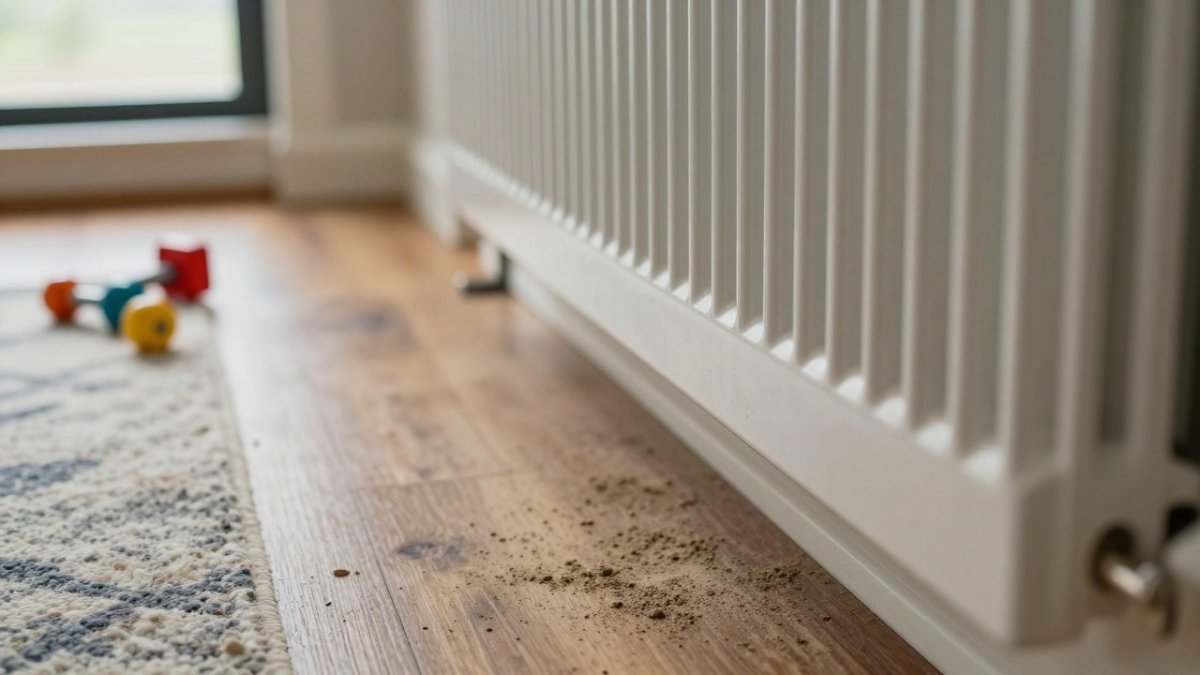
The mechanism is simple: every time the system runs, air is drawn from the room and pushed back through the register, so loose particles near the grille are repeatedly stirred and partly drawn into the duct.
Moisture is the part most guides skip. A spilled drink, a wet mop, or a pot plant that drains onto the floor can send liquid through the grille into the duct or the sub-floor cavity.
Pests are a related concern. An open or poorly fitted register can give insects and rodents a route into the ducts or the sub-floor space, and a cover that is cracked, warped or missing sections makes that easier. Check that the cover sits flush, that the screws or clips hold it down, and that there are no gaps around the edge of the opening.
Safety and accessibility also deserve a mention. A floor register is a trip point for anyone walking barefoot or in socks, and a metal cover in full sun or above a heating run can become hot enough to startle a child or a pet.
Simple habits reduce the problem:
- Vacuum around and inside the register at least monthly, and more often in busy rooms
- Keep rugs and furniture away from the grille
- Use a fitted cover or screen where the register allows it
- Check for gaps, cracks or damage around the edges of the vent
- Wipe up spills promptly and check the duct area if dampness persists
- Lift the cover occasionally to remove trapped debris rather than only vacuuming the surface
If a musty smell or persistent dampness appears near a register, a building or pest professional can assess whether the duct or sub-floor is the source. Relevant guidance on moisture and building health is available from Australian Building Codes Board guidance on sub-floor moisture.
Subfloor Ventilation Problems Caused by Passive Vents
Floor vents in older Australian homes are sometimes confused with subfloor ventilation, but they serve different purposes. Subfloor ventilation moves air through the space beneath a suspended timber floor to reduce moisture. Passive subfloor vents are the openings in the perimeter walls that rely on natural air movement, not a fan. If you are unsure whether your property needs this, read Does your older home need subfloor ventilation?
Passive vents can cause problems when they are blocked by soil, garden beds, debris or stored items. In humid climates or on sites with poor drainage, a passive system may not move enough air to keep the sub-floor dry. This can lead to dampness, musty odours and timber decay over time.
Qualified guidance is useful here: if you notice persistent dampness, a musty smell or soft timber near the floor, a building or pest professional can assess whether the sub-floor is ventilating properly. Relevant guidance on moisture and building health is available from Australian Building Codes Board guidance on sub-floor moisture.
Passive Subfloor Ventilation Versus Fans: Which Suits Your Home
Passive vents rely on natural airflow and cost less to install, but they depend on wind, temperature differences and clear openings. Subfloor fans add active airflow, which can help in still or damp sites, but they need power and regular checks.
The right choice depends on the property:
- Passive vents may suit well-drained sites with clear perimeter openings and good natural breezes.
- Subfloor fans may suit damp, still or heavily shaded sites where passive vents cannot keep up.
- A combination is sometimes used, with passive vents and a fan managed by a moisture sensor.
Many homeowners find that the right answer is not obvious from the outside. Get the sub-floor checked before committing to a system, and ask for a clear explanation of why the recommended option suits your site. For a practical comparison, you can read our guide on Subfloor Ventilation Fan vs Passive Vents: Which Works? and whether subfloor ventilation systems are worth it.
How to Improve Underfloor Ventilation and Plan Your Next Step
Improving underfloor ventilation usually starts with a simple check. Clear any blocked perimeter vents, move garden beds or soil away from the building, and make sure stored items are not sitting under the house.
If the problem continues, a professional assessment helps you find the cause rather than guessing. At Doctor Damp Ventilation, we design and install sub-floor ventilation solutions and can assess whether passive vents, a fan or a combination suits your home. Our team can also advise on subfloor insulation and ducted exhaust systems where they are relevant. Call us on 1300 557 687 to talk through what your home needs before you commit to any work.
Doctor Damp Ventilation is a fully licensed sub-floor ventilation specialist, so you can ask for a clear explanation of the diagnosis before committing to any work. Talk to our subfloor ventilation experts about a site visit. Get started with a site visit and find out whether your floor vents or sub-floor system are the real source of the problem.
Frequently Asked Questions
What are the disadvantages of floor vents?
Floor vents can be blocked by furniture and rugs, which reduces airflow to the room. They collect dust, hair and dropped objects, so they need regular cleaning. Because heat rises, floor outlets can make a room feel cooler in winter. In older homes, vents can also let debris or pests into the ducting. Most of these downsides depend on vent placement and room layout, so a quick check of where the vents sit and what sits over them is a practical first step.
Can passive subfloor vents make damp worse?
They can, if the subfloor is already damp and the vents are placed poorly or the site has little airflow. Passive vents rely on natural wind and temperature differences, so on still, humid days they may move very little air. Clearing vents of debris, checking that the ground is covered and confirming the vent count against the floor area usually helps. If damp persists, a professional assessment can identify whether a fan or additional ventilation is needed.
Are subfloor ventilation fans better than passive vents?
Fans move more air than passive vents, which can help where the subfloor stays humid or still. They do use electricity and need occasional servicing. Passive vents cost less to run and have no moving parts, but their performance varies with weather. Many homes suit passive vents when the underfloor space is dry and well sealed. The right choice depends on the subfloor condition, so an inspection before buying is sensible.
How can I improve underfloor ventilation at home?
Start by clearing vents and keeping them free of soil, leaves and rubbish. Make sure the ground is covered with a vapour barrier where appropriate, and check that vents are not blocked by landscaping or garden beds. Adding or repositioning vents can improve cross-flow, though this should be planned carefully. Doctor Damp Ventilation can assess your subfloor and advise on options. Contact the team on 1300 557 687 or check the website for a quote, as pricing depends on the site and the work required.

