
Quick Summary
To reduce subfloor humidity, first find the moisture source, since ground moisture, plumbing leaks, rainwater and condensation each need different fixes. Then improve airflow by clearing blocked vents, and for ground evaporation add a moisture barrier over the soil. Measuring air and timber moisture before and after the work shows whether the fix is working.
- Test for a plumbing leak first by checking whether the water meter moves with all taps off.
- Ground evaporation causes the most even, widespread humidity and is strongest away from the vents.
- Sealing subfloor vents usually traps moisture, because airflow is what carries it out.
- Place a hygrometer about 300 to 500 millimetres above the soil and log readings for at least 48 hours.
- A ground moisture barrier stops vapour rising from soil but does not remove moisture already in the timber.
Table of Contents
- Why Subfloor Humidity Builds Up and Where It Comes From
- Diagnosing the Moisture Source Before You Spend Money
- How to Measure Subfloor Humidity Accurately
- Subfloor Ventilation Fan vs Passive Vents: Which Fits Your House
- Ground Moisture Barrier Under House: Installation and Trade-offs
- Damp Subfloor Solutions Compared by Cost and Climate
- Booking a Subfloor Assessment and Verifying the Results
- Frequently Asked Questions
Why Subfloor Humidity Builds Up and Where It Comes From
Subfloor humidity is the moisture held in the air beneath your floor, in the gap between the ground and the timber or particleboard above. When that air stays damp, it can soak into joists and bearers, feed mould, and make the whole house feel musty.
Most subfloor humidity has two main sources. The ground beneath the house holds water, and the air under the house does not always move enough to carry that water away. When both are present, the damp air has nowhere to go.
Ground moisture rising into the subfloor
Soil under a house is rarely dry. Rain, irrigation, and seasonal groundwater all add moisture to the earth, and that moisture evaporates upward into the space under the floor. An exposed dirt floor, a crawl space with little cover, or a sloping block that drains toward the house can make this worse.
A common mistake is assuming that a dry-looking surface means a dry subfloor. Wet soil can sit just a few centimetres below the surface, and the vapour can rise quietly for months.
Blocked vents and stale air
Subfloor vents are meant to let fresh air circulate. When they are blocked by soil, garden beds, leaf litter, or furniture placed against the wall, the air stops moving. Stale, humid air then settles and stays put.
Watch out: sealing vents to keep out pests or cold drafts often makes the humidity problem worse. Airflow is what carries moisture out, so a sealed subfloor usually traps it.
Diagnosing the Moisture Source Before You Spend Money
Several sources can cause subfloor humidity, and they look similar from above. Ground evaporation, plumbing leaks, rainwater intrusion, and condensation each produce damp timber and a musty smell, but each calls for a different remedy. Fitting a fan to a house with a leaking pipe, or laying a membrane under a house with a gutter discharging at the footing, can waste money and leave the damp in place. Work through the sequence below before buying anything.
Step 1: Test for a plumbing leak
Turn off every tap and appliance that draws water, then check the water meter. If the meter still moves, water is escaping somewhere in the system. Damp that appears in one localised patch of the subfloor, especially around a bathroom, laundry, or kitchen wall, points strongly to a pipe or drain. Look for wet soil that stays soggy in dry weather, staining on the underside of the flooring, or a fresh-smelling damp rather than a stale one.
Step 2: Test for rainwater intrusion
Rainwater usually leaves a pattern tied to weather. If the subfloor damp rises within a day or two of heavy rain and drops off during dry spells, check the roof gutters, downpipes, and the ground grading around the perimeter. Water that pools against the footings or runs toward the house is the usual cause. Rainwater intrusion is more likely to produce wet, dark patches on the soil and damp edges on the lower timbers than a general, evenly spread humidity.
Step 3: Test for ground evaporation
Ground evaporation produces the most even, widespread humidity. Read the full guide to the seven common causes of a damp subfloor and their fixes to compare them with what you are seeing. Bare or lightly covered soil, a dirt floor, or a crawl space with little ground cover will show a consistent moisture level regardless of recent rain, and the damp tends to be strongest in the parts of the subfloor furthest from the vents.
Step 4: Test for condensation
Condensation forms when warm, moist air meets a surface cooler than its dew point. In a subfloor, this usually shows up as droplets or a film on the underside of the flooring, on pipes, or on the joists during cool mornings, and it often clears as the day warms. If the timber is damp but the soil is dry and there is no leak, condensation is the likely cause. Improved airflow tends to help here more than a membrane.
Choosing a remedy from the diagnosis
Once the source is clear, the order of work matters. A leak needs repairing before anything else. Rainwater intrusion calls for fixing gutters and grading before a barrier. Ground evaporation is the case where a moisture barrier earns its cost, usually paired with ventilation. Condensation is generally addressed through airflow. If two sources seem to be contributing, treat them in that same order and remeasure between steps so you can see which change made the difference.
How to Measure Subfloor Humidity Accurately
A single reading tells you little, and symptoms such as a musty smell can mislead you in either direction. Measuring two things, the air and the timber, gives you a far clearer picture, and the result is most useful when you compare it against a baseline you have recorded yourself.

Choosing the right instruments
A digital hygrometer with a logging function measures relative humidity in the air and is the best tool for tracking the subfloor over time. Choose one with a stated accuracy and a sensor that tolerates damp conditions.
A pin-type or pinless timber moisture meter measures the moisture content of the joists and bearers directly. Because timber readings reveal where moisture is accumulating rather than how it entered, tracing the source of persistent damp may also call for the basement moisture advice at Basements.com.
Placing the sensors
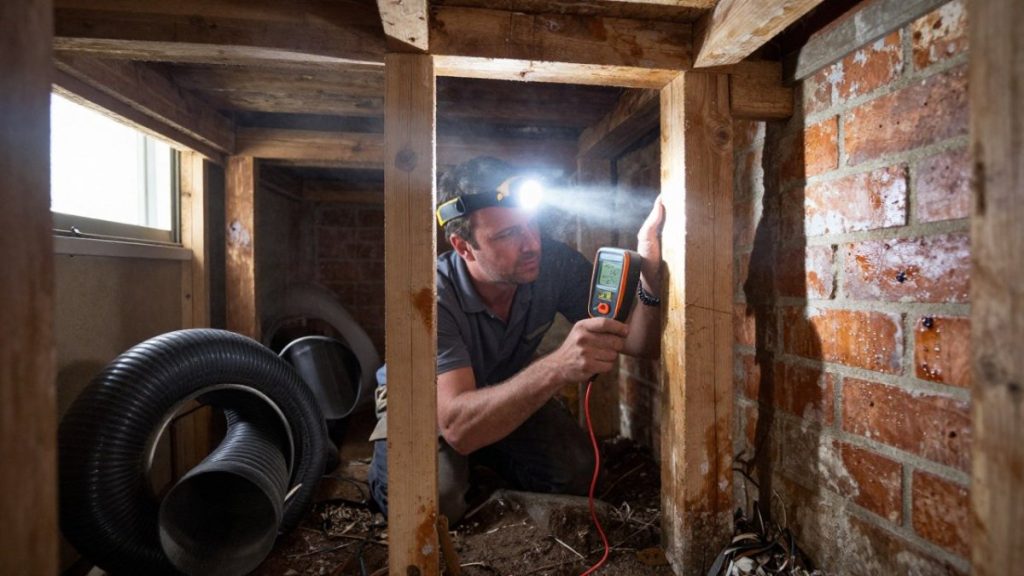
Place the hygrometer at about the height of the lower joists, roughly 300 to 500 millimetres above the soil, and away from direct contact with it so that it reads the air rather than the ground. Put a second sensor on the opposite side of the subfloor, away from the vents, because a single sensor near an open vent can read the outside air and hide a damp corner. Shade the sensor from direct sunlight through any gaps, which can make the reading swing.
Timing and logging
Leave the hygrometer in place for at least 48 hours before reading anything, since a new sensor needs time to settle. Log readings at the same times each day, and note whether the morning was clear, foggy, or following rain. Humidity often peaks in the early morning and falls through the day, so a single afternoon reading can look much better than the conditions the timber actually experiences.
Interpreting the results
Compare the subfloor reading with the indoor reading in the living area. A subfloor reading consistently well above the indoor level suggests ground moisture or stagnant air. A subfloor reading that rises sharply after rain and falls quickly afterwards points toward rainwater intrusion. Timber readings that stay high long after the air has dried suggest the moisture is locked in the wood and will need airflow and time to clear. Record the readings before any works begin, so that you have a baseline to measure the outcome against.
Subfloor Ventilation Fan vs Passive Vents: Which Fits Your House
Passive vents rely on natural air movement, usually from wind and temperature differences. They cost less to install and use no power.
A subfloor ventilation fan actively moves air through the space. It suits homes where passive vents cannot keep up, such as sheltered blocks, tightly enclosed subfloors, or areas with still, humid air for much of the year.
Doctor Damp Ventilation designs and installs subfloor ventilation systems, and the right choice depends on your site. A fan is often worth considering when:
- The subfloor is enclosed and passive vents have little effect
- Humidity readings stay high even after vents are cleared
- The home sits in a naturally humid or still location
Passive vents remain a sensible choice when the space is already open and airflow is good.
Ground Moisture Barrier Under House: Installation and Trade-offs
A ground moisture barrier is a membrane laid over exposed soil under the house. Learn how rising damp develops and how it is treated if moisture from the ground is the problem you are trying to stop.
The main trade-off is access. Laying a barrier means working in a tight, often low space, and it can take time.
A common approach is to install the barrier first, then improve ventilation so that any remaining moisture is carried away. Ask your installer how they plan to overlap and seal the membrane, since gaps reduce its effect.
Damp Subfloor Solutions Compared by Cost and Climate
No single solution fits every home. The table below summarises the main options and where each tends to suit.
| Solution | Best For | Main Trade-off |
|---|---|---|
| Clearing and improving passive vents | Open subfloors with some airflow | May not be enough in still or humid sites |
| Subfloor ventilation fan | Enclosed or stale subfloors | Needs power and ongoing upkeep |
| Ground moisture barrier | Bare, wet soil | Limited effect on moisture already in timber |
| Combined barrier and ventilation | Persistent damp in most climates | Higher upfront effort |
Pricing depends on house size, access, and system design. For current costs, contact Doctor Damp Ventilation for a quote based on your home.
Climate matters too. Coastal and high-rainfall areas often need barrier work, while humid, still sites may benefit most from active airflow. Local rainfall and humidity data, such as that published by the Bureau of Meteorology, can help you understand your region’s conditions.
Booking a Subfloor Assessment and Verifying the Results
A professional assessment brings together the diagnosis, measurements, and recommendations in one place. It is the fastest way to avoid guesswork.
Before the visit, gather a few details: when the damp smell appears, whether the house has a dirt or concrete subfloor, and any past works done underneath.
After any work is completed, verify the result. Keep the hygrometer in place and compare readings over several weeks, especially through a wet season.
To book a subfloor assessment with Doctor Damp Ventilation, call 1300 557 687.
Frequently Asked Questions
How do I reduce humidity under my house?
Start by checking whether the moisture comes from the ground or from air that cannot escape. Clear blocked vents, keep the subfloor clear of debris, and make sure gutters and downpipes direct water away from the foundation. If ground moisture is the main source, a polyethylene ground barrier stops vapour rising from exposed earth. For air-driven humidity, a fan or additional ventilation moves stale air out. Measure humidity before and after each change so you know which step made a difference.
Do subfloor ventilation fans reduce moisture?
A subfloor ventilation fan can reduce moisture when it actively exchanges damp air for drier outside air, particularly in still or humid conditions where passive vents cannot move enough air. Fans work best in combination with a ground barrier, because a fan cannot remove moisture rising continuously from bare earth at the rate it arrives. Fan choice, placement and run-time all affect results, so verify improvement with a humidity monitor rather than assuming it has worked.
Are passive vents enough to ventilate a damp subfloor?
Passive vents are often enough when they are unobstructed, correctly positioned on opposite sides of the subfloor, and the site is not subject to stagnant, humid conditions. They are inexpensive and need no power. However, if vents are small, blocked, or the subfloor is closed in, passive ventilation may not change the air often enough. In that case, fan-assisted ventilation or a ground barrier is usually needed.
How can I tell whether my subfloor has a moisture problem?
Signs include a musty smell under the floor, condensation on pipes or timber, visible dampness on the ground, mould or mildew on framing, and springy or softening flooring above. A simple test is to place a hygrometer in the subfloor for several days and compare readings with the indoor humidity. Sustained high readings point to a subfloor issue. Inspect the ground for exposed earth, check whether vents are clear, and look for water pooling outside the foundation.

