
Table of Contents
- What Rising Damp Treatment Costs and Why Prices Vary
- Rising Damp Inspection Cost and What a Diagnosis Involves
- Rising Damp Treatment Methods and Their Cost Implications
- Factors That Affect Your Rising Damp Treatment Quote
- How Long Rising Damp Treatment Takes and What to Expect
- Rising Damp Versus Other Moisture Problems: Cost and Treatment Differences
- Getting an Accurate Rising Damp Treatment Quote
- Frequently Asked Questions
Last Updated: October 14, 2026
What Rising Damp Treatment Costs and Why Prices Vary
Rising damp treatment cost in Australia depends on the scope of work, the severity of the moisture problem, your home’s construction type, and the treatment method your surveyor recommends.
A chemical damp-proof course injection on a 1970s weatherboard house on concrete stumps differs fundamentally from treating a modern double-brick residence, and costs reflect that.
The most common mistake is comparing quotes without understanding what’s included. One estimate might cover diagnosis and injection only; another might include plaster removal, wall drying, and replastering. Before committing to a rising damp treatment quote, know what each price covers and whether the surveyor assessed your wall construction.
Rising Damp Inspection Cost and What a Diagnosis Involves
A proper rising damp inspection underpins an accurate estimate. Any contractor quoting over the phone without visiting is guessing.
The surveyor examines affected walls, tests moisture levels, assesses construction type (single-brick, double-brick, concrete block or stone), and checks salt contamination, which affects complexity. Thorough diagnosis takes time and expertise, hence assessment fees.
Inspection cost varies with property size and access difficulty. Some specialists credit the fee against treatment if you proceed; others charge separately, so clarify when you book. The fee prevents unnecessary work or a treatment method that won’t solve your problem.
Rising Damp Treatment Methods and Their Cost Implications
Not all rising damp treatments are equal, and the recommended method significantly affects your final bill. The table below compares the main approaches on suitability, durability, disruption, and cost contribution. Figures are per linear metre unless stated, and are guides only, a site-specific quote is the only reliable number.
| Method | Best suited to | Expected lifespan | Disruption | Indicative cost |
|---|---|---|---|---|
| Chemical damp-proof course injection | Brick, block and stone masonry with a continuous mortar bed; the standard remedy for genuine rising damp | Commonly warranted for 20 years or more when installed to specification | Moderate, drilling, injection odour, then plaster removal and drying | Roughly $120-$300 per linear metre for injection alone; plaster and finishing are additional |
| Physical damp-proof course (replacement or insertion) | Situations where a chemical barrier is unsuitable, such as very irregular rubble stone or where a physical membrane can be threaded | Long-lived, effectively the life of the wall if installed correctly | High, involves cutting or rebuilding courses | Typically $400-$900 per linear metre because of the masonry work |
| Drainage and sub-floor ventilation improvements | Damp driven by high external ground levels, blocked stormwater, poor grading or trapped sub-floor moisture | Indefinite if maintained, but does not replace a damp-proof course where one is absent | Moderate to high, excavation, pipework, vents | Commonly $2,000-$12,000 per property depending on extent |
| Surface treatments and breathable coatings | Cosmetic control only; not a remedy for rising damp | Short, months to a few years before salts and moisture reappear | Low | Often $30-$80 per square metre |
Chemical damp-proof course injection
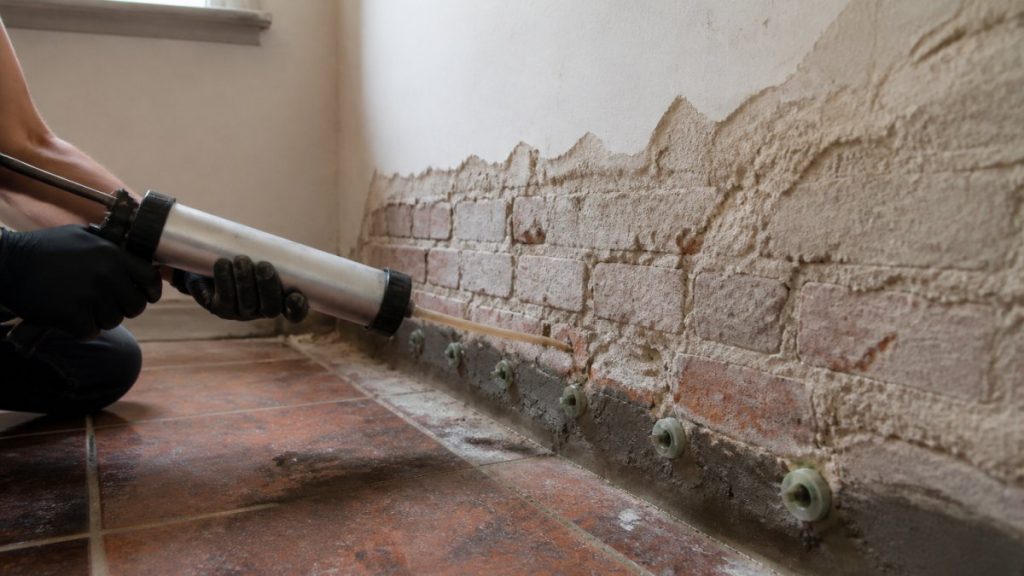
Chemical injection is the most common treatment, especially in older homes. It involves drilling into mortar joints and injecting a chemical damp-proof course that blocks capillary action, the process by which ground moisture travels upward through masonry.
Cost depends on wall area, thickness (double-brick needs more injection points than single-brick), and depth of damp penetration. Contractors quote per metre of affected wall length.
Injection does not remove existing salts or dry the wall instantly. It stops new moisture rising, but the wall must still dry and salt-contaminated plaster must come off, so injection is rarely a standalone line item.
Physical damp-proof course
Where a chemical barrier cannot be relied on, irregular rubble stone or inconsistent mortar, a physical damp-proof course may be inserted or the affected course rebuilt with an impervious membrane. It is more durable but far more disruptive and expensive, usually reserved for heritage or difficult masonry.
Plaster removal and replastering
Once the chemical barrier is in place, damaged plaster must be removed and replaced, salt-contaminated plaster absorbs moisture and won’t adhere to new finishes. Removal creates dust and needs containment if you’re living in the home during work.
Replastering costs depend on wall area and plaster type. Standard gypsum is cheaper; specialist salt-resistant plaster costs more but lasts longer, and the choice significantly affects your rising damp treatment quote. Decorative finishes add labour costs.
Drainage and sub-floor ventilation
Improving sub-floor drainage and ventilation can address the root cause of rising damp, installing sub-floor vents, clearing blocked perimeter drainage, or regrading ground to direct water away from the foundation. These works are more invasive and costly than injection but address moisture ingress at the source.
Drainage improvements require excavation and site work; sub-floor ventilation involves accessing the space beneath your home and installing ducted systems. Extent depends on construction type and moisture severity.
Surface treatments, and why they are not a fix
Breathable masonry paints and anti-salt coatings improve appearance temporarily but do not stop capillary rise. Where a damp-proof course is absent or failed, moisture and salts reappear behind the coating. Treat them as cosmetic, not remedial, and be sceptical of quotes presenting them as a substitute for injection or drainage work.
A treatment that only addresses appearance, sealing, painting or rendering over damp masonry, will usually fail within a season or two and can trap moisture, making the underlying problem worse.
Match the method to the cause. Injection stops capillary rise in masonry; drainage and ventilation reduce the moisture source; replastering removes salts and restores the finish. A complete quote usually combines two or three of these, not one.
Factors That Affect Your Rising Damp Treatment Quote
Five key variables determine whether your rising damp treatment cost in Australia will be modest or substantial.
Severity of salt contamination: Heavy salt efflorescence (white crystalline deposits) requires more thorough plaster removal and possibly specialist cleaning.
Access difficulty: Restricted sub-floor access, narrow side passages, or difficult terrain cost more due to extra time and equipment.
Existing damage: Rotted structural timbers or floor joists must be replaced or treated as part of the works, adding significant cost.
Regional labour costs: Treatment pricing varies between metropolitan areas and regional centres due to local labour rates and travel distances.
How Long Rising Damp Treatment Takes and What to Expect
Duration varies with scope. A straightforward chemical injection on a single-storey home takes 2-4 weeks from diagnosis to completion: injection (2-5 days), drying (7-14 days), and replastering (5-10 days depending on plaster type and curing).
Complex projects involving drainage work, structural repairs, or extensive salt removal can extend to 8-12 weeks. Walls must dry thoroughly after injection before replastering, and replaster must cure before decoration.
Expect tradespersons on site, dust from plaster removal, and disruption to affected rooms. If the damp is in a bedroom or living area, plan for alternative spaces.
Rising Damp Versus Other Moisture Problems: Cost and Treatment Differences
Rising damp looks similar to other moisture problems but requires different treatment. Misdiagnosis wastes money on the wrong solution.
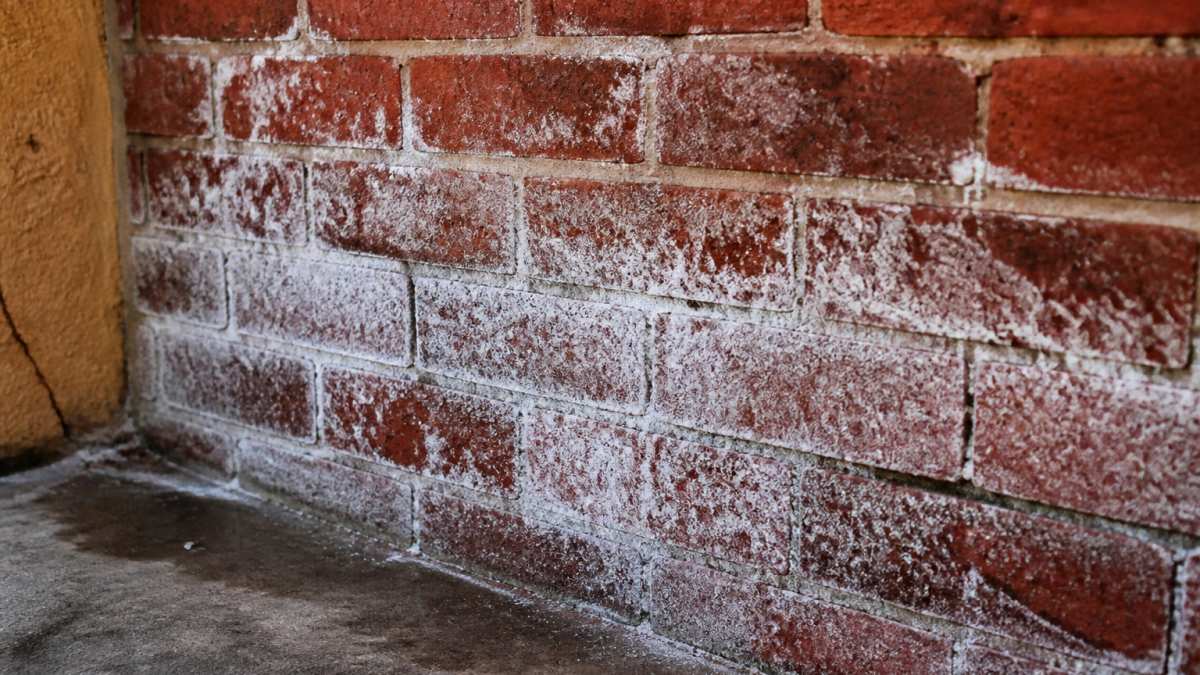
Condensation occurs when warm, moist air meets cold surfaces, appearing on windows, mirrors and external walls without salt stains.
Penetrating damp enters from outside through cracks, failed mortar or damaged render, appearing anywhere on a wall rather than following the rising damp pattern.
Plumbing leaks create localised wet patches and often smell of stale water. They require identifying and repairing the leak source, not damp-proofing.
A proper survey distinguishes between these problems because the rising damp treatment cost in Australia is only justified if rising damp is actually present.
Getting an Accurate Rising Damp Treatment Quote
A rising damp quote is only useful if you can see what’s inside it. Two quotes for the “same” wall often differ by thousands because one includes plaster removal, salt treatment, drying and replastering, and the other doesn’t. Ask for an itemised quote, not a lump sum.
What an itemised quote should show
A transparent quote breaks the job into the following lines. Figures are guides only, site conditions will move them.
| Line item | What it covers | Indicative cost |
|---|---|---|
| Assessment and moisture survey | On-site inspection, moisture meter readings, salt testing, written diagnosis | $250-$600 (often credited against the treatment if you proceed) |
| Access and preparation | Moving furniture, floor protection, dust containment, scaffolding if required | $200-$800 |
| Chemical damp-proof course injection | Drilling and injecting the affected wall length | $2,400-$6,000 (roughly $120-$300 per linear metre) |
| Plaster removal | Stripping salt-contaminated plaster to the required height | $800-$2,500 |
| Salt treatment and wall drying | Neutralising salts, allowing the wall to dry before reinstatement | $300-$900 |
| Replastering | Salt-resistant base coat and finish coat | $1,200-$3,500 |
| Decoration | Sealer and paint to match existing finishes | $400-$1,200 |
| Contingency | Unexpected rot, failed render or hidden damage | 10-15% of the total |
Inclusions, exclusions and the questions to ask
Before you compare quotes, confirm in writing:
- Is the assessment fee separate or credited? Many specialists deduct it from the treatment price if you proceed.
- How far up the wall does plaster removal go? It should extend above the visible damp line, not stop at it.
- Is salt-resistant plaster specified, or standard gypsum? This affects durability and cost.
- Is decoration included? Many quotes stop at the plaster and leave painting to you.
- What happens if rot or failed render is found once the wall is opened? Ask how variations are priced.
- Is the sub-floor ventilation or drainage being addressed? If not, ask why, because the moisture source may remain.
Warranties, lifespan and what treatments do not cover
A reputable specialist should provide a written warranty on the chemical damp-proof course, commonly 20 years or more, and a separate warranty on plastering and finishes. Read the terms carefully:
- The injection warranty usually covers re-treatment of the injected wall if rising damp returns, but it rarely covers replastering or decoration.
- Warranties are typically void if you later raise external ground levels above the damp-proof course, block sub-floor vents, or render over the treated wall.
- No treatment can prevent damp caused by a plumbing leak, a bridged damp-proof course, or condensation, those are separate problems with separate fixes.
- Expect to maintain sub-floor ventilation and external drainage. Where these are neglected, damp can return even after a correctly installed barrier.
Ask for the warranty document before you sign, not after. The exclusions matter as much as the term, a 20-year warranty that is voided by common landscaping changes is worth less than it appears.
Getting comparable quotes
Request a site inspection. Do not accept phone quotes. A surveyor must visit, assess wall construction, test moisture levels and check for salt contamination, typically one to two hours.
Get at least two independent itemised quotes. Compare line by line, not on the total.
Verify credentials. Confirm the contractor is licensed, insured, and experienced with rising damp specifically. Ask for references from similar properties.
Ask about the timeline and staging. Understand how long each phase takes, when the wall will be dry enough to replaster, and how disruption will be managed if you’re living in the home.
The cheapest quote is rarely the cheapest outcome. Compare itemised scopes, warranty terms and what is excluded, then judge value on the full cost of restoring the wall, not the injection line alone.
Frequently Asked Questions
What factors affect the cost of rising damp treatment?
Rising damp treatment cost depends on wall area affected, wall construction type (single-brick, double-brick, or block), severity of salt contamination, accessibility of the affected wall, whether plaster removal and replastering are needed, and the treatment method chosen. Older homes or those with complex construction may require more extensive remedial works, increasing the total cost.
How can I tell whether a wall has rising damp or another moisture problem?
Rising damp typically appears as a distinct damp line starting at ground level and rising up the wall, often accompanied by salt staining and plaster deterioration. Other moisture problems like condensation or lateral damp show different patterns. A professional rising damp inspection can distinguish between these issues using moisture meters and visual assessment, helping you avoid unnecessary treatment for the wrong problem.
How long does rising damp treatment take to work?
Rising damp treatment duration varies depending on the method used and severity. Chemical injection may take weeks to months for full effectiveness as the damp-proof course sets. Plaster drying after replastering can take several weeks. Sub-floor ventilation improvements may show results within weeks, though complete resolution depends on environmental factors and whether all contributing causes are addressed.
What should a rising damp treatment quote include?
A comprehensive rising damp treatment quote should itemise the assessment fee, cost per metre of chemical injection (if applicable), plaster removal and replastering costs, any drainage or ventilation work, materials and labour, and expected timeline. It should specify the wall area being treated, construction type, and the scope of remedial works. Avoid quotes that lump everything together without detail, as this prevents you from understanding what you’re paying for.
