
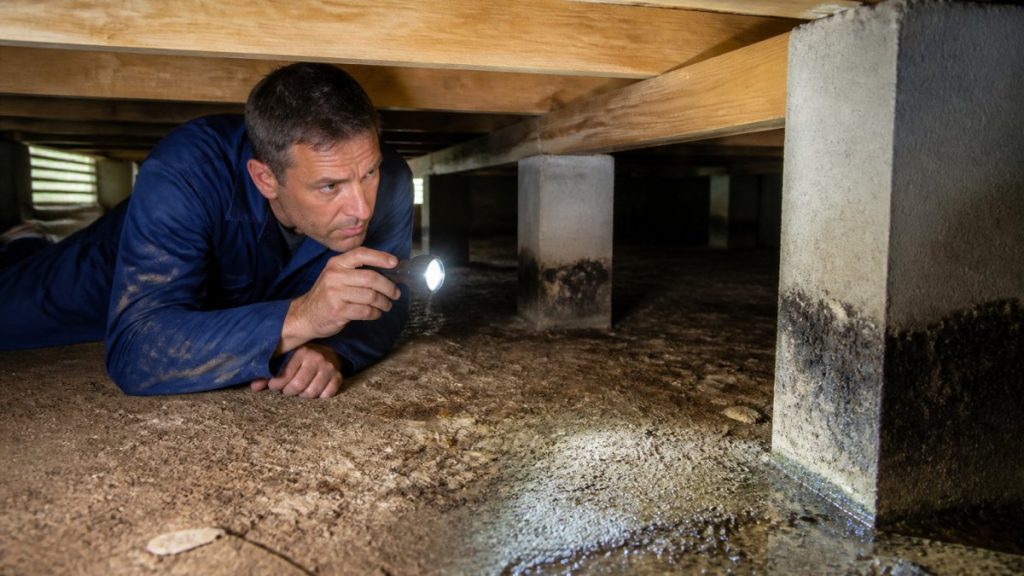
Last Updated: October 31, 2026
Quick Summary
Diagnosing damp under house conditions means finding where the moisture comes from before treating it. Start with an exterior walk-around after rain, then monitor temperature and humidity over several days, and inspect the subfloor timber for wetness, mould and tide marks.
- Walk the perimeter after rain to check pooling water, gutters, downpipes and blocked vents first.
- Monitor temperature and relative humidity over several days, since a single reading tells you little.
- Rain-linked localised damp usually points to surface water, drainage or roof discharge.
- Constant damp with a tide mark suggests rising damp, while winter condensation on cold surfaces suggests ventilation problems.
- Clear and check passive vents before considering a fan, and confirm any fix with repeated monitoring.
Table of Contents
- What Damp Under a House Really Means
- Signs of Poor Subfloor Ventilation to Look For
- Common Sources of Moisture Beneath a House
- A Step-by-Step Subfloor Moisture Inspection
- Telling Condensation, Leaks, Groundwater and Rising Damp Apart
- Subfloor Ventilation Fan or Passive Vents: Which Fits Your House
- How to Reduce Moisture Under a House and Confirm the Fix Worked
- Frequently Asked Questions
- Frequently Asked Questions
What Damp Under a House Really Means
Damp under a house is excess moisture in the subfloor space, the void between the ground and the timber or concrete floor, and it is one of the most common hidden causes of mould, musty odours and timber decay in Australian homes. Estimates suggest between 10% and 50% of homes in Australia have indoor dampness issues, according to the World Health Organization’s global guidance on indoor dampness, which makes a systematic diagnosis worth the effort.
Damp is a symptom, not a diagnosis. The same stain on a skirting board can come from a leaking downpipe, poor airflow beneath the floor or water rising from wet soil, and each one needs a different fix. Treating the symptom without identifying the source is how homeowners end up paying twice.
The research supports a methodical approach. BRE Group’s guidance on diagnosing the causes of dampness in buildings recommends monitoring temperature and humidity across several rooms and outside over time, rather than relying on a single reading or a visual check. A four-stage approach is also recommended for rising damp in residential buildings, as set out in University of Salford research on diagnosing rising damp.
Signs of Poor Subfloor Ventilation to Look For
Poor subfloor ventilation usually shows up in the living space before anyone looks underneath. The most reliable early signs are a persistent musty smell that worsens after rain, condensation on windows in the cooler months, mould on the underside of timber flooring and soft or springy boards.
Work through these checks before you climb under the house:
- A stale, earthy smell in rooms built over the subfloor, especially in winter mornings
- Condensation or mould on the lower sections of walls and skirting boards
- Carpet or timber boards that feel cold or damp to the touch
The pattern matters as much as the sign. A single damp patch after a storm usually points to a one-off water event, whereas a smell that lingers for weeks suggests the air beneath the house is not moving.
Common Sources of Moisture Beneath a House
Moisture under a house usually has one of a handful of sources, and most are inexpensive to identify once you know what to look for. The two categories that appear most often are ground-level issues and plumbing or roof drainage faults. Addressing these external water sources often requires improving property drainage to ensure that runoff is directed safely away from the foundation.
Ground Levels, Paving and Garden Beds
Soil that sits higher than the floor level, or paving that slopes toward the house, pushes water against the base of the building. Garden beds piled up against the stumps or brick piers hold moisture in exactly the spot where the subfloor needs to breathe. Check whether the ground beside the house drains away from the foundations, and whether any soil or mulch is covering the vents.
Leaking Pipes, Gutters and Downpipes
A leaking pipe under the house can keep the subfloor wet for months without any obvious sign above. Gutters that overflow or downpipes that discharge at the wall line send large volumes of water into the surrounding soil. Look for wet patches on the ground after rain, rust or staining on the stumps, and water pooling in one spot. A plumber should confirm any suspected leak before you assume the damp comes from the ground.
A Step-by-Step Subfloor Moisture Inspection
A structured inspection separates the likely causes from the unlikely ones and gives you evidence to act on. The value of an inspection lies less in any single reading than in the pattern across location, timing and weather. Work through the stages below in order, and stop at any stage where the evidence already points to a clear cause.
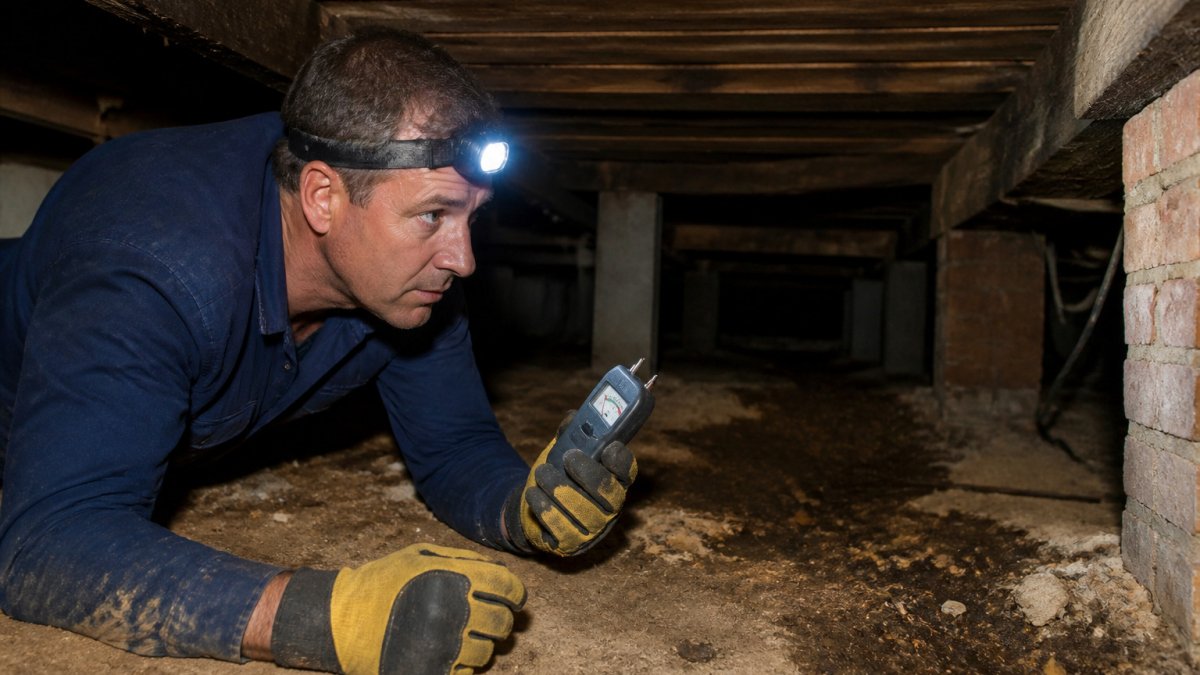
Do not enter a subfloor unless it is safe to do so. Subfloors are confined spaces with electrical cabling, pests, possibly asbestos-containing materials in older homes, and contaminated water. Never enter alone, never in poor light, and never where headroom is low or piers look unstable. If you are unsure, engage a qualified subfloor inspector.
Stage 1, Exterior walk-around (before you go under)
Walk the perimeter after a rain event and note:
- Pooling water, soggy ground or paving that slopes toward the house
- Gutters overflowing, downpipes discharging at the wall line, or stormwater points that back up
- Soil, mulch or garden beds sitting above the damp-proof course
If any of these are present, fix them before diagnosing further, surface water and roof drainage are the cheapest causes to rule out.
Stage 2, Interior monitoring (over several days, not one reading)
Record temperature and relative humidity in the affected rooms and outside at the same time, ideally over several days. A single reading tells you little; the pattern does. Rising indoor humidity after rain points to subfloor moisture; humidity that tracks outdoor conditions points to ventilation; humidity that spikes in winter in bathrooms and kitchens points to condensation.
Stage 3, Subfloor visual inspection
With a torch, work from the access point outward and look for:
- Wet or stained timber on joists, bearers and stumps
- Mould, fungal growth or white rot on timber
- Standing water or damp soil
Stage 4, Moisture measurement (and its limits)
Use a moisture meter on joists and bearers at several points, comparing readings near the wet area with dry sections. Understand the limits: pin-type meters read electrical conductivity, which is affected by timber species, treatment salts and surface moisture, so they are indicative rather than absolute. For a more evidence-based diagnosis, combine timber-moisture readings with ambient temperature and relative humidity, and where possible take readings at the same points before and after any change.
Stage 5, Decision points
Use the evidence to narrow the cause before you spend money:
- Rain-linked, localised damp → surface water, drainage or roof discharge
- Constant damp in still weather, tide mark present → rising damp or groundwater
- Localised damp near a pipe or fitting → plumbing leak (confirm with a plumber)
Stage 6, Record and compare
Photograph and note each finding with its location, and match it to the pattern. Keep the record, it is what you will compare against after repairs to confirm the fix worked.
Wear gloves, a mask and long sleeves, watch for spiders and snakes, and avoid crawling into a space with low headroom or unstable piers. If in doubt, do not enter.
The table below summarises the six inspection stages in order, so you can match each step to its timing.
| Stage | What to do | Time or frequency |
|---|---|---|
| 1. Exterior walk-around | Check pooling water, gutters, downpipes and blocked vents | After a rain event |
| 2. Interior monitoring | Record temperature and relative humidity in affected rooms and outside | Over several days, not one reading |
| 3. Subfloor visual inspection | Look for wet timber, mould, standing water and tide marks | During the subfloor check |
| 4. Moisture measurement | Take meter readings on joists and bearers, near and far from the wet area | At several points |
| 5. Decision points | Narrow the cause using the evidence before spending money | After monitoring and inspection |
| 6. Record and compare | Photograph and note each finding for later comparison | Before and after repairs |
Telling Condensation, Leaks, Groundwater and Rising Damp Apart
These four causes can look identical on a wall, yet each needs a different response. The most useful diagnostic tool is not a meter but a comparison of location, timing and weather response. Use the patterns below to separate them before committing to a repair.
Condensation
- Where: cold surfaces, windows, lower wall sections, skirting boards, the underside of timber flooring
- When: worst in cooler months and in poorly ventilated rooms (bathrooms, kitchens, laundries)
- Weather response: tracks indoor moisture production and outdoor temperature, not rain
Plumbing leaks
- Where: localised, often traceable to a pipe, fitting, tap or appliance
- When: constant or intermittent depending on use; can worsen after heavy use
- Weather response: largely independent of rain
Groundwater
- Where: subfloor soil, lower masonry, stumps; often the whole subfloor rather than one spot
- When: rises and falls with wet periods and can flood a subfloor after sustained rain
- Weather response: closely tied to rainfall and site drainage
Rising damp
- Where: lower masonry, brickwork and stumps; typically a horizontal band
- When: persistent, not strongly tied to individual rain events
- Weather response: stays relatively constant across weather
The practical order of elimination
Common practice is to rule out the simpler explanations first. Fix any leak, correct the drainage and improve ventilation, then re-test. Only when the moisture persists should you consider a damp-proof course problem. The research on electro-osmosis for rising damp in historical buildings shows that treatments for rising damp are not always necessary, so an accurate diagnosis helps avoid unnecessary work.
If the damp rises and falls with the weather, groundwater is likely; if it stays constant and leaves a tide mark, rising damp is the more probable cause; if it is localised near a fitting, suspect a leak; if it is widespread in winter on cold surfaces, suspect condensation.
Subfloor Ventilation Fan or Passive Vents: Which Fits Your House
Once the cause is identified, ventilation is often part of the answer. For a side-by-side look at the two approaches, read fan versus passive vents compared.
A fan-assisted system moves air mechanically and suits subfloors that are sheltered, low or poorly ventilated, where passive vents cannot shift the air fast enough. You can see how the business designs and installs subfloor ventilation for Adelaide homes on its own site.
For most homes, the honest answer is that passive vents should be checked and cleared first, since they cost little. If the subfloor stays damp after that, a fan is the logical next step.
How to Reduce Moisture Under a House and Confirm the Fix Worked
Reducing moisture is a sequence, not a single action.
Confirming the fix is just as important as making it. Repeat the same monitoring you used in the original inspection, comparing humidity and timber readings before and after changes.
If the readings do not improve, the diagnosis needs revisiting rather than more of the same treatment. You can also get in touch to request a moisture fix quote or inspection online.
Frequently Asked Questions
When should you worry about moisture under the house?
Worry when you see persistent dampness, a musty smell that returns after cleaning, soft or swollen timber, or visible mould on subfloor framing. Seasonal dampness after heavy rain is common, but moisture that stays high through dry months points to a drainage, plumbing or ventilation problem. Measure readings over several weeks before deciding, and bring in a qualified inspector if timber shows decay or you cannot identify the source.
Can damp in the house cause illness?
Damp and mould indoors are linked to respiratory symptoms, allergies and asthma flare-ups, particularly in children and older people. If a family member has breathing issues that worsen at home, speak to a GP and reduce moisture sources, including those beneath the floor, as part of managing the environment.
What are the signs of poor subfloor ventilation?
Common signs include a damp, earthy or musty smell at floor level, condensation on the underside of floorboards, mould on joists or bearers, and soft or spongy flooring. Look for stagnant air, few or blocked vents, and soil that stays wet after rain. Any of these combined with moisture readings above typical levels suggests the subfloor is not drying out and needs a closer inspection.
How do you check for standing water or leaks under a house?
Inspect the subfloor on a dry day and again after rain, using a torch to check the soil, pipe joints, tap connections and drain lines. Standing water, wet soil directly under plumbing, or drips from fittings point to a leak. Mark any wet areas and compare them after a few days. Avoid entering a subfloor alone, and do not disturb asbestos-containing materials without proper advice.
Can subfloor vents fix damp, or is a fan needed?
Passive vents work well when the subfloor has good cross-flow and the soil is reasonably dry, because they rely on natural air movement. Where airflow is poor, due to a small or enclosed space, still air or high ground moisture, a fan can move air more reliably. The right choice depends on the readings and layout of your particular subfloor, so ask for a site assessment before buying equipment.
When should you call a subfloor ventilation specialist?
Call a specialist when you have persistent moisture readings, mould or decay on timber, or a musty smell that returns after cleaning and dehumidifying. A specialist can identify whether the cause is ventilation, drainage, plumbing or groundwater. For a professional assessment, visit the website or call 1300 557 687.
Frequently Asked Questions
How do I know if the damp under my house is serious?
Damp that produces a persistent musty smell, mould on timber or visible rot is worth treating promptly. Early action is generally cheaper than repairing rotted joists or flooring later.
Can I check the subfloor myself?
Yes, a careful visual check with a torch and a moisture meter is a reasonable first step. Wear protective gear, avoid unsafe spaces and bring in a professional when the cause is unclear.

