
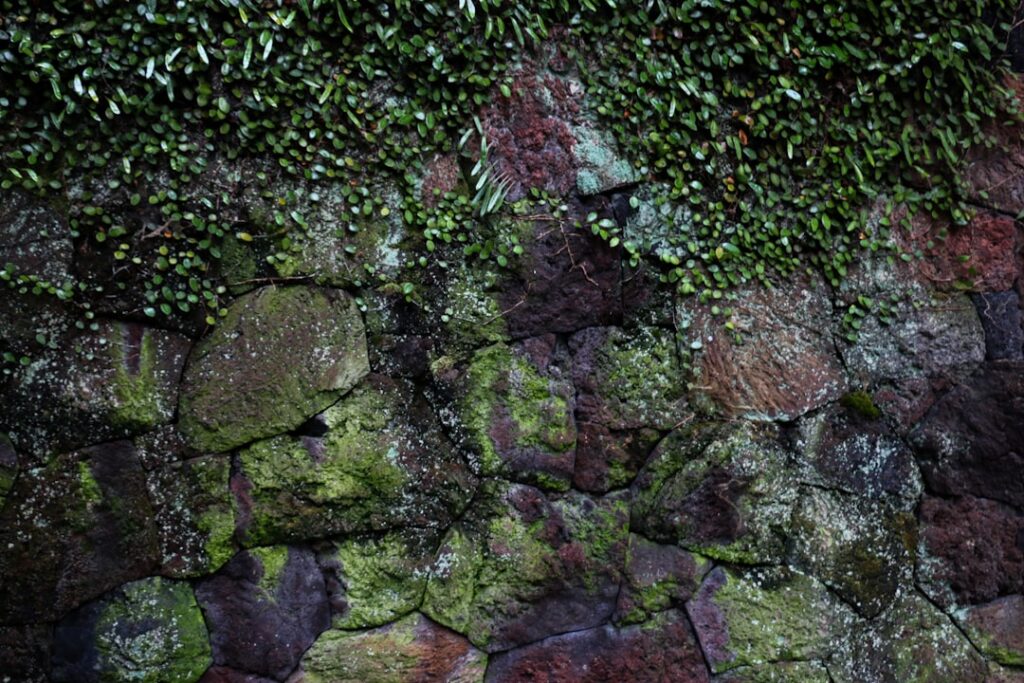
Why Dampness in Walls is a Problem
You’re here because you’re worried about dampness in wall issues in your home. You’re right to be concerned. Damp walls are more than an eyesore; they can lead to serious problems for your property and your family’s health.
Here’s a quick look at what dampness means for your home:
- What it is: Unwanted moisture within your home’s structure.
- Main Impacts:
- Health Hazards: Creates ideal conditions for mould, which can cause respiratory issues, allergies, and worsen asthma.
- Property Damage: Leads to crumbling plaster, peeling paint, rotting wood, and structural decay.
- Three Main Types:
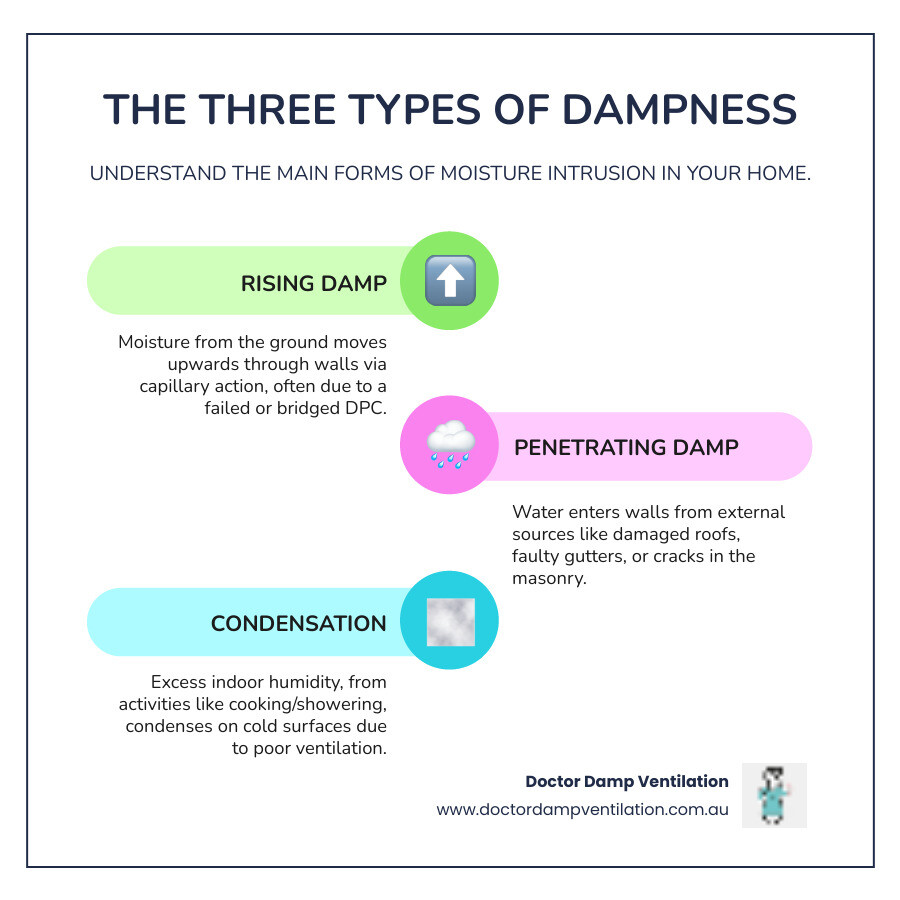
- Rising Damp: Moisture from the ground moving up through walls.
- Penetrating Damp: Water entering from outside sources like leaks or cracks.
- Condensation: Excess indoor moisture condensing on cold surfaces.
Dampness is a common but serious problem that can damage your home’s structure and affect air quality. This guide will help you understand, identify, and tackle it.
I’m Scott Lambert, founder of Dr. Damp. For over 20 years, my team and I have specialised in solving residential moisture control and dampness in wall issues for Australian homeowners, helping thousands protect their homes and improve their indoor air quality.
How to Spot the Telltale Signs of Damp Walls
Catching dampness in wall issues early can save you from expensive problems. The signs can be subtle at first, but become more noticeable over time. Here’s what to look for:
- Musty Smell: An earthy or stale odour is often the first clue, indicating hidden moisture and mould.
- Cold or Clammy Feeling: Walls may feel unusually cold or damp to the touch because moisture conducts heat away from the surface.
- Peeling Wallpaper: Moisture weakens the adhesive, causing wallpaper to bubble, lift, or peel.
- Blistering Paint: Similar to wallpaper, moisture pushes paint away from the wall, causing it to blister, bubble, or flake.
- Crumbling Plaster: Dampness can soften plaster, causing it to crumble or leave a powdery residue at the base of walls. This is common with rising damp.
- Dark Patches: Discoloured, wet-looking stains on walls or ceilings are a classic sign of moisture.
- Visible Mould Growth: Black, green, or white fuzzy spots on walls, ceilings, or behind furniture are an undeniable sign of damp.
- Rotting Wood: Skirting boards, floorboards, or window frames that feel soft or are discoloured indicate prolonged moisture exposure, which can lead to wet or dry rot.
The location and appearance of these signs can help identify the type of dampness. For a more precise reading, a Damp Meter can be used to measure moisture levels within the wall, confirming the presence of a problem.
| Damp Type | Visual Signs | Location | Feel |
|---|---|---|---|
| Rising Damp | Noticeable “tide marks” (often up to 1-1.5m high), powdery white salt deposits (efflorescence), bubbling/peeling paint, crumbling plaster, decaying skirting/floorboards. | Lower sections of internal and external walls, usually rising from ground level. | Cold and damp to the touch, sometimes visibly wet at the base. |
| Penetrating Damp | Isolated, irregular damp patches that can grow in size, watermarks on masonry, damage to plaster/brickwork. | Can appear at any height on walls or ceilings, often localized near source (e.g., leaky pipe, damaged gutter). | Cold and damp to the touch, sometimes visibly wet or spongy. |
| Condensation | Black mould spots (especially in corners), streaming windows, cracked paint, musty smell, walls cold/wet to touch. | Cold surfaces like windows, external walls, corners, bathrooms, kitchens, behind furniture, unventilated areas. | Cold and wet/clammy to the touch, sometimes with visible water droplets. |
What are the Impacts on Your Home and Health?
Ignoring dampness in wall has serious consequences for your home and health.
Impacts on Your Home:
- Structural Integrity: Long-term damp can crumble masonry, rot timber, and compromise your home’s stability through issues like wet rot and dry rot.
- Timber Decay: Fungi like wet and dry rot feed on timber, weakening floor joists, roof timbers, and other wooden structures.
- Plaster Damage: Damp causes plaster to soften and crumble, requiring costly repairs and replastering.
- Reduced Property Value: Damp issues are a major deterrent for buyers and can significantly lower your property’s value.
- Increased Heating Costs: Damp walls lose heat much faster, increasing your energy bills as your heating system works harder.
Impacts on Your Health:
- Respiratory Issues: Inhaling mould spores can cause coughing, wheezing, and shortness of breath.
- Allergies: Mould can trigger allergic reactions like sneezing, runny nose, itchy eyes, and skin rashes.
- Asthma Triggers: Damp and mould can worsen asthma, especially in children, the elderly, and those with weakened immune systems.
- General Ill Health: Prolonged exposure can lead to fatigue, throat irritation, and a general feeling of being unwell.
Dealing with dampness in wall is a crucial step toward a healthy living space. If you see mould, it’s time to take action. Learn more about our professional Mould Removal services and our approach to creating a Healthy Home.
The Three Culprits: Understanding the Main Types of Dampness in a Wall
Understanding the type of dampness in wall is crucial because each kind requires a different solution. Misdiagnosing the problem can lead to wasted time, money, and ineffective repairs. Let’s break down the three main culprits.
Rising Damp: Moisture from the Ground Up
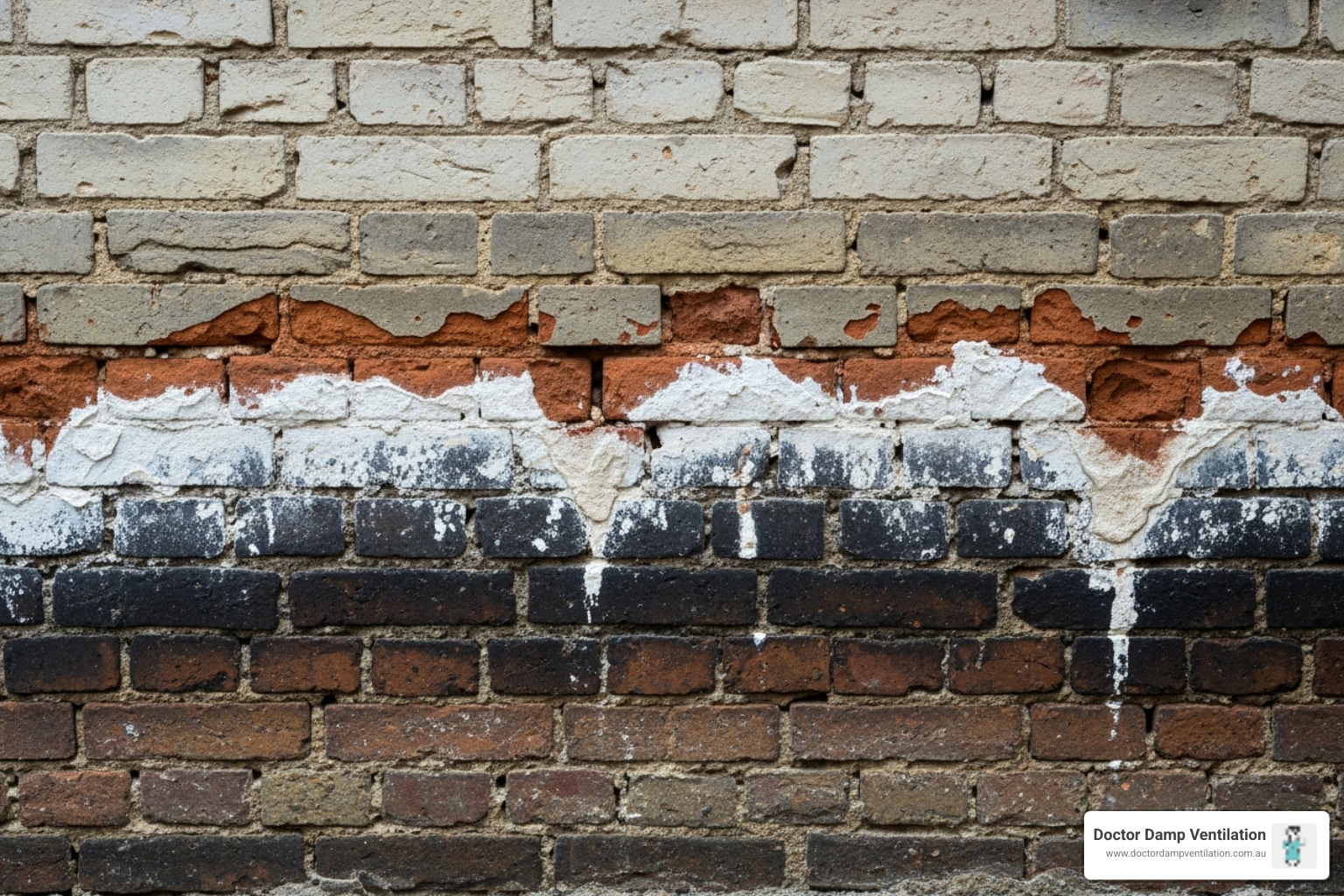
Rising damp occurs when groundwater travels up through a wall’s masonry via capillary action. It is less common than other forms but can be serious. The main causes are:
- A Failed or Missing Damp Proof Course (DPC): A DPC is a waterproof barrier in the lower wall that stops moisture from rising. It can fail due to age, damage, or poor installation.
- A Bridged DPC: Moisture can bypass a functional DPC if external ground levels are too high, debris is trapped in the wall cavity, or plaster/render creates a “bridge” for water to cross.
The classic sign is a “tide mark” up to 1.5 metres high on the wall, often with powdery salt deposits. While rising damp is often suspected, it can be misdiagnosed. A professional assessment is needed to confirm genuine cases and recommend the right treatment for Rising Damp.
Penetrating Damp: When the Outside Gets In
Penetrating damp is water leaking through the building’s fabric from an external source. It can appear anywhere on walls or ceilings as isolated damp patches.
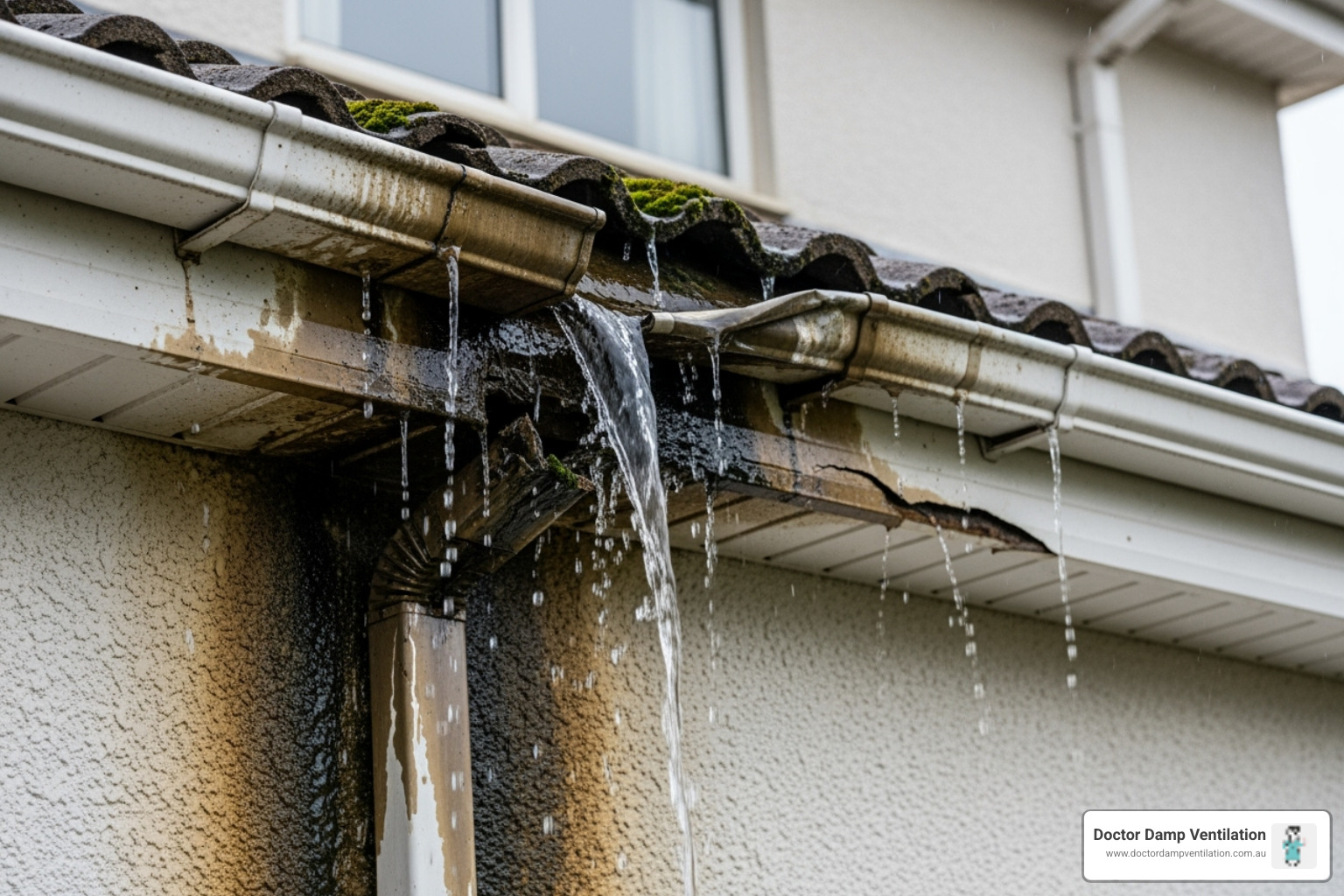
Common causes include:
- Structural Defects: Cracked walls, damaged roofing, or faulty flashing.
- Faulty Gutters and Downpipes: Blocked or leaking gutters can saturate external walls. Poor drainage is a primary cause of water issues.
- Porous Brickwork: Ageing bricks and mortar can lose their water resistance.
- Seal Failure: Worn seals around windows and doors can let water in.
- Plumbing Leaks: Leaks from external pipes or tanks.
The location of the damp patch is often a direct clue to the source of the leak.
Condensation: The Enemy from Within
Condensation is the most common type of damp, caused by excess moisture inside your home. It occurs when warm, moist air comes into contact with a cold surface, turning the vapour back into water droplets.
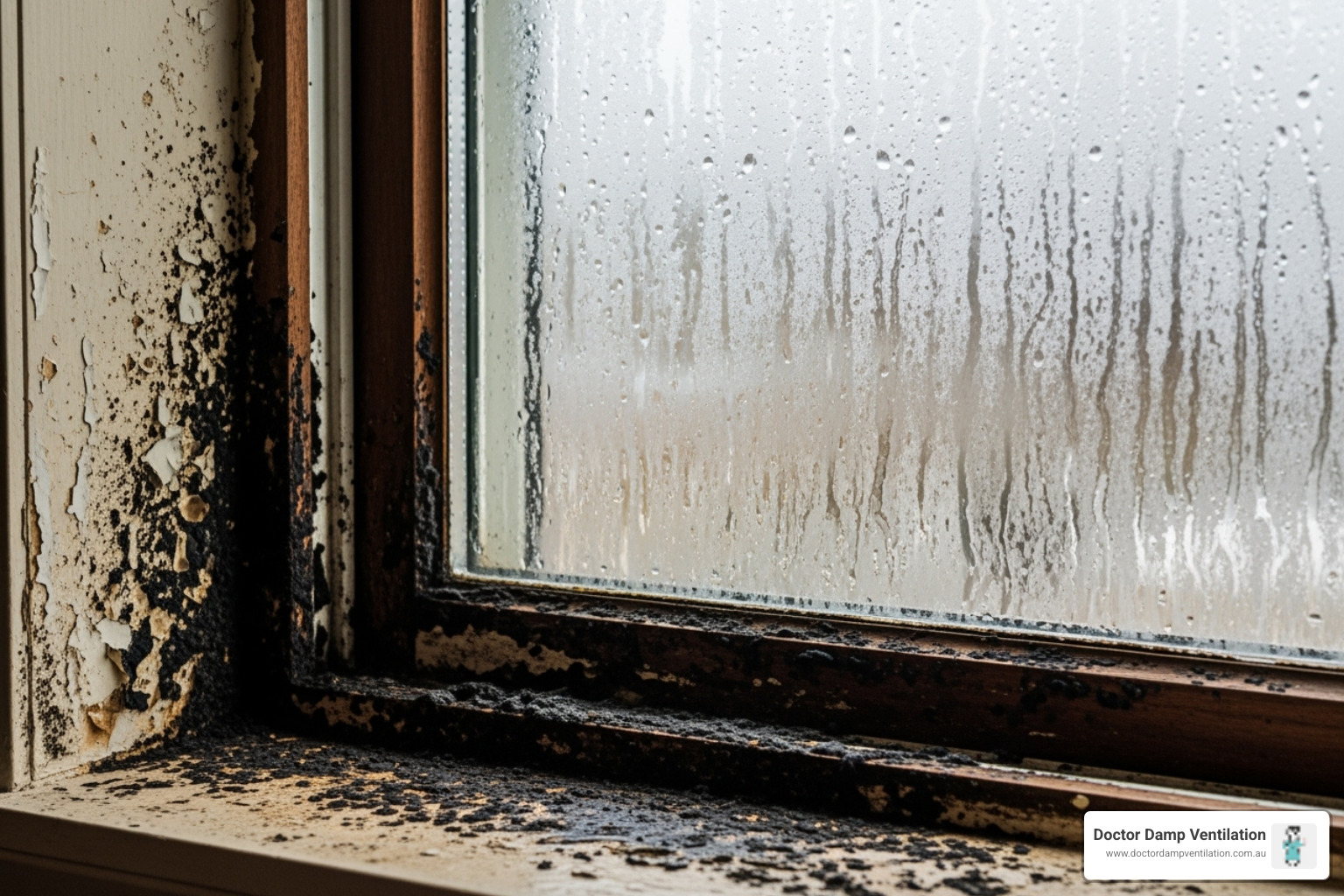
Key factors include:
- Excess Moisture: Daily activities like showering, cooking, and drying clothes indoors release large amounts of water vapour into the air. Even breathing contributes.
- Poor Ventilation: Airtight homes can trap moist air, preventing it from escaping.
- Cold Surfaces: Condensation forms on windows, external walls, and in corners, creating the perfect conditions for black mould growth.
While it may seem less severe initially, chronic condensation can damage your property and harm your health due to mould.
Your Action Plan: Effective Solutions and Treatments
Once you’ve identified the type of dampness in wall, the goal is to fix the root cause, not just the symptoms. A professional assessment is key to a lasting solution, as each type of damp requires a specific approach. Improving ventilation is a cornerstone of many damp solutions, particularly for condensation.
If mould is present, it must be treated. While minor spots can sometimes be handled with DIY products, widespread mould requires professional remediation. Anti-mould paint can provide extra protection, but only after the underlying moisture source is fixed.
Treating Each Type of Damp
- For Rising Damp: The primary solution is installing a new damp proof course (DPC), often by injecting a chemical cream into the brickwork to create a waterproof barrier. Afterwards, any salt-contaminated plaster must be removed and replaced with a specialist damp-resistant plaster.
- For Penetrating Damp: Treatment focuses on stopping water ingress. This involves repairing external defects like cracked rendering, repointing mortar, fixing damaged roof tiles, and sealing gaps around windows. Applying a masonry protection cream can waterproof porous brickwork. Crucially, gutters and downpipes must be cleared and repaired to ensure they direct water away from the house, as poor drainage is a major cause of penetrating damp.
- For Condensation: The key is to improve ventilation and reduce indoor humidity. Install extractor fans in kitchens and bathrooms, and consider whole-home ventilation systems. Maintain consistent, low-level heating to prevent cold spots. Improving sub-floor and roof ventilation is also vital for reducing the overall moisture load in the home, which is a core area of our expertise.
How to Prevent Dampness in a Wall
Prevention is always better than cure. Proactive steps can significantly reduce your risk of dampness in wall issues.
- Regular Maintenance: Routinely inspect your home’s exterior. Clean gutters and downpipes at least twice a year to prevent overflows that can saturate walls.
- Check for Cracks: Periodically inspect and seal any cracks in external walls or rendering to block pathways for water.
- Ensure Proper Drainage: Make sure the ground slopes away from your foundation to prevent water from pooling against the walls. Poor drainage is the source of most water issues in walls.
- Improve Ventilation: Ensure adequate airflow throughout your home. Our specialised Sub-Floor Ventilation and Roof Ventilation systems are designed to manage moisture in these critical, often-overlooked areas.
- Manage Indoor Humidity: Use extractor fans, open windows for ventilation, and avoid drying clothes indoors without a dehumidifier to keep indoor humidity levels between 40%-60%.
When to Call in the Professionals
While some minor issues can be addressed with DIY methods, knowing when to call in professionals can save you time, money, and stress. We recommend seeking expert help in these situations:
- Persistent Issues: If your DIY efforts fail and the damp keeps returning, it indicates a deeper problem that requires an expert eye.
- Widespread Damp: If you see dampness in wall across large areas, in multiple rooms, or spreading rapidly, it’s a sign of a significant moisture problem that needs professional intervention.
- Structural Damage Suspected: Signs like crumbling masonry, sagging floors, or timber decay (wet or dry rot) point to potential structural damage that demands immediate professional assessment.
- Uncertain Diagnosis: Correctly identifying the type of damp is vital for effective treatment. A qualified damp surveyor has the expertise and tools to provide an accurate diagnosis, which is the foundation of a lasting solution.
- Peace of Mind: Handing the problem over to qualified professionals ensures the job is done correctly and efficiently, often with guarantees, giving you confidence that your home is in safe hands.
Our team at Doctor Damp Ventilation are experienced professionals who identify and remediate all types of dampness in wall. We serve homeowners across Sydney, from Bondi and Parramatta to Manly and Cronulla, and are ready to help you solve your damp issues.
Conclusion
We hope this guide has helped you understand the complex issue of dampness in wall.
Let’s recap the key takeaways:
- Damp is a serious issue: It risks your property’s structure and your family’s health.
- Early identification is key: Spotting signs early prevents minor issues from becoming major disasters.
- Prevention is better than cure: Regular maintenance, proper drainage, and effective ventilation are your best defence.
- Correct diagnosis is crucial: Understanding the difference between rising damp, penetrating damp, and condensation is vital for a lasting solution.
Tackling dampness in wall can feel overwhelming, but you don’t have to do it alone. At Doctor Damp Ventilation, we specialize in expert, non-toxic, and guaranteed mould and damp remediation. We provide thorough assessments and tailor-made solutions to fix the problem right the first time.
Don’t let dampness threaten your home or peace of mind. If you’re in Sydney and suspect a damp issue, reach out to the experts at Doctor Damp Ventilation.
Get a professional rising damp assessment today.
