
Last Updated: November 5, 2026
Quick Summary
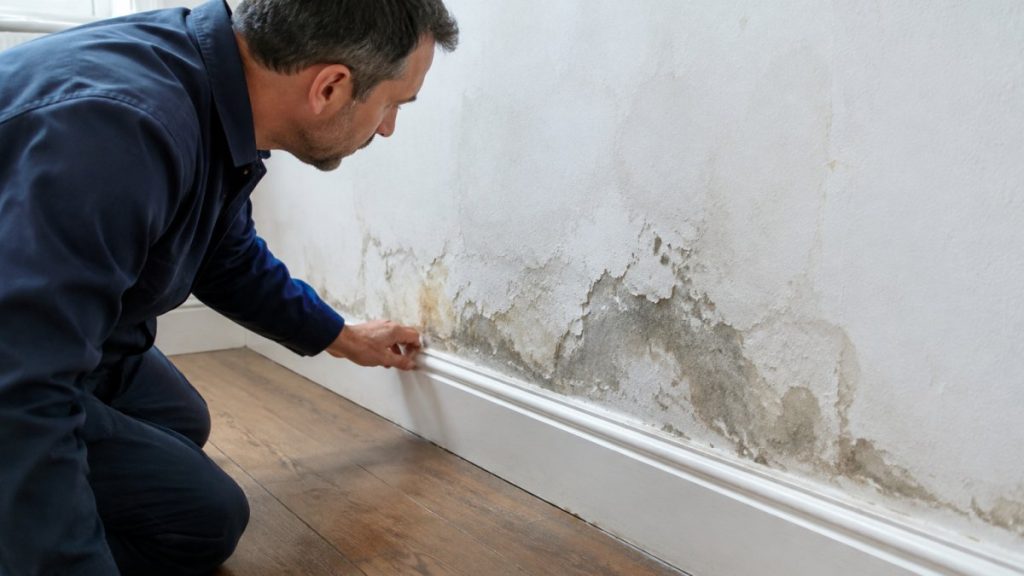
You can tell if rising damp is in your walls by looking for a horizontal tidemark low on ground-floor walls, often with a wavy top edge, plus peeling paint, bubbling plaster, white salt stains and a musty smell. Rising damp stays low and appears year-round, unlike condensation on windows and cold corners. Confirm it with a moisture meter and a professional damp survey.
- Check behind furniture pushed against outside walls, where damp can hide for months.
- A dry wall reads low and steady, while a damp wall reads high near the base.
- The Property Care Association notes rainwater penetration can be confused with rising damp at low levels.
- University of Salford research found sample analysis is the only reliable way to diagnose rising damp.
- Do not re-plaster or paint until moisture readings are stable and low.
Table of Contents
- Start With the Signs: How to Identify Rising Damp in Walls
- Rising Damp vs Condensation: Telling Them Apart
- Using a Moisture Meter for Walls: What the Readings Mean
- When Visual Signs Aren’t Enough: Why a Damp Survey Matters
- Rising Damp Treatment Cost Australia: What Affects the Price
- How Long Does It Take for Treated Walls to Dry?
- What You Can Do While Walls Dry
- Book a Professional Damp Inspection
- Frequently Asked Questions
Start With the Signs: How to Identify Rising Damp in Walls
Rising damp is moisture that moves up from the ground into a wall through tiny pores in the brickwork or mortar (Rising Damp Advice | Identification | Treatment).
The tell-tale sign is a tidemark. This is a horizontal stain along the lower part of a wall, often with a wavy top edge.
Damp also brings a musty smell. It can worsen allergies and asthma in families. Spotting it early protects both your health and your home’s value.
Visual Clues You Can Spot Yourself
Look for these signs on your lowest walls:
- A tide mark running along the skirting board
- Peeling paint or bubbling plaster
- White, powdery stains on brick or render
- Dark patches that stay damp after rain
- Loose skirting boards or rotting timber
- A musty odour in the room
Salt damage leaves that white powder behind. Salts get carried up with the moisture and stay in the wall as it dries. This is one reason damp walls keep decaying even after the source slows.
Where Damp Shows Up First
Damp appears low on walls that touch the ground. Ground-floor rooms, basements and sub-floor spaces are the usual suspects. External walls facing prevailing weather often show it first.
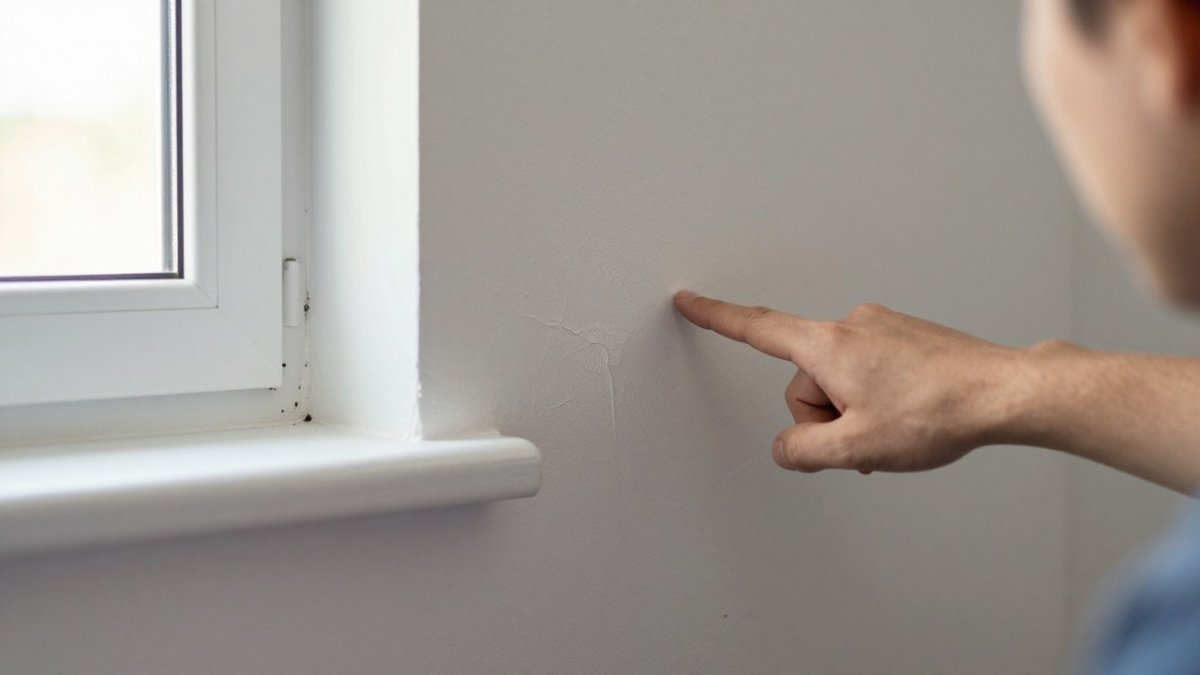
Check behind furniture pushed against outside walls. Damp hides there for months. For a plain-language overview of causes and signs, read our guide on what rising damp is.
Rising Damp vs Condensation: Telling Them Apart
Condensation is water that forms on cold surfaces when warm, moist air cools. Rising damp comes up from the ground. Because both can leave damp patches, checking for spreading stains, peeling finishes or musty smells can help distinguish the cause and recognise serious water damage before it worsens.
Condensation tends to gather on windows, mirrors and cold corners. It often appears in kitchens and bathrooms. Rising damp stays low and follows a horizontal line.
| Feature | Rising Damp | Condensation |
|---|---|---|
| Where it appears | Low on ground-floor walls | Windows, cold surfaces, corners |
| Pattern | Horizontal tidemark | Patchy or widespread film |
| Feel | Cold and damp to touch | Wet surface, dries and returns |
| Smell | Musty, earthy | Stale, less earthy |
| Worst time | Year-round | Cold mornings, winter |
The Other Lookalikes Competitors Skip
Condensation is not the only thing mistaken for rising damp. Before anyone quotes a treatment, rule out these alternatives, because each needs a different remedy:
- Penetrating damp: moisture entering from outside through failed render, cracks, blocked gutters or defective pointing. It often shows as patchy damp at any height, worse after rain, rather than a clean horizontal tidemark.
- Plumbing or drainage leaks: a slow leak or failed drain can wet the base of a wall and mimic rising damp. A leak usually produces a localised patch that grows from one point, not a uniform line along the wall.
- Failed or bridged damp-proof course: an existing course can be breached by raised external ground levels, a rendered plinth or debris in a cavity. The pattern looks like rising damp because it effectively is, but the fix is correcting the bridge, not injecting a new course.
- Hybrid cases: more than one source can be active at once, which is why a single reading or a visual check is not enough.
A useful rule of thumb: rising damp follows a horizontal line low on the wall and is present year-round; penetrating damp is patchy and weather-driven; condensation is surface film on cold spots and dries and returns. If the pattern does not fit cleanly, treat it as undiagnosed until a survey says otherwise.
If you are unsure whether damp is feeding mould growth in your home, our article on rising damp and mould explains the link.
Using a Moisture Meter for Walls: What the Readings Mean
A moisture meter for walls is a handheld tool that estimates water content in building materials. It gives a quick reading, not a diagnosis.
Pin meters push two probes into the wall. Pinless meters scan the surface without damage. Both show relative moisture, often as a percentage of the meter’s scale.
What the readings tell you:
- A dry wall reads low and steady
- A damp wall reads high near the base
- Readings that drop as you move upward suggest rising damp
- Readings that spike after rain suggest a leak or penetration
Meters can mislead. Plaster, salts and metal fixings all skew results. Use a meter to map the problem, then confirm with a proper survey.
When Visual Signs Aren’t Enough: Why a Damp Survey Matters
A damp survey is a professional inspection that confirms the cause of moisture before anyone quotes a repair. Visual signs alone can be wrong.
The Property Care Association code of practice notes that rainwater penetration can be confused with rising damp at low levels on external walls.
A good survey includes:
- A full inspection of walls, floors and sub-floor areas
- Moisture readings taken at several heights
- Checks for leaks, blocked drains and failed damp-proof courses
- Lab analysis of samples where the cause is unclear
Research from the University of Salford on rising damp evaluation found that sample analysis is the only reliable way to diagnose rising damp.
Rising Damp Treatment Cost Australia: What Affects the Price
Pricing for rising damp treatment depends on several factors, and a quote is best given after an inspection. For current pricing or a quote, contact Doctor Damp Ventilation directly.
The main cost drivers:
- Wall length: longer walls need more injection points
- Wall type: solid brick, cavity brick and render behave differently
- Salt damage: heavy salt contamination may need special plaster
- Access: sub-floor and tight spaces slow the work
- Re-plastering: reinstatement often costs more than the treatment itself
- Drying time: faster drying may need extra ventilation or heating
Our article on rising damp treatment cost breaks down what to budget for each stage.
Watch out: a quote given over the phone without a survey is a guess. Ask what is included, especially re-plastering and redecoration.
How Long Does It Take for Treated Walls to Dry?
Treatment installation is often quick. Drying is the slow part, and the gap between the two is where most homeowner confusion sits. Installation of a damp-proof course can be quick, but the wall then needs time to cure and dry.
Separate the four stages and the numbers stop contradicting each other:
- Installation: the damp-proof course is injected or installed. Many walls are done in a day; long or thick walls, or walls needing re-plastering, can run to two or three days.
- Curing: the mortar and any chemical injection set. This is typically a matter of weeks, not days, and the wall should not be sealed or finished during this window.
- Drying: moisture leaves the wall over several months. This is the longest stage and the one most affected by wall type, salts and season.
- Reinstatement: salt-resistant plaster, render and decoration go on once readings fall and stay low.
The stages of treatment, curing, drying and redecoration are worth distinguishing when comparing timeframes, since a quote may cover only one part of the process.
What Changes the Drying Time
- Wall thickness and material: solid brick and stone walls hold more moisture and dry more slowly than cavity brick.
- Salt contamination: heavy salts keep pulling moisture and can delay safe re-plastering; salt-resistant plaster is usually needed before finishing.
- Season and weather: winter slows drying; warm, breezy weather speeds it up.
- Airflow and heating: steady, gentle warmth and moving air help; sealed rooms and furniture pushed against the wall slow it down.
- Ventilation and sub-floor airflow: poor underfloor ventilation keeps the whole lower wall wetter for longer.
How to Tell a Wall Is Dry Enough to Plaster or Paint
Do not rely on a calendar alone. Use a moisture meter for walls to track readings at several heights over a few weeks, and look for readings that are stable and low rather than still falling.
Watch out: sealing a wall with paint, render or wallpaper before readings are stable traps moisture behind the finish and the damp returns, often within a season.
For a deeper look at drying schedules, read how long rising damp treatment takes.
What You Can Do While Walls Dry
You can help the drying phase without touching the treatment. The goal is moving air and steady warmth.
- Keep windows open on dry days to boost airflow
- Run a dehumidifier in the affected room
- Move furniture away from damp walls
- Avoid sealing the wall with paint or render too early
- Check moisture readings every few weeks
Do not re-plaster or paint until readings are stable and low. Trapping moisture behind a fresh finish causes the damp to return. The same goes for salt damage: brush off white salts and let the wall dry before any repair.
Book a Professional Damp Inspection
Guessing at damp wastes money. A proper inspection finds the real cause, so you treat it once and treat it right.
Doctor Damp Ventilation designs and installs sub-floor ventilation systems and moisture control technology. We also offer non-toxic mould removal and ducted exhaust systems.
If damp is spreading in your walls, do not wait. Contact us to arrange a damp inspection and get clear answers.
Frequently Asked Questions
What are the visual signs of rising damp?
Look for a horizontal tide mark on the lower section of a wall, usually within the first metre above the skirting board. Paint may bubble or flake, wallpaper can peel, and a white powdery deposit called efflorescence may appear as salts migrate to the surface. Dark patches and a musty smell are also common. These signs are a prompt to investigate further, but they do not confirm rising damp on their own because condensation and leaks can produce similar marks.
How can I tell the difference between rising damp and condensation?
Condensation tends to appear on cold surfaces, especially windows and external wall corners, and often comes and goes with the weather and how much ventilation a room gets. Rising damp stays low on the wall and moves upward from the base, leaving a consistent tide mark. A moisture meter for walls can help: readings that are high at the base and drop steadily as you move up the wall point toward rising damp, while condensation usually produces patchier readings.
Does rising damp always leave a tide mark?
No. A tide mark is a strong clue, but it is not guaranteed, especially in the early stages or where heavy paint or render hides the surface. Some walls show only blistering paint, a musty odour, or cold, damp patches near the skirting. Because the signs vary, a damp-proof survey that includes moisture readings and, where needed, sample analysis is the reliable way to confirm what is happening in the wall.
What is the first step if I suspect rising damp?
Start by noting where the damp appears, how high it reaches, and whether it changes with the weather. Check for obvious leaks and poor sub-floor ventilation, then book a professional damp survey rather than buying a treatment kit. A surveyor can use a moisture meter for walls and, if needed, take samples to rule out condensation or a plumbing leak. Confirming the cause first avoids paying for a treatment that does not address the real problem.
Damp in your walls will not fix itself, and the longer it sits, the more it costs. Doctor Damp Ventilation brings over a century of experience, fully licensed sub-floor ventilation specialists, and non-toxic mould removal to every job. Get started with Doctor Damp Ventilation and protect your home from damp, mould and musty odours. Call 1300 557 687 today.

