
Table of Contents
- What Rising Damp Is and Why Specialist Diagnosis Matters
- What Can Be Mistaken for Rising Damp
- How Rising Damp Repair Specialists Diagnose the Problem
- Rising Damp Treatment Methods Explained
- Rising Damp Treatment Cost in Australia and Getting a Quote
- What to Expect in a Rising Damp Repair Quote
- How to Verify Your Specialist’s Credentials and Protect Yourself
- Frequently Asked Questions
Last Updated: October 21, 2026
What Rising Damp Is and Why Specialist Diagnosis Matters
Rising damp occurs when moisture travels upward through building materials from the ground via capillary action, usually because a property’s damp-proof course has failed, been damaged, or was never installed properly.
A rising damp repair specialist diagnoses and treats this problem systematically, because misdiagnosis wastes money on the wrong solutions.
Getting a qualified specialist involved early prevents these cascading problems, and the diagnosis determines which treatment method will actually work.
What Can Be Mistaken for Rising Damp
Not every damp patch on a wall is rising damp.
Condensation appears on cold surfaces when warm, humid air meets a cold wall or window, typically in bathrooms, kitchens, and bedrooms, especially in winter or after showers.
Lateral moisture ingress occurs when water enters horizontally through external walls, usually from rain penetration, blocked gutters, or poor drainage, affecting the side facing prevailing winds.
How Rising Damp Repair Specialists Diagnose the Problem
The diagnostic process separates guesswork from certainty: a qualified specialist measures, observes, and tests before recommending treatment.
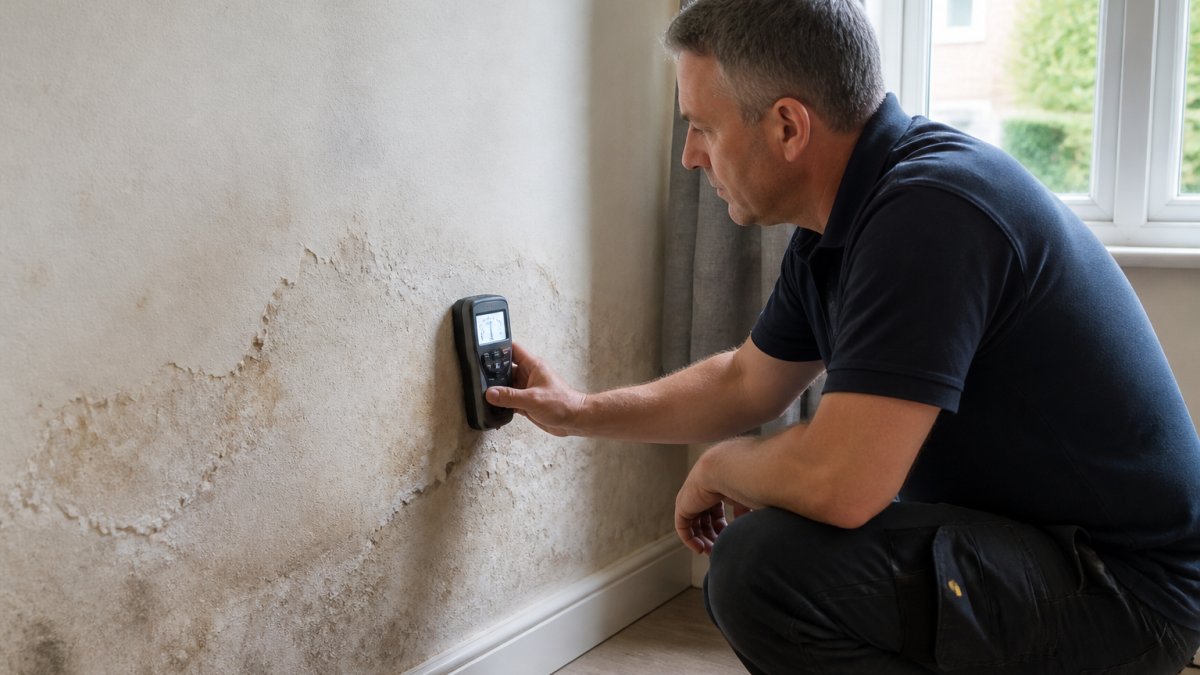
Moisture Meter Testing and In-Home Assessment
Moisture meters provide objective data. A specialist presses the meter probe against the wall at various heights, ground level, one metre up, two metres up, to map how moisture decreases with height.
An in-home assessment also reveals the building’s construction: concrete slab foundations behave differently from timber stumps, and older weatherboard homes have different vulnerabilities than brick veneer.
Some specialists use calcium carbide testing or plaster samples to confirm salt presence, proving rising damp is occurring, not just that moisture is present. The findings guide whether a damp-proof course injection, sub-surface barrier, or sub-floor ventilation system is appropriate.
A comprehensive assessment typically takes 30-60 minutes for a residential property.
Rising Damp Treatment Methods Explained
Once diagnosis confirms rising damp, treatment depends on the building type, the severity of damage, and the damp-proof course situation.
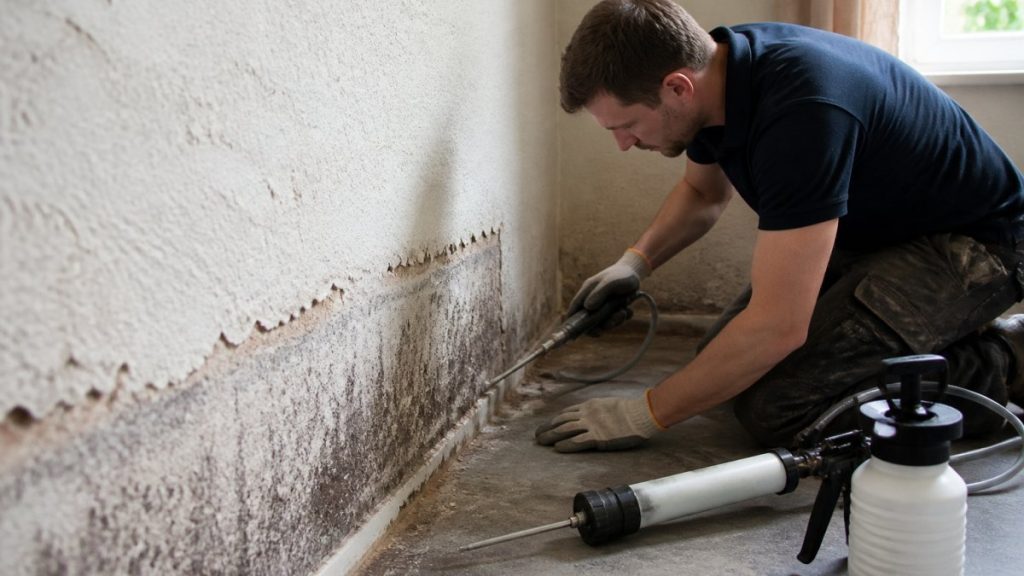
Damp-proof course injection is the most common treatment for older properties where the original damp-proof course has failed or doesn’t exist.
Physical barriers involve excavating soil away from the external wall, exposing the foundation, and installing a new impermeable membrane or coating.
Damp-Proof Course Installation and Sub-Surface Barriers
A damp-proof course is a horizontal barrier, historically slate, lead, or bitumen, built into the wall during construction to stop rising damp. Modern installations use synthetic membranes or chemical injection.
Sub-surface barriers extend this concept to the ground itself: a membrane under the building’s footprint prevents moisture rising through the soil into the foundation, often combined with sub-floor ventilation.
Sub-Floor Ventilation and Moisture Control
Sub-floor ventilation systems actively manage moisture beneath the building. Air is drawn from outside, filtered, and circulated under the floor, displacing humid air and reducing condensation. Doctor Damp Ventilation specialises in these systems because they address moisture at the source.
Effective sub-floor ventilation requires proper ductwork, extraction points, and intake vents sized to the building’s footprint, running continuously or on a timer depending on local humidity. Combined with a damp-proof course or moisture barrier, it provides comprehensive protection.
Rising Damp Treatment Cost in Australia and Getting a Quote
Most homeowners searching for a rising damp repair specialist want a realistic idea of cost before they pick up the phone, but few specialists publish pricing and quotes can vary by thousands for what sounds like the same job. Understanding what drives the number, and how to compare quotes fairly, is the difference between a sound investment and an expensive experiment.
Typical cost ranges by treatment method
Pricing is genuinely variable because every wall, building and moisture profile is different. Treat them as budgeting guides, not fixed prices.
These figures are indicative only. Get at least three itemised quotes for your specific property before committing. A quote that is dramatically cheaper than the others usually reflects a narrower scope, cheaper materials, or a diagnosis that has not been properly tested.
What actually drives the final price
The single biggest cost variable is not the treatment method, it is the extent of damage already done. A wall caught early needs injection and minimal making good. A wall that has been damp for years may need plaster stripped to a metre or more, render removed, timbers replaced and the wall allowed to dry for weeks before reinstatement. That difference alone can double a quote.
Other factors that move the number:
- Wall construction and thickness. Solid brick, stone and rendered walls take longer to drill and inject than cavity brick or lightweight construction.
- Access. Internal walls, tight side passages, heritage overlays and upper-storey work all add labour.
- Height of the damp zone. Treatment is priced by wall length and sometimes by the height of affected plaster; a two-metre rise costs more to remediate than a half-metre rise.
- Drying time and sequencing. If replastering must wait for the wall to dry, you may pay for a return visit or for temporary protection.
- Heritage or strata requirements. Heritage overlays can require specific materials and approvals; strata properties may need body corporate consent and coordinated access.
- Contingencies. Asbestos in older plaster, hidden leaks, or failed sub-floor timbers discovered mid-job all add cost. A good quote flags these as provisional sums rather than pretending they don’t exist.
How to compare quotes fairly
A cheap quote and an expensive quote are not comparable unless they cover the same scope. Before comparing totals, check that each quote specifies:
- The diagnosis and evidence, what testing was done, and what it found.
- The treatment method and materials, product type, brand where relevant, and quantity.
- The extent of making good, how much plaster is removed and replaced, and whether decoration is included.
- Drying and sequencing, how long before replastering, and who returns for what.
- Exclusions, asbestos handling, electrical make-safe, cabinetry removal, painting.
- Warranty terms, duration, what is covered, and what voids it.
A quote that is $1,500 cheaper but excludes plaster replacement and decoration is not cheaper at all. Ask each specialist to quote to the same scope, or ask them to explain any difference in scope in writing.
Getting a useful quote
When you request a quote, give the specialist enough information to price accurately: the property’s age, construction type, number of storeys, the rooms affected, and photographs of the damp patches, salt staining and any visible sub-floor area. Ask whether the assessment includes moisture meter readings and, where relevant, salt or carbide testing. Ask for the quote in writing, itemised, with the warranty attached.
Budget for the treatment plus making good, not just the treatment. The cheapest quote is rarely the cheapest outcome, and the most expensive quote is only worth it if the scope and warranty justify it.
What to Expect in a Rising Damp Repair Quote
The timeline matters. Injection-based damp-proof courses need the wall to dry fully before replastering, typically 4-12 weeks depending on wall thickness and ventilation. Sub-floor ventilation installation might take 2-5 days.
Guarantees vary. Understand what the guarantee covers: if the damp returns, does the specialist return to retreat the wall at no cost, or do you pay for a second application?
How to Verify Your Specialist’s Credentials and Protect Yourself
Hiring a rising damp specialist is a significant purchase, often several thousand dollars, and the work is largely hidden once the plaster goes back on. That makes verification before you sign more important than in almost any other trade. Most of what you need to check is public, free and quick, if you know where to look.
Licensing: check the register, not the business card
Building and specialist trade licensing is administered by state and territory regulators, and the requirements differ. In New South Wales, for example, residential building work above a threshold value must be carried out by a licensed contractor under the Home Building Act 1989, and licences can be checked on the NSW Fair Trading register. Victoria has a similar system through the Victorian Building Authority.
Whatever the jurisdiction, the principle is the same: ask for the licence number and the name it is held in, then verify it yourself on the relevant regulator’s public register. Check three things:
- The licence is current, not expired or suspended.
- The licence class covers the work being quoted (some licences cover only certain types or values of work).
- The name on the licence matches the entity you are contracting with, not just a trading name.
A business name registration is not a licence. An ABN is not a licence. A logo on a van is not a licence. Verify on the regulator’s register before any deposit is paid.
Insurance: two different policies, two different jobs
Ask for current certificates of currency for:
- Public liability insurance, covers damage to your property or injury to others during the work. A common minimum in residential work is $5 million, though higher is better.
- Professional indemnity insurance, covers errors in diagnosis or advice. This matters in damp work, where a wrong diagnosis leads to the wrong treatment.
Check the certificate’s expiry date and the policyholder’s name. If the certificate is in a different company’s name, ask why.
Consumer protections you should know about
Australia has strong consumer guarantees that apply to building and trade services, regardless of what a contract says. Under the Australian Consumer Law, services must be delivered with due care and skill, be fit for the purpose you made known, and be delivered within a reasonable time.
State and territory fair trading and consumer affairs agencies also handle complaints and disputes, and many offer mediation before matters go further.
References and evidence of outcomes
Ask for references from jobs comparable to yours, same construction type, similar damp severity, similar timeframe. When you call, ask:
- Did the diagnosis match what was actually found when work started?
- Did the damp stay away after the agreed drying period, and was it re-checked?
- Did the specialist return for warranty issues, and how quickly?
- Would you use them again?
A specialist who cannot or will not provide references for comparable work is a risk. Online reviews are useful context but no substitute for a direct conversation with a past customer.
The written scope and warranty are your real protection
Before signing, insist on a written scope that states the diagnosis, the treatment method, the materials, the extent of making good, the drying and return-visit schedule, and the warranty terms. The warranty should state its duration, what is covered, what is excluded (for example, damage caused by later plumbing leaks or altered drainage), and how a claim is made.
Verify the licence on the regulator’s register, confirm both insurance certificates are current, ask about statutory compensation scheme coverage, and get the scope and warranty in writing. These four steps cost nothing and protect thousands.
Doctor Damp Ventilation has operated for over a century, holds current licensing across our service areas, and carries comprehensive public liability and professional indemnity insurance. We provide written, itemised scopes and warranties with every job, and we welcome customers verifying our credentials before they commit.
Frequently Asked Questions
What can be mistaken for rising damp?
Condensation, lateral damp from failed gutters or downpipes, and plumbing leaks often mimic rising damp symptoms. Salt efflorescence on walls can also resemble damp staining. A qualified rising damp repair specialist uses moisture meters and physical inspection to distinguish rising damp from these conditions. Misdiagnosis leads to wasted money on unnecessary treatment, so always request a thorough assessment before committing to work.
How much does rising damp treatment cost in Australia?
Treatment costs vary significantly based on property size, foundation type, damage extent, and chosen remediation method. A specialist will provide an accurate quote tailored to your situation. Always ensure your quote includes labour, materials, and any necessary aftercare.
How can I tell if a rising damp repair specialist is qualified?
Look for fully licensed tradespeople with documented experience in sub-floor ventilation, damp-proofing, and moisture remediation. Ask for references, evidence of completed work, and details of any guarantees or warranties on their remedial work. Verify they use moisture meters and proper diagnostic methods rather than recommending treatment without testing.
How long does rising damp treatment take?
Installation timelines depend on the chosen method and property complexity. Sub-floor ventilation systems typically require several days to install, whilst damp-proof course injection may take one to two days. Your specialist should outline the full installation schedule and any disruption to your home during the process. Most remedial work can be completed without requiring you to vacate the property, though access to affected areas is essential.
