
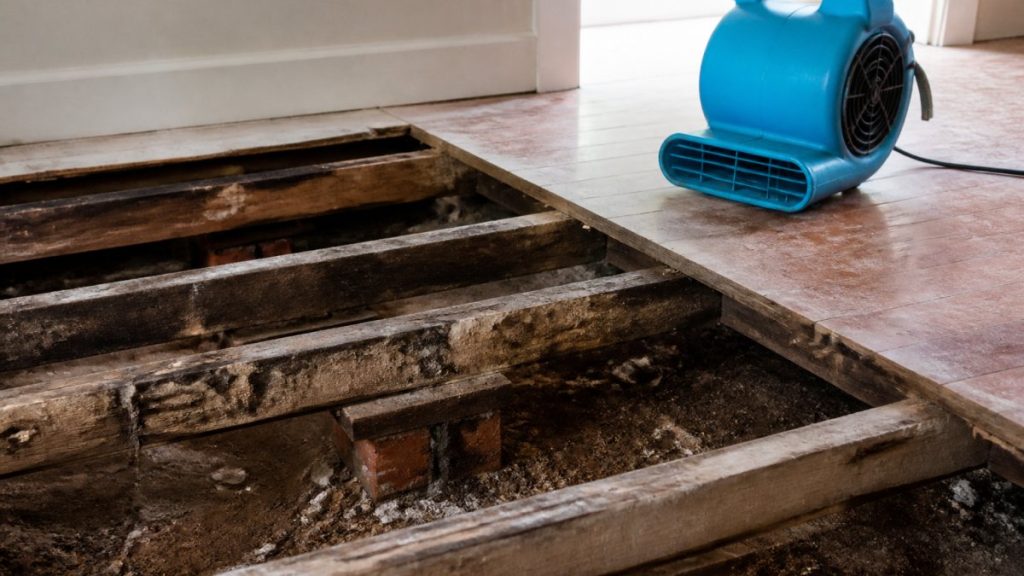
Last Updated: October 28, 2026
Quick Summary
To prevent mould under floorboards, find and fix the moisture source first, then dry the subfloor with airflow and keep it dry with permanent subfloor ventilation. Clear vents every 3 months and keep timber below about 15% moisture and subfloor humidity below roughly 70%.
- A musty smell under floorboards can be a sign of damp or mould.
- Confirm a likely moisture source with a moisture meter before sealing or treating anything.
- Clear subfloor vents every 3 months so air moves freely through every vent.
- Timber that stays below about 15% moisture is generally considered dry.
- Relative humidity above roughly 70% for extended periods is the condition mould needs.
Table of Contents
- Signs You Have Mould Under Floorboards
- Find the Moisture Source Before You Treat Anything
- How to Dry a Wet Subfloor Properly
- Why Subfloor Ventilation Is the Long-Term Fix
- Treating Existing Mould Without Damaging the Timber
- A Prevention Schedule That Keeps Floor Timbers Dry
- When to Call a Subfloor Ventilation Specialist
- Frequently Asked Questions
Signs You Have Mould Under Floorboards
Mould under floorboards often announces itself before you ever see it. The first clue is usually a smell, not a stain.
What a Musty Smell Under Floorboards Tells You
A musty smell under floorboards can be a sign of damp or mould. If the smell returns every time the weather turns, moisture may be present below.
That smell rarely stays put. It drifts up through gaps around skirting boards and floorboards, then settles into carpets and furniture. If you can smell it in one room more than others, start your inspection there. For a full walkthrough of tracking that smell to its source, see our guide on why your house smells musty.
Visible Clues Around Skirting Boards and Floorboards
Look along the bottom edge of your walls. Dark staining, bubbling paint, or a chalky white line on the skirting boards can be signs of moisture. Pull back a corner of carpet if you can. Discoloured boards, soft patches, or fine dark speckling can be signs of a problem.
Other signs worth checking:
- Gaps between floorboards that feel damp to the touch
- A hollow or spongy feel when you walk on certain boards
- Small white or black specks on timber near brick piers
- Condensation on exposed pipes or joists
Any one of these is reason enough to look underneath.
Find the Moisture Source Before You Treat Anything
Addressing the moisture source is important when treating mould. The goal here is to identify the source before you seal, treat, or install anything.
A Diagnostic Decision Tree
These questions can help you consider possible sources.
- Is the damp worse after rain, or concentrated near external walls and downpipes? If yes, drainage or water ingress may be worth investigating. Check gutters, downpipe discharge, surface grading, and any cracks at the base of walls.
- Is there a musty smell that is constant rather than weather-dependent, with high subfloor humidity but no obvious wet patch? If yes, poor ventilation or condensation may be worth investigating.
- Is the damp rising up the base of walls, with a tide mark on brickwork or plaster? If yes, rising damp may be worth investigating.
- Is there a wet patch that does not follow rain or humidity, often near a bathroom, kitchen, or laundry? If yes, a plumbing leak may be worth investigating.
- Is the ground under the floor visibly damp, with no moisture barrier or a torn one? If yes, ground moisture may be worth investigating.
Identify the moisture source before deciding whether to seal or install a barrier.
Common Causes and What Each One Looks Like
- Poor ventilation: high subfloor humidity, a constant musty smell, and condensation on cold pipes or joists. Air feels still and heavy.
- Rising damp: a tide mark on the lower wall, damp plaster, and salt deposits. It is persistent and not tied to weather.
- Plumbing leaks: a localised wet patch, rusted or dripping joints, and damp lagging on pipes. Often worse near wet areas.
- Poor drainage: water pooling against the foundations, damp soil at the base of walls, and overflow after rain.
- Blocked or buried subfloor vents: airflow cut off at the source, with high humidity and a stale smell in the crawl space.
- Broken or missing moisture barriers: damp soil under the floor, visible ground moisture, and a barrier that is torn, missing, or laid upside down.
How to Inspect Beneath the Floor
Get a torch, a mask, and old clothes. Lift a floorboard or access hatch and look along the joists and bearers. Check for:
- Damp patches on timber or brickwork
- Rusted or dripping pipes
- Standing water or wet soil
- Debris blocking vents
- A moisture barrier that is torn, missing, or laid upside down
Take photos as you go. They help when you talk to a specialist later. Watch out: never enter a crawl space with standing water or loose wiring. If the space looks unsafe, stop and call a professional.
Confirm the Diagnosis Before You Act
Once you have a likely source, confirm it with a moisture meter. Take a reading at the suspect area and at a known-dry reference point nearby.
How to Dry a Wet Subfloor Properly
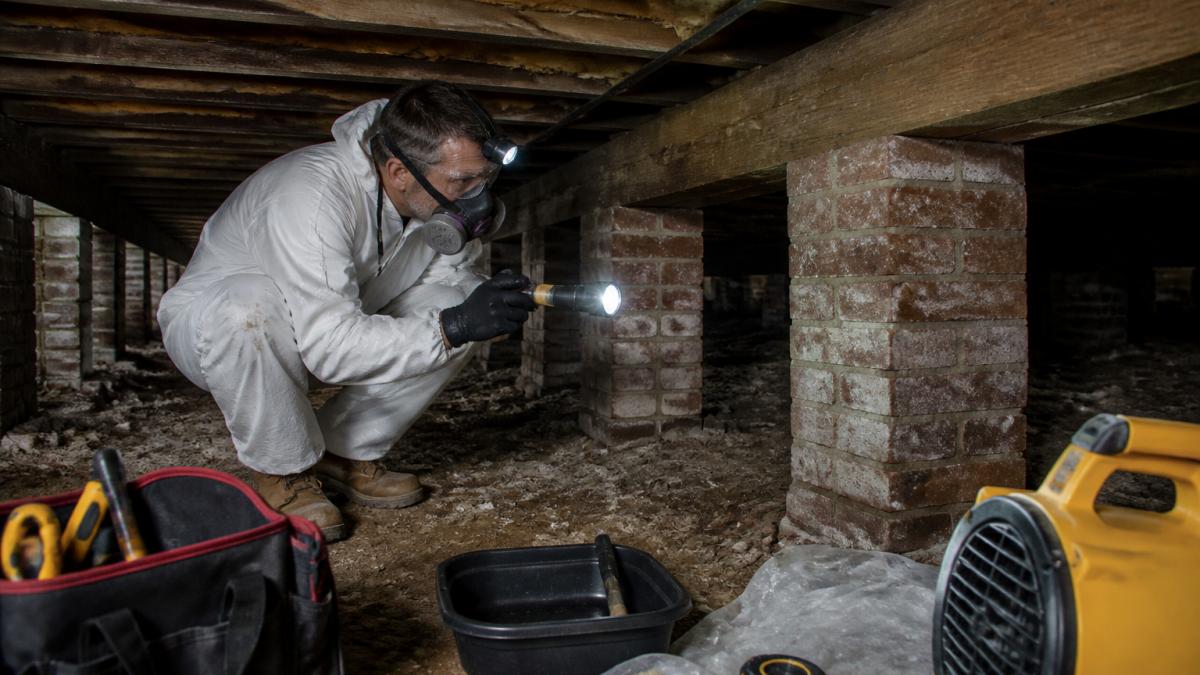
Start by fixing the leak or clearing the blockage. Then open up airflow. A dehumidifier helps in enclosed spaces, but it cannot replace proper ventilation. Run fans to push humid air out and draw drier air in. Check the timber every few days with a moisture meter. Do not seal anything back up until readings stay stable and dry.
Why Subfloor Ventilation Is the Long-Term Fix
Subfloor ventilation is the permanent answer to mould under floorboards because it removes the humid air mould needs to grow. Drying once solves today’s problem. Ventilation stops it coming back next season. Consistent airflow remains the most effective strategy for preventing mould growth, though structural adjustments often require a broader approach to moisture control.
Airflow, Vents and Moisture Barriers That Work Together
- Vents: clear of soil, plants, and debris, on opposite sides of the house
- Moisture barrier: intact, correctly laid, and covering the ground
- Air path: no obstructions between inlet and outlet vents
For a practical walkthrough, read our step-by-step guide to ventilating under a house. If you are weighing up hardware, our comparison of subfloor ventilation fans versus passive vents covers which suits older homes and which suits newer builds.
Treating Existing Mould Without Damaging the Timber
Mould often runs deeper than the surface. Where growth is widespread, or where spores have spread into living areas, professional mould removal and treatment is the safer route. It also confirms the growth is actually gone.
A Prevention Schedule That Keeps Floor Timbers Dry
A prevention schedule keeps floor timbers dry by catching moisture early, before mould gets a foothold. The routine below is built around measurable thresholds, not guesswork, so you can tell the difference between a healthy subfloor and one that is starting to drift. Most practitioners find that ten minutes every few months is cheaper than replacing floor timbers.
Measure Before You Manage
You cannot prevent what you do not measure. Two inexpensive tools do most of the work:
- A pin-type moisture meter for timber. Push the pins into joists and bearers, not just the surface. Readings are expressed as a percentage of moisture content. As a working rule, timber that stays below about 15% is generally considered dry; readings that sit consistently above 18-20% indicate active dampness and a likely moisture source. Treat any reading above 20% as a prompt to investigate, not a reason to seal.
- A hygrometer for the air in the subfloor. Relative humidity (RH) above roughly 70% for extended periods is the condition mould needs. If RH stays high while timber readings are also climbing, ventilation is the first thing to check.
Take readings in the same spots each time and write them down. A single reading tells you little; a trend over months tells you whether the subfloor is drying, stable, or getting wetter.
The Prevention Schedule
| Task | How often | What to check | Pass condition |
|---|---|---|---|
| Clear subfloor vents | Every 3 months | Soil, plants, debris, blocked mesh | Air moves freely through every vent |
| Inspect crawl space | Every 6 months | Damp patches, leaks, barrier damage, standing water | No new staining, barrier intact and covering ground |
| Take moisture readings | Twice a year, plus after heavy rain | Timber at labelled test points; subfloor RH | Timber below ~15%; RH below ~70% |
| Clear gutters and drains | Before and after the wet season | Overflow, downpipe discharge near foundations | Water directed away from the building |
| Check plumbing under the floor | Annually | Slow drips, rusted joints, condensation on pipes | No active drips or damp lagging |
| Re-check after heavy rain | As needed | New damp or musty smell | No change in readings or smell |
System-Specific Adjustments
The same schedule does not suit every floor system. Adjust the emphasis:
- Suspended timber floors rely on cross-flow ventilation. Keep vents on opposite sides clear and confirm air can travel between inlet and outlet. This is where blocked vents do the most damage.
- Concrete slabs have no subfloor cavity to ventilate. Prevention shifts to ground moisture, drainage, and the damp-proof membrane. Watch for rising damp at the slab edge and moisture wicking into wall plates.
- Crawl spaces need the most frequent inspection because debris, soil build-up, and fallen insulation block airflow. Clear the ground and keep the moisture barrier continuous.
- Humid or high-rainfall climates warrant quarterly readings rather than twice-yearly, and a re-check after every significant rain event.
What to Do When a Reading Fails
If timber reads above 20% or RH stays above 70%, do not seal or treat yet. Find the source first: check vents, look for leaks, inspect the moisture barrier, and confirm drainage is carrying water away from the building. Dry the space with airflow and re-measure. Only when readings return to the dry range and stay there should you consider closing up or treating. If readings stay high after the source is addressed, that is your signal to bring in a specialist rather than repeat the same fix.
When to Call a Subfloor Ventilation Specialist
Consider seeking professional advice if the moisture source is unclear, mould returns after treatment, or timber is soft or discoloured.
Doctor Damp Ventilation designs and installs subfloor ventilation systems, moisture control technology, and non-toxic mould removal. If you are ready to address damp, talk to our subfloor ventilation specialists.
Frequently Asked Questions
What causes mould to grow under floorboards?
Damp and mould under floorboards can have various possible causes, including plumbing leaks, drainage issues, rising damp, condensation and blocked subfloor vents. If you are unsure what is causing the problem, consider seeking professional advice.
Does subfloor ventilation help prevent mould under floorboards?
Doctor Damp Ventilation designs and installs subfloor ventilation systems and moisture control technology. Whether ventilation is suitable depends on the circumstances; contact the business to discuss your situation.
How do I dry a wet subfloor after a leak or flooding?
If a subfloor is wet after a leak or flooding, consider seeking professional advice about the appropriate next steps.
When should I call a damp or mould specialist?
Consider seeking professional advice if a musty smell returns after cleaning, mould covers a large area of timber, or you cannot identify the source of moisture. Doctor Damp Ventilation is fully licensed and offers subfloor ventilation, moisture control technology and non-toxic mould removal.
Mould under floorboards will keep coming back until the moisture behind it is dealt with. Doctor Damp Ventilation has spent over a century helping homeowners eliminate damp, mould, and musty odours for good. Our licensed specialists design and install subfloor ventilation systems, moisture control technology, and non-toxic mould removal, all built around your home’s specific layout. Get started with Doctor Damp Ventilation and breathe easier in a drier, healthier home. Call 1300 557 687 today.

