
Last Updated: November 1, 2026
Quick Summary
Yes, rising damp can cause mould because it keeps wall surfaces wet for long periods, and mould needs damp conditions to grow. A musty smell often appears first, followed by dark patches near skirting boards. Treat the moisture source first, then remove the mould.
- The clearest sign of rising damp is a horizontal tide mark within the first metre above the floor.
- White, powdery salt deposits near the skirting board point strongly to rising damp rather than condensation.
- Check gutters, plumbing, ground levels and ventilation before paying for any damp-proofing work.
- Walls that have held moisture for a long time can take weeks or months to dry fully.
- Call a professional when damp keeps coming back or mould covers more than a small patch.
Table of Contents
- Can Rising Damp Cause Mould? The Short Answer
- Signs of Rising Damp to Watch For
- Rising Damp vs Condensation: Telling Them Apart
- How to Treat Rising Damp and Stop Mould Returning
- Rising Damp Treatment Cost in Australia: What to Expect
- When to Call a Professional for a Damp and Mould Inspection
- Book a Damp Assessment Before Mould Takes Hold
- Frequently Asked Questions
Can Rising Damp Cause Mould? The Short Answer
Yes. Rising damp can cause mould, and the link between them is moisture. Mould needs damp conditions to grow, and rising damp keeps wall surfaces wet for long periods. A musty smell often appears first, then dark patches near skirting boards. If you want the full picture on how ground moisture travels upward, read our rising damp guide before you treat anything. Below, we explain exactly how rising damp and mould connect, how to spot the signs, and how to stop both.
Rising damp is the upward movement of moisture from the ground into walls and floors through capillary action. It usually shows up as a damp band at the base of a wall. That constant moisture raises indoor humidity and gives mould spores the conditions they need to grow.
Mould will not grow without moisture. A review of mould-affected housing research found that damp housing is a recognised problem across many regions, and that moisture is the key driver. Rising damp is one source of that moisture.
Signs of Rising Damp to Watch For
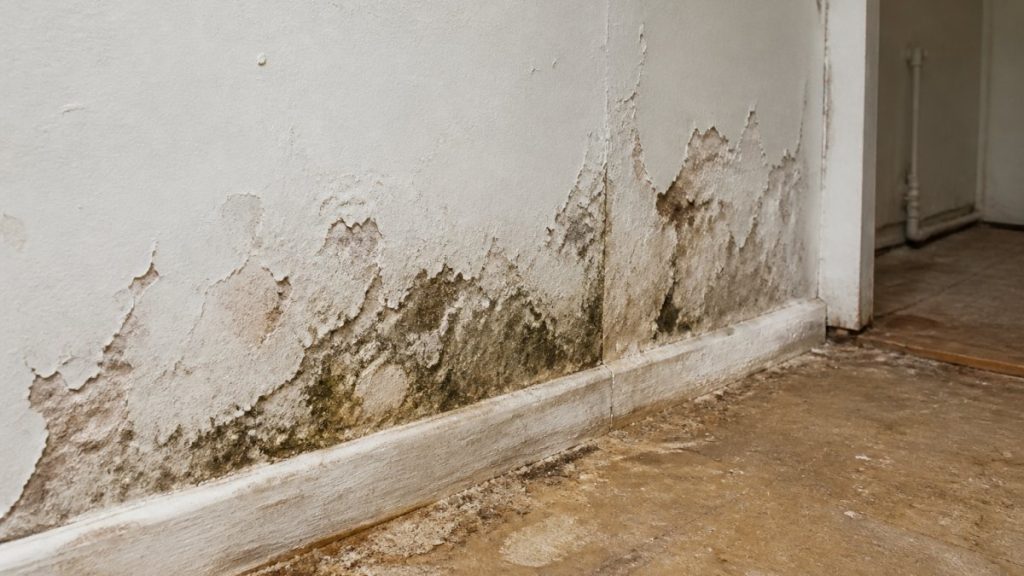
The clearest sign is a tide mark on the lower wall. Look for a horizontal line of damp staining, usually within the first metre above the floor. It often comes with a musty smell that never quite goes away.
Other common signs of rising damp include:
- Peeling paint or bubbling plaster near skirting boards
- White, powdery salt deposits on the wall surface
- Dark or discoloured patches that stay damp
- Lifting floorboards or rotting timber near the base of walls
- Black mould in corners at low level
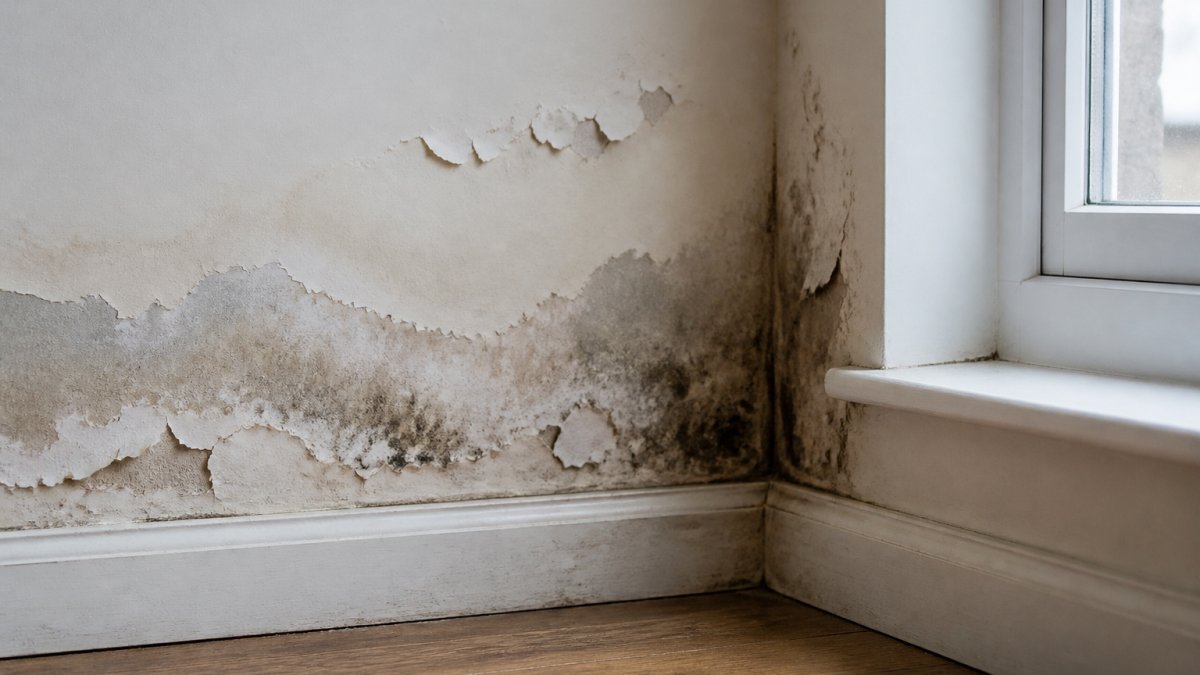
A common mistake is treating the mould patches and ignoring the damp, since the moisture source is still there.
Rising Damp vs Condensation: Telling Them Apart
Rising damp comes from the ground and climbs upward. Condensation comes from moist air inside the home and settles on cold surfaces. Penetrating damp comes from water entering through the building fabric. All three can leave walls looking damp, but they need different fixes, so getting the diagnosis right matters more than any single treatment.
Here is how the three compare:
| Feature | Rising Damp | Condensation | Penetrating Damp |
|---|---|---|---|
| Location | Low on walls, near floors | Windows, ceilings, cold corners | Anywhere, often after rain |
| Pattern | Horizontal tide mark | Widespread surface moisture | Localised patches that grow |
| Timing | Constant, year-round | Worse in cold weather | Worse after rain or leaks |
| Smell | Persistent musty odour | Mild, varies with airflow | Damp, sometimes earthy |
| Cause | Ground moisture | Poor ventilation, high humidity | Building defects, leaks |
A practical diagnostic checklist helps narrow it down before you call anyone:
- Location. Rising damp almost always appears at the base of ground-floor walls, often within the first metre above the floor. Condensation tends to show on windows, ceilings, and cold external corners. Penetrating damp can appear anywhere water can get in, including upper floors.
- Pattern. A horizontal tide mark low on the wall is the classic rising damp sign. Condensation is usually more widespread and follows cold surfaces. Penetrating damp often forms a localised patch that grows after rain.
- Salts. White, powdery salt deposits near the skirting board point strongly to rising damp, because ground moisture carries salts that crystallise as the wall dries. Condensation does not usually leave salts.
- Moisture readings. A moisture meter can confirm that the wall is wet, but it cannot tell you why. Readings taken at different heights and depths help show whether moisture is concentrated at the base or spread across surfaces.
- Timing and weather. Damp that worsens after rain suggests penetrating damp. Damp that is constant year-round and concentrated low on the wall suggests rising damp. Damp that worsens in cold weather and improves with ventilation suggests condensation.
Visual signs alone are not conclusive. Salts, tide marks, and damp patches can overlap between damp types, and a wall can have more than one problem at once. Use the checklist to form a hypothesis, not a final diagnosis.
If you are unsure which one you have, check the pattern first. A horizontal band low on the wall points to rising damp. Damp near a window or ceiling usually points to condensation or a leak. Damp that appears after rain on an upper wall points to penetrating damp. For a full breakdown of how ground moisture travels upward, read our rising damp guide.
How to Treat Rising Damp and Stop Mould Returning
Treat the moisture source first, then deal with the mould. Cleaning mould without fixing the damp is a short-term fix at best. Before paying for any remedial work, work through a step-by-step investigation so you are treating the right problem.
Step 1: Investigate before you treat
A common pattern is to assume every low-level damp patch is rising damp and pay for damp-proofing before checking simpler causes. Work through these checks first:
- Gutters and downpipes. Blocked or leaking gutters can send water into walls and foundations, producing damp that looks like rising damp. Check them before anything else.
- Plumbing. A slow leak under a floor or behind a wall can keep the base of a wall wet for months. Look for signs of leaks near the damp area.
- Ground levels. Soil, paving, or garden beds built up above the damp-proof course can bridge it and let ground moisture into the wall. Check that external ground levels sit below the damp-proof course.
- Ventilation. Blocked sub-floor vents or sealed airbricks trap moisture under the floor and can worsen damp at the base of walls.
- Moisture patterns. Take readings at several heights and locations. Moisture concentrated at the base and fading upward supports rising damp. Moisture that follows a leak or a cold surface points elsewhere.
A moisture meter confirms that a wall is wet, but it does not confirm why. Use readings to map the pattern, then match it to the checklist above before committing to treatment.
Step 2: Fix the source
Once you have a working diagnosis, address the cause. For rising damp, that usually means repairing or installing a damp-proof course and correcting ground levels and sub-floor ventilation. For condensation, it means improving ventilation and reducing indoor moisture. For penetrating damp, it means repairing the building defect, such as a leaking roof, cracked render, or faulty plumbing.
Step 3: Dry the space
Heating and ventilation work together to lower indoor humidity. Walls that have held moisture for a long time can take weeks or months to dry fully. Do not assume the problem is solved just because the surface looks dry. Monitor moisture levels over weeks, not days.
Step 4: Remove the mould safely
Wear gloves and a mask, and use non-toxic removal methods where possible. Avoid dry brushing, which can spread spores. For mould that has spread across a large area, professional mould removal and treatment is the safer route. It removes the growth and helps stop it returning.
Step 5: Prevent recurrence
Prevention is about keeping moisture out and keeping air moving. Sub-floor ventilation and ducted exhaust systems help move damp air out. Keep gutters clear, maintain ground levels below the damp-proof course, and fix leaks promptly. Covering or cleaning mould alone will not solve the moisture problem, and the mould will return while the source remains.
Treatment choices have limits. Source repair addresses the cause, drying and ventilation manage the moisture that remains, and damp-proofing prevents future ground moisture. No single step replaces the others, and the right combination depends on the diagnosis.
Rising Damp Treatment Cost in Australia: What to Expect
Pricing depends on the size of the problem, the type of treatment, and the property. There is no single figure that fits every home.
Costs can vary based on:
- The extent of the damp and how long it has been present
- Whether sub-floor ventilation needs to be installed
- The size and layout of the sub-floor area
- Whether mould removal is also needed
We do not quote fixed prices without seeing the property, because the right fix depends on the diagnosis. For a detailed breakdown of what drives the budget, see our guide to rising damp treatment cost.
Be wary of any quote given without an inspection. A proper assessment checks the moisture source, not just the visible damage.
When to Call a Professional for a Damp and Mould Inspection
Call a professional when the damp keeps coming back, when mould covers more than a small patch, or when you cannot find the moisture source. These are signs the problem needs a trained eye.
A good inspection should include:
- A moisture reading of walls and sub-floor areas
- A check for water ingress, leaks, and faulty plumbing
- An inspection camera check where needed
- A clear diagnosis of the moisture source
- A treatment plan that addresses the cause, not just the symptoms
If you have had conflicting opinions from other inspectors, ask for the reasoning behind the diagnosis. A proper inspection explains what the evidence shows. If you are ready to find a specialist, our guide to finding a rising damp repair specialist explains what to look for.
Book a Damp Assessment Before Mould Takes Hold
Mould is a symptom. The damp underneath is the cause. The longer moisture sits in your walls and sub-floor, the more damage it does to timber, plaster, and indoor air quality.
At Doctor Damp Ventilation, we have over a century of experience helping property owners eliminate damp, mould, and condensation. Our fully licensed team designs and installs sub-floor ventilation systems, moisture control technology, and ducted exhaust systems. We also offer non-toxic mould removal and disinfection.
Do not wait for the musty smell to become a bigger problem. Get in touch with our team to arrange a damp assessment and protect your property.
Frequently Asked Questions
Can rising damp cause mould on walls?
Yes. Rising damp draws ground moisture up through brickwork and plaster, raising the moisture level in wall surfaces. Mould spores need persistent moisture to grow, so damp patches near skirting boards and tide marks become common places for black mould to form. Rising damp is one pathway to that moisture.
What is the difference between rising damp and condensation?
Rising damp comes from groundwater moving up through the structure, usually leaving a tide mark below about one metre and affecting the lower walls. Condensation forms on cold surfaces when indoor humidity is high, often on windows, ceilings and upper walls, and is worse in winter or after showers. A simple check: rising damp patches stay damp year-round, while condensation patches dry out when ventilation improves.
How much does rising damp treatment cost in Australia?
Pricing depends on the extent of the damp, the construction type, and whether sub-floor ventilation, injection damp-proofing or drainage work is needed. Doctor Damp Ventilation does not publish fixed prices because every property is assessed on site. For a ballpark before committing, call 1300 557 687 or request a quote online. Avoid any provider who quotes a firm price without inspecting the sub-floor and wall moisture readings.
Will removing mould stop it from coming back?
Only if you fix the moisture source. Cleaning mould from a wall treats the symptom, not the cause. If rising damp or excess moisture remains, spores will regrow within weeks. Mould will not grow without moisture, so the priority is finding and correcting the water source, then drying and ventilating the space. A professional damp assessment should include moisture readings, a sub-floor inspection and a plan to stop water ingress.
If damp or mould has taken hold in your home, we can help you find the source and fix it properly. Get started with Doctor Damp Ventilation and breathe easier in a drier, healthier home. Call 1300 557 687 today.

