
Quick Summary
Subfloor ventilation is worth it when the underfloor space is holding moisture, but it is not a fix for water entering from outside. Passive vents suit open, well-drained subfloors, while a fan may be needed in enclosed or humid spaces. Confirm the damp source with an inspection before buying any system.
- Passive vents have no running cost but depend on wind and weather to move air.
- Exhaust fans give consistent airflow but add continuous electricity and maintenance costs.
- Fix leaks, poor drainage or rising damp first, since ventilation alone cannot solve them.
- Compare total cost of ownership over the system’s service life, not just the installation price.
- Ask for a written quote that itemises preparation, electrical work and ongoing maintenance.
Table of Contents
- What Subfloor Ventilation Does and Where It Helps
- Signs of Poor Subfloor Ventilation to Look For
- Subfloor Ventilation Fan vs Passive Vents
- When Ventilation Can Make Moisture Worse
- Cost of Subfloor Ventilation Installation in Australia
- Diagnosis First: Confirming the Problem Before You Buy
- Booking a Site Assessment to Decide If Ventilation Is Worth It for Your Home
- Frequently Asked Questions
What Subfloor Ventilation Does and Where It Helps
Subfloor ventilation moves air through the space beneath a home, between the floor and the ground. Its job is to keep that space dry enough that damp does not travel up into timber floors, joists and stumps. Whether it is worth the cost depends on whether the underfloor space is actually holding moisture, which is a question worth answering before any work starts.
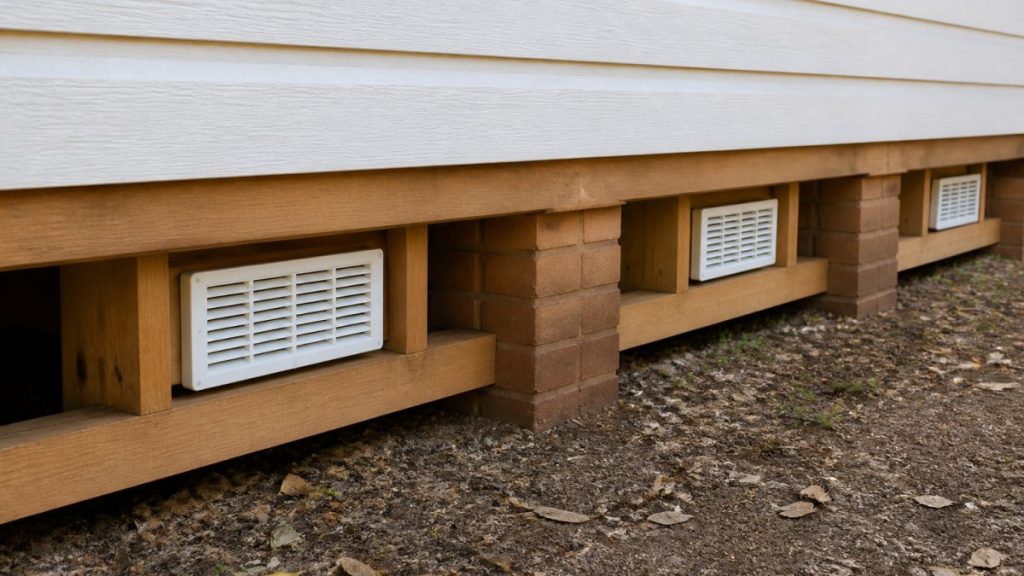
Passive vents, usually grilles set into the foundation walls, rely on natural breezes and temperature differences to move air. Powered systems add a fan to push or pull air through the space. Both aim at the same outcome: replacing damp, stale air with drier air and reducing the conditions that favour mould and condensation.
Ventilation tends to help most in homes where the subfloor is enclosed, the ground is damp or unsealed, and air simply does not move. Older timber-floored homes built on stumps are common examples. Ventilation is less likely to solve a problem caused by water entering from outside, such as a leaking pipe, poor site drainage or rising damp through masonry.
Signs of Poor Subfloor Ventilation to Look For
Homeowners often notice a problem long before they know its cause. The most common warning signs include a musty smell that is strongest near floor level, visible mould or mildew on the underside of floorboards or joists, and timber that feels soft or looks darkened near the ground. Condensation on the inside of windows or on cool floor surfaces can also point to excess moisture in the home as a whole.
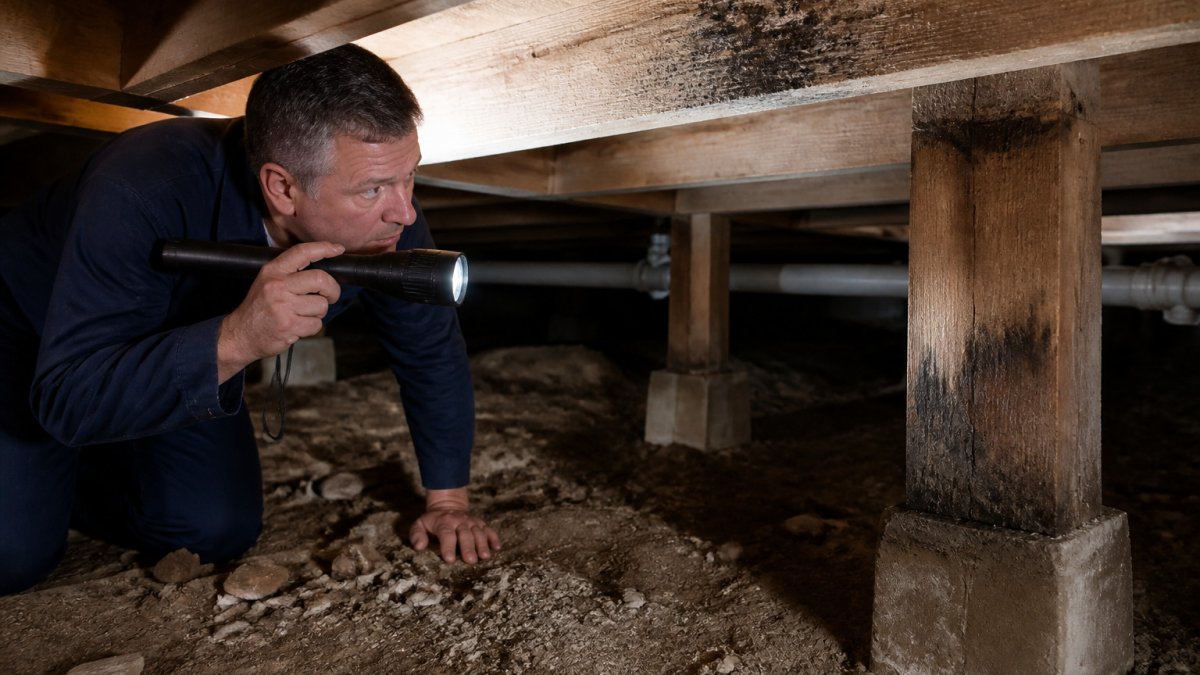
Other signs appear below the house. Look for damp soil that stays wet after rain, standing water, sagging insulation, or sheets of paper that feel cool and clammy. Check the foundation vents too. Vents that are blocked by landscaping, soil or debris cannot move air, even if they are the right size.
Some of these signs have other explanations. A musty smell can come from a blocked drain or a carpet that stays damp. Mould can grow on a single damp spot caused by a plumbing fault. A single symptom rarely confirms a ventilation problem, so it helps to look for several signs together.
Subfloor Ventilation Fan vs Passive Vents
The choice between a fan and passive vents comes down to how much air needs to move, whether natural airflow is enough, and what you are prepared to spend over the life of the system. For a deeper side-by-side breakdown of which option actually performs, see fan versus passive vent performance. Passive vents generally involve lower installation costs and use no electricity. Fans typically cost more and need power, but they can move a set volume of air regardless of wind or temperature. Neither is universally better; the right answer depends on the subfloor.
A Side-by-Side Comparison
Passive vents rely on wind pressure and the stack effect, warm air rising and escaping through high openings while cooler air enters low. They work best when vents are unobstructed, placed on opposite sides of the home, and the subfloor is reasonably open. They have no running cost and almost no maintenance beyond clearing debris.
Exhaust fans mechanically pull air out of the subfloor, drawing replacement air in through vents. They work when the subfloor is enclosed, sheltered from wind, or too humid for natural ventilation. They provide consistent airflow regardless of weather.
Positive-pressure systems push filtered air into the subfloor, slightly pressurising it so moist air is forced out through vents and gaps. They can be useful where you want to control the quality of incoming air, but they are the most complex and costly option and are only worth considering after a proper assessment.
| Factor | Passive vents | Exhaust fan | Positive-pressure system |
|---|---|---|---|
| Upfront cost | Lowest | Moderate to high | Highest |
| Running cost | None | Electricity, continuous | Electricity, continuous |
| Weather dependence | High | Low | Low |
| Maintenance | Clear debris | Fan, filters, electrical | Fan, filters, electrical |
| Best suited to | Open, well-vented subfloors | Enclosed or sheltered subfloors | Subfloors needing controlled intake air |
When Passive Vents Are Enough
Passive vents are usually adequate when the subfloor is reasonably open, the vents are unobstructed and placed on opposite sides of the house, and the ground is not persistently wet. In these homes, cross-ventilation can carry moisture out with little help. Passive vents are often a reasonable starting point where the damp problem is mild and the underfloor space is accessible. Clearing the vents, improving drainage, and laying a ground moisture barrier are common basics to address before adding anything more expensive.
When a Fan Makes Sense
A fan becomes worth considering when passive airflow has been tested and found insufficient, or when the subfloor is enclosed, sheltered from wind or too humid for natural ventilation to cope. Fans are also useful in homes where consistent airflow matters more than running costs. Fans have limits. They need a power supply, they need maintenance, and a poorly sized fan can pull in more humid outside air than it removes. A fan should only be installed after the moisture source has been identified. Before choosing a fan, identifying subfloor moisture helps distinguish a ventilation problem from a leak or another source that needs to be addressed first.
Running Costs and Realistic Expectations
Running costs are the part most homeowners underestimate. A continuously running fan adds to the electricity bill every day of the year, and the cost depends on the fan’s power draw, how many units are installed, and how long they run. Ask the installer for the fan’s wattage and estimate the annual electricity use before committing. Maintenance, cleaning filters, checking belts and electrical connections, is a recurring cost too.
Watch out: a fan that is oversized for the subfloor can short-circuit the airflow path, pulling air from the nearest gap rather than moving it across the whole space, so sizing matters as much as the type of system.
When Ventilation Can Make Moisture Worse
Ventilation is not always the answer. In some conditions, moving air through a subfloor can increase moisture problems rather than reduce them. Warm, humid outside air drawn into a cool subfloor can condense on cold timber and ground surfaces. This is a common issue during humid months in coastal areas.
Ventilation can also worsen rising damp. Where water is wicking up through masonry or soil, airflow may simply speed evaporation in one area while the source continues to supply moisture. The result can look like progress while the underlying problem remains.
Ventilation can also fail in sealed or heavily obstructed subfloors. If air cannot enter and leave freely, a fan may draw air through a few small gaps and leave most of the space unchanged. Before installing any system, confirm that the subfloor has a realistic path for air to move through it.
Cost of Subfloor Ventilation Installation in Australia
Costs vary widely depending on the size of the subfloor, the type of system, access, and whether preparation work such as ground sealing is needed. Costs vary widely depending on the size of the subfloor, the type of system, access, and whether preparation work is needed. Ask any installer for a written quote and breakdown, and contact Doctor Damp Ventilation through its website for current pricing.
What Drives the Price
Several factors affect the final cost:
- Subfloor size and layout, a larger or more compartmentalised space needs more vents, more fan capacity or both.
- System type, passive vent upgrades sit at the lower end; powered systems with fans, controls and electrical work sit at the higher end.
- Access and preparation, restricted access, soil removal, ground moisture barriers and drainage work all add cost.
- Electrical work, fans need a power supply, and a licensed electrician’s work is a separate line item.
- Number of units, larger subfloors may need multiple fans rather than one.
Total Cost of Ownership
The upfront price is only part of the picture. A powered system carries ongoing costs that passive vents do not:
- Electricity, continuous fan operation adds to every bill. Ask for the wattage and estimate annual use before you commit.
- Maintenance, filter cleaning, belt checks and electrical inspections are recurring costs.
- Repairs and replacement, fans have a service life, and replacement is a future cost to budget for.
- Diagnosis, a proper assessment before installation costs money but can prevent spending on the wrong system.
When you compare quotes, compare total cost of ownership over the expected service life, not just the installation figure. A cheaper passive system that does not solve the problem is poor value; an expensive fan installed for the wrong reason is worse.
A quote that does not itemise preparation work, electrical connections and ongoing maintenance can be hard to compare, so ask for a written breakdown that separates each component.
Diagnosis First: Confirming the Problem Before You Buy
Before spending on any system, confirm what is causing the damp. A proper inspection of the subfloor, the ground, the foundation vents, the drainage around the home and any plumbing that runs underneath is a sensible first step. Taking moisture readings where possible, and noting where and when the problem appears, helps.
A common mistake is buying a fan to fix a problem that is actually caused by a leak, poor drainage or rising damp. A fan may reduce the symptom for a short time while the source continues. If you are unsure whether you have a damp problem, learn the causes, signs and treatment of rising damp before committing to a fix.
If the inspection finds a clear, ventilation-related cause, such as stale air, enclosed space or blocked vents, then a system can be designed to address it. Ask for a written assessment that explains what was found and why a particular approach is recommended.
Booking a Site Assessment to Decide If Ventilation Is Worth It for Your Home
If you are unsure whether subfloor ventilation is worth it for your home, the next step is a site assessment. A professional inspection can confirm the cause of the damp, check the existing vents and drainage, and recommend whether passive vents, a fan or a different fix makes the most sense.
You can talk to our subfloor ventilation experts about your home’s specific conditions, or request a site assessment through our contact page to arrange an inspection. If you are still comparing options, our guide on whether an older home needs subfloor ventilation explains the common scenarios in more detail.
Frequently Asked Questions
How do I know if I need subfloor ventilation?
Look for a musty smell in the home, condensation on windows or walls, mould on the underside of timber floors, and damp soil or pooling water beneath the house. These signs suggest moisture is building up under the floor. They do not prove ventilation is the fix, though. Rising damp or drainage problems can cause the same symptoms, so a proper inspection beneath the floor should confirm the cause before any system is installed.
Is a subfloor ventilation fan better than passive vents?
It depends on the airflow under your home. Passive vents rely on natural air movement and can fail in still or enclosed spaces. A fan can move air when passive vents do not produce effective airflow. Fans add running costs and need correct sizing. Where rising damp is the real cause, a fan may not help much, so the underlying moisture source needs to be identified first.
What does subfloor ventilation cost in Australia?
Final pricing depends on the size of the subfloor, the system chosen and the work required. For a current quote, contact Doctor Damp Ventilation directly through its website.
Can poor subfloor ventilation cause structural damage?
Persistent dampness under a house can contribute to problems with timber floors, joists and stumps, and it can attract pests. Moisture that stays trapped beneath the floor creates conditions for decay and mould. Ventilation can help reduce that moisture where airflow is the issue, but it is not a repair for existing structural damage. A qualified inspector should assess any damage before work begins.

