
Table of Contents
- Why Subfloor Moisture Control Matters for Your Home
- Understanding Subfloor Moisture Problems
- How Professional Moisture Testing for Subfloors Works
- The Role of Subfloor Ventilation in Moisture Management
- Installing a Subfloor Moisture Barrier for Long-Term Protection
- Key Benefits of Professional Subfloor Moisture Control
- Professional Assessment Versus DIY Solutions
- Frequently Asked Questions
Last Updated: October 18, 2026
Why Subfloor Moisture Control Matters for Your Home
Subfloor moisture control is one of those home maintenance issues that doesn’t announce itself loudly until it becomes expensive. You don’t see the problem until the floorboards start warping, the musty smell becomes impossible to ignore, or you notice the first signs of mould creeping across your ceiling.
The reality is that moisture beneath your home creates a cascade of problems. It attracts termites and other pests. It compromises the structural integrity of timber joists and stumps. It fills your indoor air with moisture and mould spores that affect respiratory health, particularly for children and people with asthma.
The benefits of professional subfloor moisture control extend far beyond simply keeping things dry. When moisture is managed properly, you’re protecting your investment, improving the air you breathe, and preventing costly repairs down the track.
Understanding Subfloor Moisture Problems
Subfloor moisture doesn’t appear randomly. It comes from specific sources, and understanding where it’s coming from is the first step toward fixing it properly.
Rising damp and moisture intrusion
Rising damp occurs when moisture from the ground moves upward through your subfloor structure, through concrete, brick, and timber, via capillary action. It’s particularly common in older homes built on concrete stumps or direct-on-ground slabs without adequate moisture barriers. Water doesn’t need a visible crack or hole to intrude; it will travel through microscopic pores in building materials.
Moisture intrusion also happens laterally. Water can enter from beneath the house, around penetrations (pipes, cables, stumps), and through cracks in concrete. In properties near the coast or in flood-prone areas, groundwater pressure can force moisture upward with considerable force.
Construction moisture and residual moisture
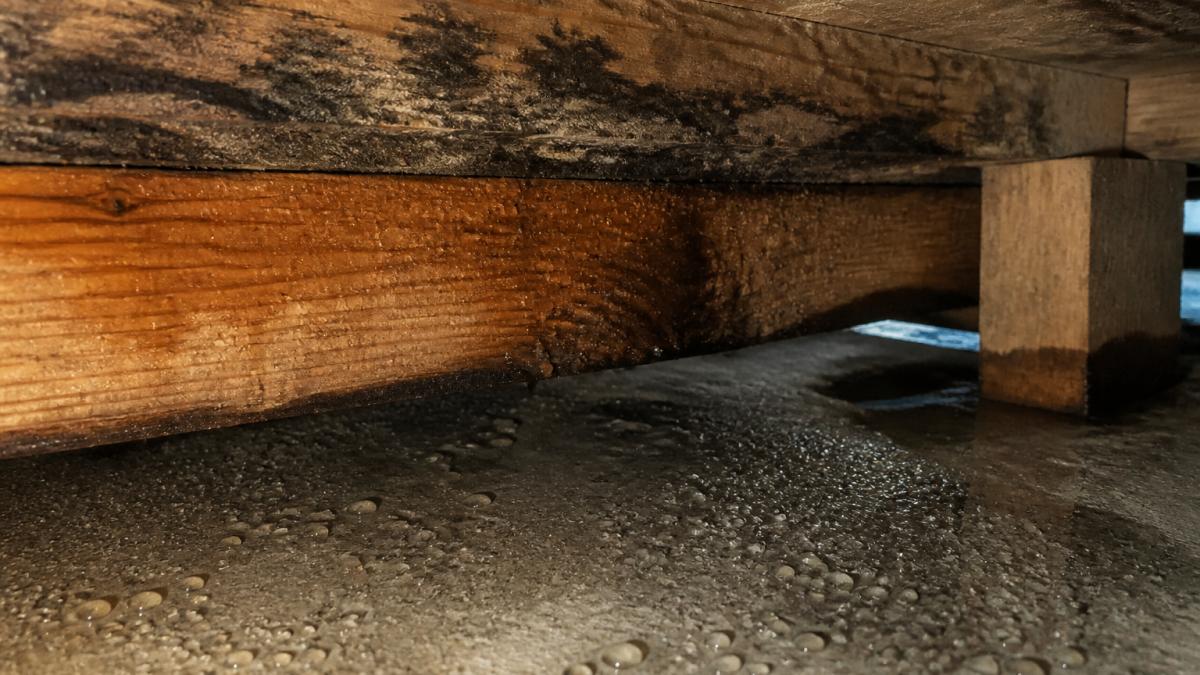
When a house is built, the concrete slab, timber framing, and other materials contain significant moisture from the construction process. This is called construction moisture or residual moisture. In theory, this moisture should dry out over weeks or months after the building is completed and sealed. In practice, many homes never fully dry out, especially if ventilation is poor or if the subfloor remains enclosed without air movement.
This trapped moisture creates an ideal environment for mould growth and wood rot. Timber that remains damp for extended periods loses strength and becomes attractive to termites and other wood-boring insects. Concrete that doesn’t dry properly develops efflorescence (white salt deposits) and can deteriorate faster.
How Professional Moisture Testing for Subfloors Works
Diagnosing a moisture problem correctly is critical. A misdiagnosis leads to wasted money on the wrong solution, or worse, leaving the real problem untreated.
Assessment methods and moisture readings
Professional moisture testing for subfloors uses calibrated instruments to measure moisture content in concrete and timber. A moisture meter gives you a specific reading, typically expressed as a percentage of moisture content or relative humidity, that tells you whether the subfloor is within acceptable ranges or dangerously wet.
Different materials have different acceptable moisture levels. Concrete slabs should typically read below 85% relative humidity. Timber framing should be below 15-18% moisture content. A professional assessment identifies which areas are problematic and why. Are the readings high everywhere, or only in specific zones?
A comprehensive assessment also includes visual inspection for signs of active moisture damage: mould growth, timber decay, rust staining, salt deposits, and pest activity. The professional assessment process identifies not just that moisture is present, but what’s causing it and how severe the damage already is.
Why DIY testing falls short
Many homeowners attempt to diagnose moisture problems themselves using a basic moisture meter or by simply observing musty smells and visible mould. The problem is that a single reading in one spot doesn’t tell you the full story. Moisture distribution across a subfloor is often uneven. One area might be acceptably dry while another metre away is dangerously wet. A DIY reading might miss the real problem zone entirely.
Additionally, consumer-grade moisture meters lack the accuracy and calibration of professional instruments. They can give misleading readings, especially in concrete where moisture distribution is complex. Without professional training, you might also misinterpret what the readings mean. A reading of 16% moisture in timber sounds acceptable, but if that timber is in direct contact with wet concrete below, the problem is still active and will worsen.
The Role of Subfloor Ventilation in Moisture Management
Once you understand the moisture problem, the next step is controlling it. Ventilation is often the most effective and cost-efficient approach, particularly for homes with enclosed subfloors that trap stagnant, humid air.
How ventilation reduces humidity and moisture content
Subfloor ventilation works by introducing fresh, drier air into the space beneath your home and extracting humid, moisture-laden air. This continuous air exchange reduces the relative humidity in the subfloor, which slows moisture evaporation from concrete and timber, dries out residual construction moisture, and makes the environment hostile to mould growth and pests.
The effectiveness of ventilation depends on the design. Passive ventilation, simple vents in the perimeter walls, provides some air movement but is often insufficient in humid climates or where the subfloor is poorly designed. Active ventilation systems use fans to actively draw air through the subfloor, creating consistent air movement and much more reliable moisture control.
In practice, a well-designed ventilation system can reduce subfloor humidity, helping timber stabilise, stopping mould growth, and fading musty smells.
Ventilation versus moisture barriers
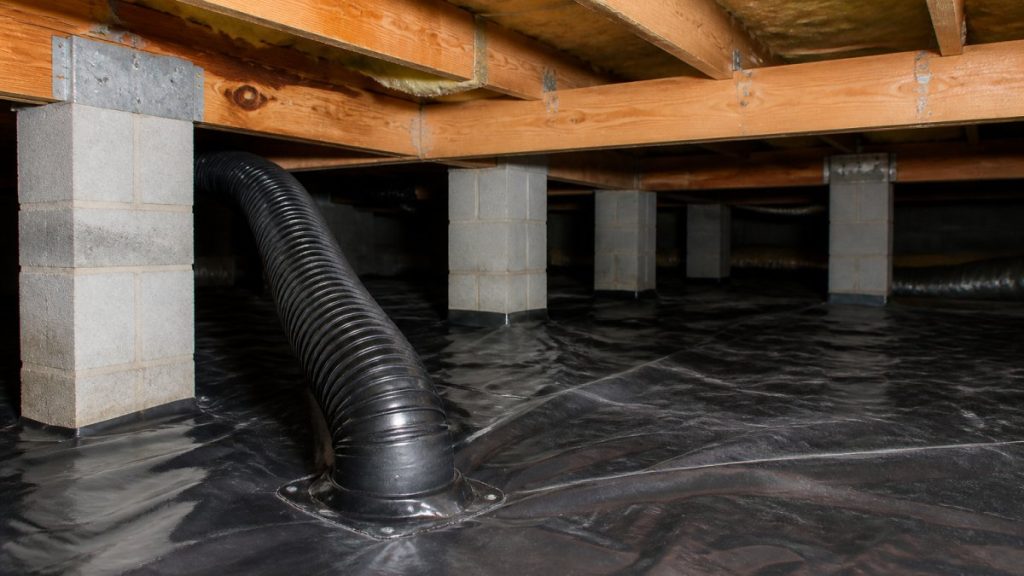
Ventilation and moisture barriers are not competing solutions, they work together. A moisture barrier (also called a vapour barrier or impermeable membrane) is a layer of plastic sheeting or similar material laid across the concrete subfloor. It blocks moisture vapour from rising up through the concrete into the air above.
Ventilation removes the moisture that’s already in the air. A moisture barrier prevents new moisture from entering the air. Used together, they’re highly effective. Ventilation alone in a poorly sealed subfloor may not fully control humidity if moisture is constantly rising from wet ground. A moisture barrier alone won’t help if the subfloor is already humid, you need ventilation to remove that existing moisture.
Installing a Subfloor Moisture Barrier for Long-Term Protection
A moisture barrier is a critical component of professional subfloor moisture control. It’s often one of the first physical steps in a comprehensive moisture management plan.
Moisture-resistant materials and membranes
Modern moisture barriers are typically heavy-gauge polyethylene sheeting (typically 200 microns or thicker) or specialised membranes designed for subfloor use. These materials are impermeable to water and water vapour, creating a seal between the damp ground below and the air space above. They’re durable, relatively inexpensive, and highly effective when installed correctly.
The key is coverage. A moisture barrier only works if it covers the entire subfloor area and is properly sealed at seams and around penetrations (pipes, stumps, cables). Partial coverage or gaps render the barrier ineffective. Corners and edges are critical, moisture will find any opening.
Preparation and installation process
Professional installation begins with thorough subfloor preparation. Any debris, loose concrete, or existing damage is addressed. The concrete surface is cleaned and allowed to dry. In some cases, the surface is lightly prepared to ensure good contact between the membrane and the concrete.
The barrier is then laid across the entire subfloor, overlapping at seams by at least 300mm. Seams are sealed with compatible tape or adhesive. The barrier is secured around the perimeter and around any penetrations. The installation is inspected to ensure complete coverage and proper sealing.
This process is labour-intensive and requires attention to detail, which is why professional installation is strongly recommended over DIY attempts. Poor installation leaves gaps where moisture continues to rise, negating the barrier’s benefit.
Key Benefits of Professional Subfloor Moisture Control
Understanding the benefits helps explain why homeowners invest in professional moisture control rather than hoping the problem resolves itself.
Structural protection and floor durability
Moisture is the primary enemy of structural timber. Wood that remains damp loses strength, becomes brittle, and eventually rots. Concrete that stays wet develops internal cracks and spalling. Steel reinforcement rusts. Professional moisture control stops this degradation in its tracks.
A subfloor kept dry and stable will support your flooring for decades. A subfloor left damp will develop structural issues within years. The cost of replacing rotted timber joists, repairing a failed concrete slab, or installing new flooring is substantial, often tens of thousands of dollars. Professional moisture control costs a fraction of that and prevents the damage entirely.
Health and indoor air quality improvements
Damp subfloors are breeding grounds for mould, dust mites, and other allergens. These organisms release spores and allergens into the air, which rise through gaps in floorboards and penetrations into your living spaces. For families with asthma, allergies, or other respiratory sensitivities, this is a serious health issue.
Professional moisture control eliminates the conditions that allow mould and dust mites to thrive. Within weeks of installing proper ventilation and moisture barriers, indoor air quality typically improves noticeably. Musty smells disappear. Respiratory symptoms often improve. The home feels fresher and healthier.
Prevention of pests and termite damage
Termites and other wood-boring insects are attracted to damp timber. They need moisture to survive and reproduce. A dry subfloor is naturally hostile to these pests. A damp subfloor is an invitation.
Professional moisture control makes your subfloor an unattractive target for termites and other pests. Combined with regular pest inspections, this significantly reduces the risk of infestation. The cost of termite damage, sometimes running to tens of thousands of dollars, makes this benefit alone worth the investment.
Professional Assessment Versus DIY Solutions
The question many homeowners face is whether to attempt DIY moisture control or hire professionals. The answer depends on the complexity of the problem and your confidence in diagnosing and treating it correctly.
DIY approaches typically involve running a dehumidifier, opening windows more frequently, or installing basic passive vents. These measures provide some relief but rarely solve the underlying problem.
Professional solutions begin with accurate diagnosis. A professional assessment identifies the moisture source, measures the extent of the problem, and recommends a targeted treatment plan.
The long-term cost comparison usually favours professional intervention. A professional solution can address the underlying problem rather than just managing symptoms.
At Doctor Damp Ventilation, we approach each subfloor as unique. Some properties need ventilation alone. Others need barriers, repairs, and ventilation working together.
Professional subfloor moisture control protects your home’s structural integrity, improves the air your family breathes, and prevents costly damage and pest infestations. If you’re experiencing rising damp, musty odours, or visible mould in your subfloor, professional assessment is the first step.
Frequently Asked Questions
What are the signs of moisture beneath a floor?
Common signs include musty odours, visible mould or discolouration on joists and stumps, soft or spongy timber, peeling paint or wallpaper on walls above the subfloor, increased humidity indoors, and pest activity. In some cases, floorboards may squeak, cup, or warp. These warning signs suggest moisture content has risen above safe levels and professional assessment is needed to identify the cause and extent of the problem.
How long does subfloor moisture control take to install?
Installation timelines vary depending on the size of the subfloor area, the type of moisture barrier or ventilation system being installed, and site conditions. A professional assessment typically takes a few hours, while full installation of a subfloor ventilation or moisture barrier system may take one to several days. Your professional installer will provide a clear timeline during the initial consultation and explain the installation process to minimise disruption to your home.
Can subfloor moisture cause mould and damage floorboards?
Yes. Excess subfloor moisture creates ideal conditions for mould growth and wood rot. Moisture migrating upward through timber joists and flooring materials weakens structural integrity, causes floorboards to warp, cup, and crack, and attracts termites and other pests. Mould spores released into indoor air worsen respiratory issues and allergies. Professional subfloor moisture control stops this damage cycle by isolating moisture at the source and maintaining healthy humidity levels.
How much moisture is acceptable in a subfloor?
Timber in subfloors should ideally maintain a moisture content below 12-15%, depending on the timber species and environmental conditions. Concrete subfloors should show minimal moisture when tested with professional equipment. Moisture readings above these thresholds indicate rising damp, condensation, or water intrusion that requires professional treatment. A qualified moisture assessment will reveal your subfloor’s current readings and recommend appropriate control measures to bring levels into safe ranges.
