
Last Updated: October 25, 2026
Quick Summary
Yes, bathroom exhaust fans should be vented outside in most cases. A bathroom exhaust fan vent is a ducting system that pulls humid air from your bathroom and expels it outdoors, preventing moisture from accumulating inside walls and roof spaces. The National Construction Code requires ventilation in bathrooms to maintain health and amenity.
- Venting outdoors removes moisture completely; recirculating fans only filter air and return it indoors, leaving humidity behind.
- Best discharge options are external wall outlets for single-storey homes, roof vents for multi-storey homes, or eave vents where roof access is limited.
- Duct must be insulated, kept short and straight, sealed at joints, and fitted with a backdraft damper to prevent condensation and pest entry.
- Never vent into roof space, ceiling cavity, or subfloor; trapped moisture causes timber rot, mould, and insulation damage.
- Professional installation ensures correct sizing, routing, insulation, and termination for reliable performance and moisture control.
Table of Contents
- Do Bathroom Exhaust Fans Need to Be Vented Outside?
- Understanding Bathroom Exhaust Fan Venting Requirements
- Where to Vent a Bathroom Exhaust Fan
- Risks of Venting Into Roof Space
- Bathroom Exhaust Fan Ducting: Installation and Best Practice
- Ducted Versus Recirculating Fans: Which Is Right for You?
- Getting Your Bathroom Ventilation System Installed
- Frequently Asked Questions
Do Bathroom Exhaust Fans Need to Be Vented Outside?
Yes, bathroom exhaust fans should be vented outside in most cases. This is the most effective way to remove moisture, steam, and odours from your bathroom. When a bathroom exhaust fan vents outdoors, it expels humid air completely away from your home. This prevents moisture from accumulating inside your walls, roof space, or ceiling cavity.
Improper venting creates serious problems. Moisture trapped indoors leads to mould growth, structural damage, and poor air quality. The National Construction Code (NCC) requires ventilation in bathrooms, showers, laundries, and similar spaces (Part 10.6 Ventilation). According to the NCC 2016 Housing Provisions, ventilation must be provided to bathrooms and related spaces to maintain health and amenity.
The key question isn’t whether to vent outside, it’s how to do it properly for your home type and climate.
Understanding Bathroom Exhaust Fan Venting Requirements
A bathroom exhaust fan vent is a ducting system that pulls humid air from your bathroom and expels it outdoors. The fan draws air through a duct, then discharges it through an external wall, roof, or eave outlet. This process removes moisture before it can condense and cause damage.
Why venting outside matters:
- Moisture removal is complete, humid air leaves your home entirely
- Mould risk drops significantly when moisture doesn’t accumulate indoors
- Energy efficiency improves because you’re not fighting trapped humidity
- Odours and stale air exit the building, not just the room
Many homeowners wonder if recirculating fans (which filter and recycle air back indoors) are acceptable. These fans can reduce odours temporarily, but they don’t remove moisture. Recirculating fans move air around the room and back inside. The humidity stays in your home. Over time, this leads to condensation on walls, mirrors, and windows, and eventually mould.
The difference is simple: a ducted fan removes moisture permanently. A recirculating fan only cleans the air and returns it. For bathrooms, ducted fans are the standard solution.
Where to Vent a Bathroom Exhaust Fan
Bathroom exhaust fans can discharge through several locations.
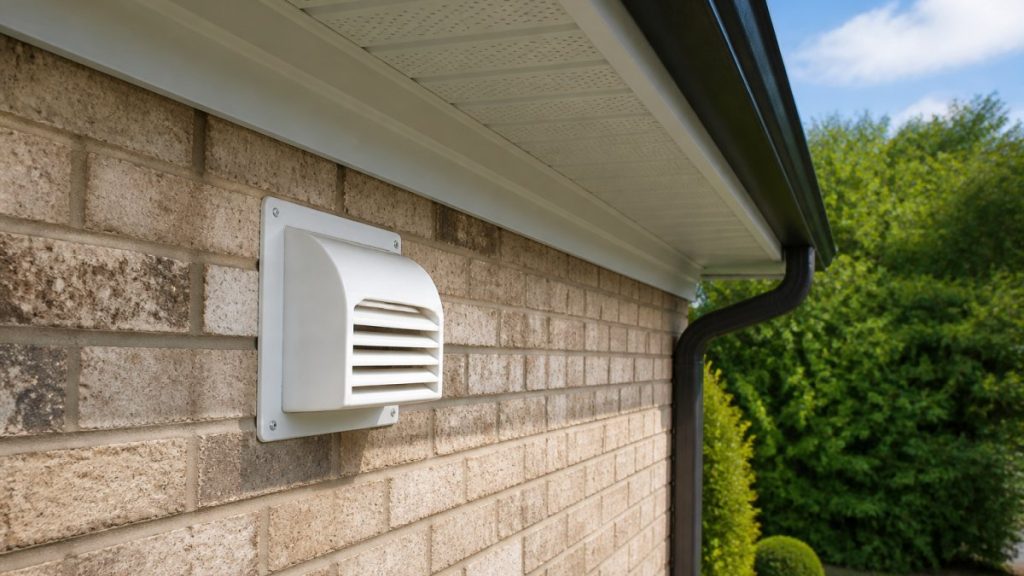
External wall outlet is often the easiest option. The duct runs through an external wall and terminates in a wall-mounted outlet with a rain hood or flap. This keeps ducting short and reduces condensation risk inside the duct.
Roof vent is common in multi-storey homes. The duct runs up through the roof and exits through a roof-mounted outlet such as a tile or metal-roof vent. This works when the bathroom is directly below the roof space.
Eave or fascia vent discharges air through the edge of the roof. This option suits homes where a roof vent isn’t practical, including some single-storey homes and rooms set back from the external wall.
Apartment and unit constraints. In strata or apartment buildings, the discharge point is often fixed by the building design.
Homes with limited roof access. Low-set homes, homes with skillion roofs, and homes where the bathroom is on the ground floor of a two-storey building often cannot route ducting up through the roof easily.
Each option has trade-offs. Wall outlets are shorter and simpler to install. Roof vents may require longer ducting and roof access. Eave vents can be difficult to access for cleaning.
For roof ventilation installation and design, the professionals at Doctor Damp Ventilation can assess your home’s structure and recommend the best discharge point.
Bathroom exhaust fans can discharge through several locations, each with different practical considerations.
| Discharge Location | Best For | Key Consideration |
|---|---|---|
| External wall outlet | Single-storey homes, ground-floor bathrooms | Keeps ducting short, reduces condensation risk |
| Roof vent | Multi-storey homes, bathroom below roof space | Must be insulated, requires roof access |
| Eave or fascia vent | Homes where roof vent impractical, set-back rooms | Difficult to access for cleaning |
| Apartment or unit | Strata buildings with fixed discharge points | Check by-laws and owners corporation approval |
| Low-set or skillion roof homes | Ground-floor bathrooms in two-storey buildings | Wall or eave outlet on nearest external wall |
Risks of Venting Into Roof Space
Some homeowners consider venting bathroom exhaust fans directly into the roof space without ducting outside. This is a common mistake that creates serious problems.
When moisture enters roof space, it has nowhere to go. The roof cavity becomes a humid, poorly ventilated environment. Condensation forms on roof timbers, insulation, and any stored items. Mould grows quickly in these conditions. Roof framing can rot. Insulation loses its effectiveness when damp.
Sarking (roof underlayment) makes this worse. If your roof has sarking installed, moisture cannot escape the cavity at all. The trapped air becomes saturated. Mould spreads rapidly across the underside of the roof.
Even without sarking, venting into roof space is not reliable. Roof spaces vary in ventilation. Some are naturally draughty; others are sealed tight. You cannot predict whether moisture will disperse or accumulate.
The risks are real and costly:
- Timber rot in roof structure
- Mould growth on insulation and framing
- Reduced insulation performance
- Pest attraction (moisture draws insects and rodents)
- Potential structural failure over time
If you’ve already vented into roof space, or suspect moisture damage, mould removal and moisture treatment services can address the problem before it spreads.
Bathroom Exhaust Fan Ducting: Installation and Best Practice
Proper ducting is essential for effective moisture removal.
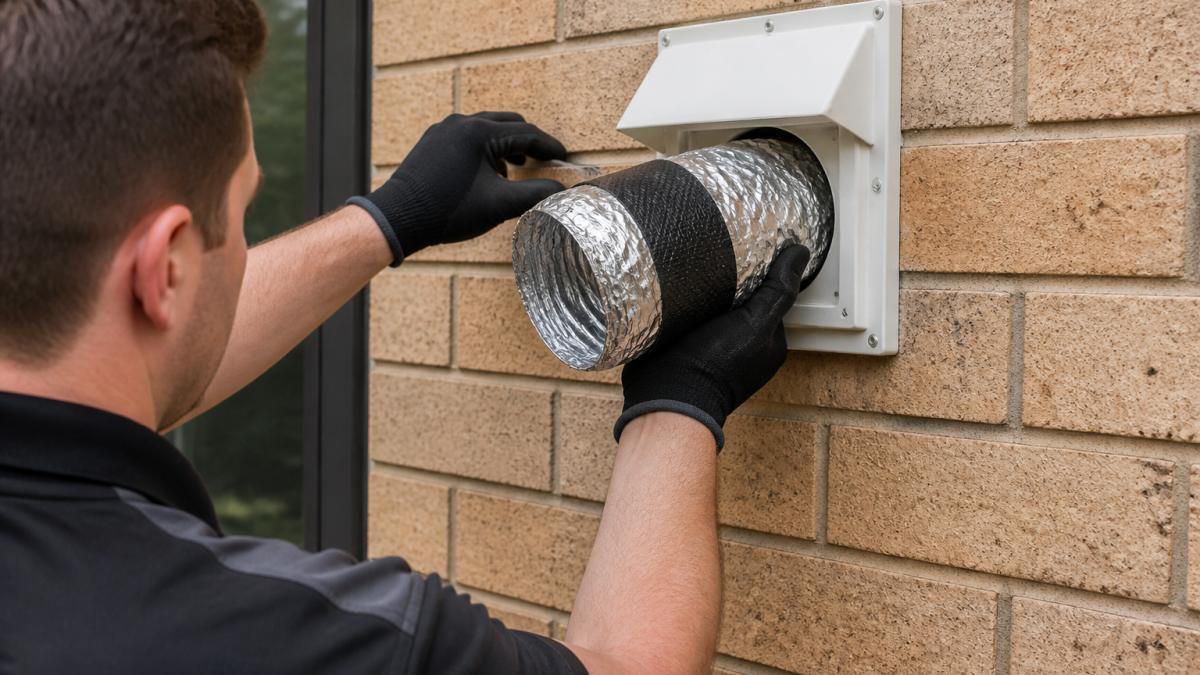
Duct size matters. Most bathroom fans require 100mm or 150mm diameter ducting. Check your fan’s specifications. Undersized ducts reduce airflow and trap moisture inside the duct itself.
Insulation prevents condensation. When warm, humid air travels through a cold duct, condensation forms on the inside walls. The water drips back into your bathroom or accumulates in the duct.
Keep ducts as short and straight as possible. Long ducting increases condensation risk and reduces fan performance. Every bend adds resistance, and resistance reduces airflow.
Give the duct a fall and a drain point. Where condensation does form, it needs somewhere to go other than back into the fan.
Seal all joints. Gaps in ducting allow air to escape before reaching the outlet. Tape all joints with foil duct tape or mastic sealant.
Install a backdraft damper. This one-way valve prevents outdoor air from flowing back into your home when the fan isn’t running. It also stops pests entering through the duct.
Terminate properly. The external outlet must have a rain hood or flap that sheds water away from the opening.
Match the fan to the duct run. A fan rated for a short, straight duct will deliver less airflow once resistance from length, bends, and a damper is added.
If you are retrofitting a fan into an existing bathroom, measure the duct run before buying the fan. A short, insulated wall outlet run usually allows a standard fan; a long roof run may need a higher-capacity unit to achieve the same effective ventilation.
Never discharge a bathroom exhaust duct into a roof space, ceiling cavity, or subfloor. Moisture trapped in these spaces causes timber rot, insulation damage, and mould, and it is not a compliant substitute for external discharge.
Ducted Versus Recirculating Fans: Which Is Right for You?
The choice between ducted and recirculating fans determines how effectively your bathroom stays dry.
Ducted fans pull humid air through a duct and expel it completely outside. They remove moisture permanently. Steam, odours, and humidity all leave your home. Ducted fans require ducting installation, which adds cost and complexity. They’re more effective but demand proper setup.
Recirculating fans filter the air and push it back into the room. They reduce odours and improve air circulation. They don’t require external ducting. Recirculating fans are cheaper and easier to install. However, they don’t remove moisture. The humidity stays in your bathroom and eventually spreads to other rooms.
For most bathrooms, ducted fans are the better choice. They solve the real problem: excess moisture. Recirculating fans are useful only in situations where ducting is impossible and you simply want to reduce odours.
When might recirculating fans work? If your bathroom has excellent natural ventilation (large windows, regular opening to outside air) and you’re mainly concerned with odours, a recirculating fan can help. But if your bathroom struggles with condensation, mould, or poor air quality, a ducted fan is essential.
Getting Your Bathroom Ventilation System Installed
Professional installation ensures your bathroom exhaust fan vent works correctly. Mistakes during installation lead to condensation, mould, and wasted fan performance.
A qualified installer will:
- Assess your home’s structure and roof design
- Choose the best discharge location (wall, roof, or eave)
- Size the duct correctly for your fan
- Route the duct efficiently with minimal bends
- Insulate the duct to prevent condensation
- Seal all joints and connections
- Install a proper external termination with rain hood
- Test the system to confirm airflow
DIY installation is possible if you have building experience. However, mistakes are common. Undersized ducts, poor insulation, and improper termination all reduce performance. Professional work typically costs more upfront but saves money by avoiding moisture damage later.
For assessment and professional installation, contact Doctor Damp Ventilation to discuss your bathroom ventilation needs. Our team can inspect your home and identify moisture problems. We’ll ensure your bathroom exhaust fan vent is installed correctly and performs reliably.
Frequently Asked Questions
What does the National Construction Code say about bathroom exhaust fans?
The NCC 2016 requires ventilation to be provided to bathrooms, shower rooms, and sanitary compartments. While the code mandates ventilation, the specific requirement is that moisture and odours must be removed from these spaces. For most homes, a ducted bathroom exhaust fan that discharges outdoors satisfies this requirement. The code does not specify a single airflow rate for all installations, so the appropriate fan size depends on your bathroom’s volume and usage patterns. Consult a licensed ventilation specialist to confirm your home’s specific requirements.
Can a bathroom exhaust fan vent into the roof space?
Venting into the roof space is not recommended and typically does not meet building code intent. Moisture discharged into the roof cavity can condense on timber, create mould growth, and damage structural elements. If your roof has sarking (a moisture barrier), venting into the roof space is not compliant, the air must be ducted outside. Even without sarking, moisture accumulation in the roof void attracts pests and compromises insulation performance. Always discharge bathroom exhaust outside through a wall or roof outlet.
What are the best options for venting a bathroom exhaust fan in older homes?
Older homes, such as 1970s weatherboard or brick veneer properties, can be retrofitted with bathroom exhaust fans using several routes. Wall discharge through the external wall is often the simplest option and avoids roof penetration. For homes with concrete stumps or pier foundations, ducting can run through the subfloor cavity to an external outlet. Roof-mounted discharge is also viable if the ducting is properly sealed and insulated. A licensed ventilation specialist can assess your home’s structure and recommend the most practical and code-compliant route.
How do I know if my bathroom exhaust fan is already vented outdoors?
Trace the ducting from your exhaust fan. If you see flexible or rigid ducting running to an external wall outlet, roof vent, or eave vent, your fan is ducted outdoors. If the ducting ends in the roof space or ceiling cavity, it is not properly vented. You can also feel for air movement at external vents on your home’s walls or roof edge when the fan is running. If you cannot locate the ductwork or are unsure, a professional inspection will confirm whether your system meets current requirements and is functioning correctly.
Bathroom moisture problems don’t resolve themselves. Trapped humidity leads to mould, odours, and structural damage. The solution is straightforward: a properly installed ducted exhaust fan that vents moisture outside. Doctor Damp Ventilation specialises in designing and installing bathroom ventilation systems, sub-floor ventilation, and moisture control technology that keeps your home dry and healthy. Call 1300 557 687 today to arrange a consultation and protect your home from damp.

