
Last Updated: October 29, 2026
Quick Summary
Improved indoor air quality supports better respiratory health by diluting and removing pollutants like moisture, mould, dust and gases before they settle into the lungs. Reducing these pollutants relies on fixing their source, such as damp and poor airflow, rather than relying on cleaning or simply opening a window.
- Indoor air pollution is associated with increased respiratory symptoms and morbidity.
- Sub-floor ventilation keeps moisture from rising into the building.
- Wiping visible mould without fixing the moisture source usually brings it back within months.
- Mould remediation should begin with a moisture investigation and correction before any removal.
- A written report with a re-test date is essential after an indoor air quality assessment.
Table of Contents
- How Indoor Air Quality Affects Respiratory Health
- Common Indoor Pollutants and Where They Come From
- Why Ventilation Is the Foundation of Healthy Air
- Controlling Humidity, Damp and Mould to Protect Lungs
- Indoor Air Quality Assessment Methods for Buildings
- Mould Remediation Standards Australia: What Compliant Work Looks Like
- Total Ventilation Hygiene: Building a Maintenance Plan That Lasts
- Booking an Indoor Air Quality Assessment for Your Property
- Frequently Asked Questions
Indoor air is where most of us spend roughly 90 per cent of our time, and for many Australian households it is quietly making breathing harder. Damp, mould and poor airflow in homes across Sydney, Brisbane and Melbourne are linked to respiratory symptoms, and the fix is rarely just opening a window.
How Indoor Air Quality Affects Respiratory Health
Indoor air pollution is associated with increased respiratory symptoms and morbidity, according to a ScienceDirect review of interventions for respiratory health.
Respiratory irritation rarely comes from one source. It builds up when moisture, particles and gases accumulate faster than the building can clear them. That is why a home that looks clean can still leave occupants coughing, wheezing or waking with a stuffy chest.
Common Indoor Pollutants and Where They Come From
Most household pollutants come from three places: the building fabric, the people living in it, and the activities that happen inside. Damp walls and under-floor moisture feed mould and dust mites. Cooking, cleaning and heating add particles and gases. Sweeping is a good example of the counterintuitive kind: research on indoor air pollution and respiratory health shows that indoor sweeping resuspends settled dust and is associated with higher household PM2.5 and PM10 levels.
Low-level nitrogen dioxide is another one to watch. Guidance from the Environmental Protection Agency’s introduction for health professionals notes that low-level NO2 exposure may increase bronchial reactivity in some people with asthma. Gas appliances and poorly ventilated kitchens are the usual sources.
Why Ventilation Is the Foundation of Healthy Air
Ventilation dilutes pollutants before they settle into your lungs. To see how subfloor ventilation is designed and installed, you can review the process step by step. Indoor pollutants are diluted by the supply of fresh outdoor air, and that principle sits at the heart of most indoor air quality guidelines.
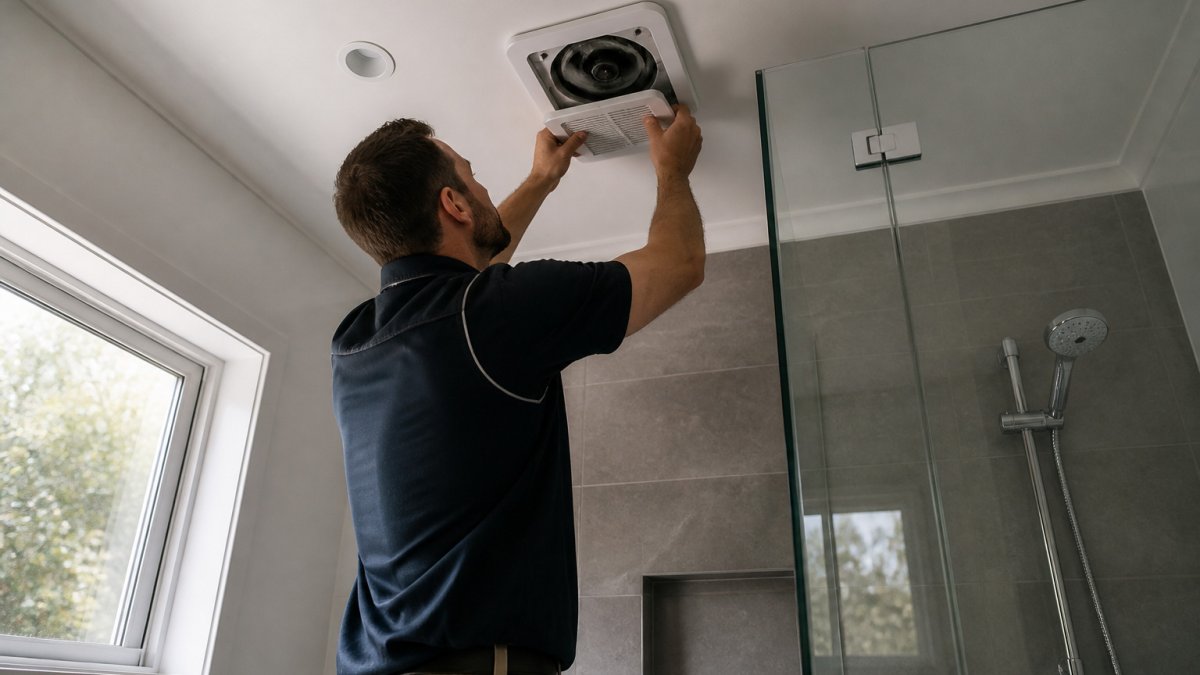
Here is the tension we see most often: modern, energy-efficient construction can reduce natural ventilation, and indoor concentrations of some pollutants have risen as a result. A well-sealed home is not automatically a healthy one. It needs deliberate airflow. In practice, that means:
- Sub-floor ventilation to keep moisture from rising into the building
- Ducted exhaust systems in bathrooms and kitchens to remove humid air at source
- Balanced airflow so fresh air is actually replacing stale air
Research on optimising outdoor air flow for energy efficiency and health is now focused on exactly this balance: ventilating enough for health without wasting energy.
Controlling Humidity, Damp and Mould to Protect Lungs
Mould is the pollutant that most homeowners recognise, and it usually signals a moisture problem rather than a cleaning problem. Addressing the underlying humidity levels often requires a more holistic approach to maintenance, where the adoption of green certified cleaning helps ensure that the materials used in your home do not introduce additional chemical irritants into the air.
Dehumidifiers and open windows help, but they treat symptoms. The lasting approach is to stop moisture entering the building from below and to remove it at the point it is produced. If you want professional mould removal in Sydney, the right provider will start by addressing that moisture source.
Indoor Air Quality Assessment Methods for Buildings
A professional assessment separates guesswork from a diagnosis.
What a professional assessment measures
A building IAQ assessment can cover several parameter families, including moisture, airflow, particulates and gases:
How the assessment is structured
The work usually follows four stages, and each one produces a record the client keeps:
Standards and reference points
Australian practitioners align assessments with the National Construction Code ventilation provisions for building ventilation performance, the enHealth guidance on indoor air quality for a health-based framework, and Standards Australia AS 1668.2 mechanical ventilation for mechanical ventilation design. Where a client needs an international benchmark, the WHO global air quality guidelines and ASHRAE 62.1 ventilation rates are commonly cited alongside the local requirements.
Ask any assessor which standards their report will reference and whether monitoring is logged over time or taken as a single spot reading. A one-visit snapshot cannot distinguish a persistent problem from a one-off event.
Facility managers at schools, strata buildings and commercial sites often need this evidence for maintenance planning, capital works justification and demonstrating that their buildings are being actively managed. A survey by GPS Air on building health data found that 66 per cent of people say improved ventilation or temperature control would help reassure them their workplace is being managed well, which is why the written report matters as much as the measurements.
The assessment outcome should be a written plan that names the cause, the recommended fix and the measurable result you should expect, with a re-test date attached.
Mould Remediation Standards Australia: What Compliant Work Looks Like
Mould work should follow Australian guidance rather than informal rules of thumb, and the difference between a compliant job and a cosmetic one is visible in the documentation.
The standards and guidance that apply
Australian mould remediation is not governed by a single statute; it sits at the intersection of several instruments, and a credible contractor can tell you which ones apply to your job:
- enHealth guidance on the health effects of mould, the national health-based framework for assessing and managing mould in buildings, including the principle that the moisture source must be corrected before remediation is considered complete.
- Safe Work Australia model Code of Practice: Hazardous Manual Tasks and airborne contaminants, relevant where remediation work disturbs mould spores and generates airborne contaminants, setting out the duty to control exposure for workers and occupants.
- National Construction Code, the waterproofing and ventilation provisions that determine whether a building is constructed to keep moisture out in the first place; remediation that ignores these will fail again.
What compliant remediation looks like step by step
- Moisture investigation first, the source is identified and corrected before any mould is removed. Wiping growth off a wall that is still damp simply resets the clock.
- Scope and containment, the affected area is defined, and where disturbance will generate spores, the work area is isolated with plastic sheeting and negative pressure so spores are not spread to unaffected rooms.
- Removal and cleaning, porous materials that cannot be cleaned are removed; semi-porous and non-porous surfaces are cleaned and, where appropriate, treated. Personal protective equipment for workers is non-negotiable.
- Drying and verification, moisture content is confirmed back to a normal equilibrium before cavities are closed up. Verification readings should be recorded, not just asserted.
- Clearance and documentation, a written record of what was found, what was done, the moisture readings before and after, and any re-test schedule. This is the document a landlord, insurer or buyer will ask for.
Be cautious of any quote that does not mention the moisture source, containment or post-remediation verification. Those three items are the difference between remediation and redecorating.
Questions to ask before you accept a quote
- How will the moisture source be found, and will it be tested before and after the job?
- What containment steps will be used, and will occupants need to vacate during work?
- What verification readings will be provided, and against which standard?
Pricing depends on the size and cause of the problem, so request a written quote from Doctor Damp Ventilation for current prices. For professional mould removal, you can [page:1].
The article lists the steps that separate compliant mould remediation from cosmetic work.
| Step | What to do | Key check |
|---|---|---|
| Moisture investigation | Identify and correct the moisture source first | Source fixed before removal |
| Scope and containment | Define area and isolate it with sheeting and negative pressure | Spores not spread to other rooms |
| Removal and cleaning | Remove porous materials; clean or treat the rest | Workers wear PPE |
| Drying and verification | Confirm moisture content returns to normal before closing up | Readings recorded, not asserted |
| Clearance and documentation | Keep a written record of findings, work and readings | Re-test schedule attached |
Total Ventilation Hygiene: Building a Maintenance Plan That Lasts
Air quality is not a one-off project. Filters, exhaust fans and sub-floor vents need inspection on a schedule, and moisture levels need checking after storms and seasonal changes. A total ventilation hygiene plan records what was installed, when it was last serviced and what to check next.
For a full walkthrough of building that plan, read our complete guide to total ventilation hygiene. Treat maintenance as part of the building’s health record, not an afterthought.
Booking an Indoor Air Quality Assessment for Your Property
If your home or building shows signs of damp, mould or stale air, the next step is a proper site assessment rather than another round of cleaning. Doctor Damp Ventilation is a fully licensed specialist that designs and installs sub-floor ventilation, moisture control and ducted exhaust systems.
When you are ready to talk through your property, [page:5]. Call Doctor Damp Ventilation on 1300 557 687 to arrange an assessment.
Frequently Asked Questions
How does indoor air quality affect respiratory health in Australia?
Indoor air often holds higher concentrations of fine particles, mould spores, dust mite allergens and nitrogen dioxide than the air outside, and people spend most of their time indoors. Research links low-level nitrogen dioxide exposure to increased bronchial reactivity in some asthmatics. Indoor air pollution is also associated with more respiratory symptoms overall, and improved indoor air quality is associated with better lung development in children. Reducing sources and improving ventilation are the most direct ways to lower that exposure at home.
What are the signs of poor indoor air quality in a building?
Common signs include a persistent musty odour, visible mould on walls or ceilings, condensation on windows, stale air that feels stuffy by mid-afternoon, and occupants who notice headaches, irritated eyes or a cough that eases when they leave. Peeling paint or a damp smell under timber floors can point to sub-floor moisture feeding the problem. Recurring symptoms that improve away from the building are a strong indicator that the indoor environment needs assessing.
How can environmental consulting improve indoor air quality?
Environmental consultants measure the conditions that drive poor air quality, including humidity, ventilation rates, airborne particles and moisture sources, rather than relying on guesswork. A structured assessment identifies whether the problem is a ventilation shortfall, a moisture source such as rising damp or sub-floor water, or contamination from mould. The resulting report gives property owners a prioritised plan, and the findings can be checked again after works to confirm they have worked.
What role does ventilation play in maintaining respiratory health?
Ventilation dilutes pollutants by bringing fresh outdoor air in and exhausting moist, contaminated air out. Mechanical exhaust fans in bathrooms and kitchens remove moisture and cooking pollutants at the source, while sub-floor ventilation keeps timber and underfloor spaces dry. Effective ventilation reduces humidity that supports mould and dust mites, both common triggers for asthma and allergies.
Are there Australian standards for indoor air quality?
Australia has no single mandatory indoor air quality standard for homes, but several frameworks apply in practice. AS 1668.2 covers mechanical ventilation and air conditioning in buildings, and the National Construction Code sets minimum ventilation requirements. Work on mould in buildings is guided by the Australian guidance on mould remediation and by state and local health authority requirements. Professionals assessing a property should reference these instruments and document their methods.
How do damp and mould impact indoor air quality?
Damp and mould release spores and microbial volatile organic compounds into the air, which can irritate airways and worsen asthma and allergic reactions. Moisture also encourages dust mites and can lead to structural timber decay and termite attraction in sub-floor areas. Addressing the moisture source, such as rising damp, poor drainage or a lack of sub-floor ventilation, is necessary before any surface mould treatment will hold.
Can a dehumidifier and opening windows solve a musty smell permanently?
A dehumidifier and more open windows can reduce the smell temporarily, but they treat the symptom rather than the source. If moisture is entering through the sub-floor, walls or a poorly sealed roof, the humidity will return once the appliance is switched off or the weather changes. A ventilation and moisture assessment identifies the source so that fixes such as sub-floor ventilation or ducted exhaust can address it directly.
Better indoor air is a practical goal with a clear path: find the moisture, move the air properly, and keep checking. Doctor Damp Ventilation can help you do all three, so your family breathes easier at home.

